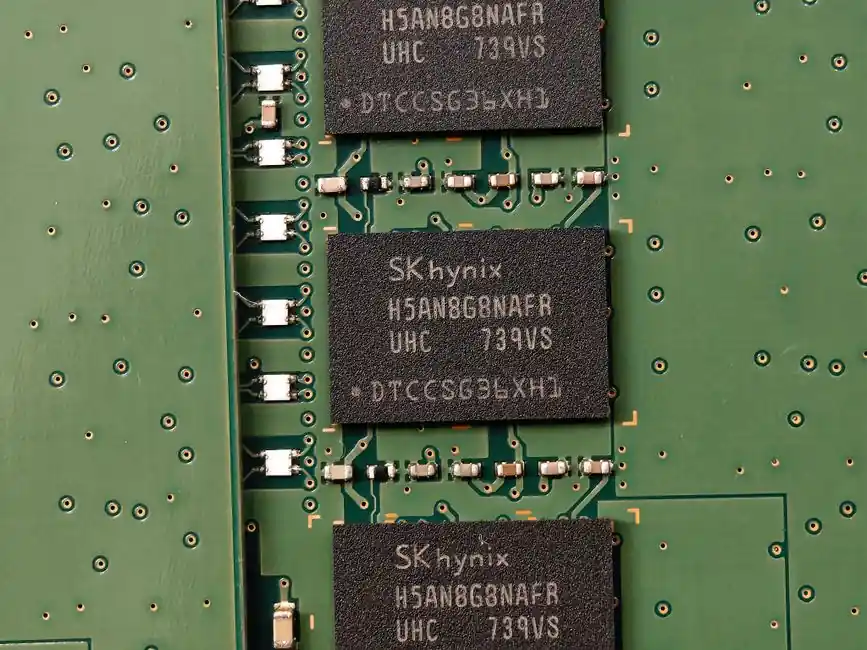
Procurement teams in mid-2026 are treating AI accelerator silicon (HBM, CoWoS-packaged GPUs, custom ASICs) as a constrained strategic input rather than a spot-priced commodity, with multi-year wafer allocation, capacity reservation, and dual-foundry qualification now standard clauses in master service agreements [S1]. The Procurement Strategy Platform frames the shift bluntly: advantage is moving from cost optimization to securing access to supply, and independent advisory output has migrated onto dedicated procurement channels rather than general business media [S1].
The signal at plant scale is concrete: GE Appliances expanded its Texas Instruments deal in 2026-08, sourcing roughly a third of the chips for its new US$1bn Kentucky facility from US fabrication lines [S2]. That is a single-vendor, single-fab share for an industrial OEM at a greenfield site, and it is the kind of commitment that pre-empts allocation disputes when CoWoS and HBM lines tighten. For process engineers evaluating plant controls, the same constrained-supply logic also cascades into the long-tail ICs feeding PLCs, flow meters, and pressure transmitters on the same BOM.
Why AI chip supply tightened into 2026-08: the structural drivers
CoWoS advanced-packaging capacity and HBM3E/HBM4 stacking remain the binding chokepoints in 2026-08, with foundry expansion lagging hyperscaler pull by a measurable margin and pulling industrial OEM allocations into the same queue [S1]. The Purchasing Practice framing of "constrained supply world" reflects three structural facts: advanced-node wafer starts are pre-committed 18-36 months ahead, HBM3E supply is allocated by memory vendor rather than priced on spot, and CoWoS interposer throughput is a single-digit-percent function of TSMC's advanced-packaging line, not a freely elastic input [S1].
For an industrial buyer this means a quoted 52-week lead time is not a buffer, it is the floor, and any clause that lets the foundry re-allocate wafers in a "force majeure" window deserves redlining before signature [S1]. Procurement leaders profiled on Procurement Magazine in 2026-08 (Coca-Cola's CPO, Schneider Electric's Christophe Quiquempoix) consistently describe AI and resilience as the dual backbone of modern category strategy, not a "digital initiative" line item [S2].
Allocation-first contract structure: clauses that matter
A 2026-grade AI chip master agreement should fix wafer starts, not finished units, and should bind the foundry to a minimum allocation percentage across a 24-36 month window, with re-allocation triggers and audit rights for non-performance [S1]. The Procurement Strategy Platform's editorial line in 2026-08 is that "procurement is no longer operating in stable supply markets", which translates contractually into: take-or-pay minimums on reserved capacity, dual-source qualification for advanced packaging, and a price-collar mechanism tied to a published index rather than vendor-discretionary adjustment [S1].
Industrial OEMs with non-AI silicon (analog, mixed-signal, MCUs that feed industrial valve positioners and sensor signal chains) should run the same allocation-first template, because the same HBM and CoWoS tightness is pulling 200mm and 300mm mature-node lines onto longer queues via tool-moves and capacity rebalancing. Comprara's 2026 capability framing for Australian enterprises explicitly lists technology hardware supply as a category where vendor management is "key", and supplier lifecycle management (KYC, sanctions, ESG, performance monitoring) is a precondition for any allocation deal that survives a stress test [S3].
Vendor landscape: foundry, memory, packaging, and the second-source gap
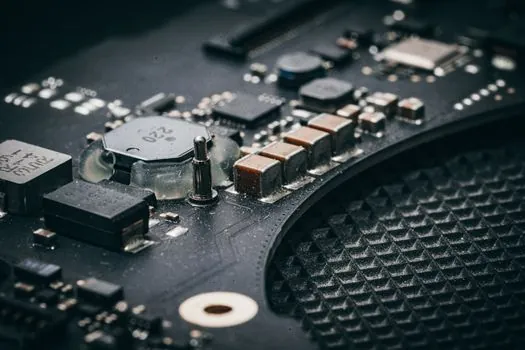
The qualified vendor set in 2026-08 is narrow: TSMC dominates CoWoS-S/CoWoS-L interposer flow for AI accelerators, SK hynix and Micron split the HBM3E allocation pool, and Samsung Foundry remains the partial second source on both advanced nodes and advanced packaging, with yield maturity varying part-by-part. A pragmatic qualification matrix for a process-engineering buyer looks like: lead foundry for primary wafer + qualified-package partner with signed capacity letter + HBM vendor with allocation, not pricing, as the contract object [S1].
GE Appliances' Texas Instruments arrangement, where a third of the silicon for a US$1bn Kentucky plant comes from US fabs, illustrates the "sovereign fab" leg of the matrix: TI's 300mm RFAB and upcoming Sherman fabs cover analog and embedded, not AI accelerators, but the same geopolitical-risk logic is what is pulling hyperscaler AI procurement toward TSMC Arizona and Samsung Taylor capacity in 2026-08 [S2]. For a pressure sensor BOM that rides the same analog fabs, the lesson is that "domestic content" deals are now a baseline contract variable, not a marketing footnote.
Who benefits vs. who should not adopt an AI chip allocation strategy
AI chip allocation-first procurement is for buyers whose end product is AI-throughput-bound (training clusters, inference appliances, edge-AI vision at line rate) and for industrial OEMs whose ASIC content is in the tens of thousands of units per year; it is not for low-volume industrial buyers whose annual AI silicon spend is below the foundry's allocation threshold [S1]. Comprara's 2026 sector model maps procurement intensity to: manufacturing, healthcare, energy/utilities, and technology, with technology flagged explicitly for "hardware supply, where vendor management is key" [S3].
Buyers who should NOT replicate hyperscaler-style allocation deals are: small-batch industrial OEMs (under ~10k units/yr per part number), buyers of mature-node logic without HBM/CoWoS dependency, and any team without a signed dual-source qualification path, because a single-source allocation that fails to deliver is worse than a spot-priced multi-source, since the failure mode is silent line-stoppage rather than price shock [S3]. For those buyers, the right 2026-08 play is contractually simpler: index-linked pricing, vendor-managed inventory, and a crossed-roller guide-style "qualified second source in reserve" clause, not a wafer-start reservation.
Use cases, failure modes, and the cost of getting it wrong

Documented 2026-08 procurement patterns show three live use cases: (1) GE Appliances routing 1/3 of Kentucky plant silicon through TI's US fabs under an expanded deal [S2]; (2) hyperscaler-style wafer-start reservation contracts published via dedicated procurement platforms rather than general media [S1]; (3) dual-foundry qualification of advanced-packaging lines as a standing workstream in semiconductor category plans [S2]. Each is a response to the same failure mode: a re-allocated wafer slot that surfaces as a 6-12 month delivery slip and an unbudgeted re-spin cost.
Comparable thinking has been published on adjacent power and motion components, where buyers are linking linear guide sourcing to the same allocation-reservation template, and the procurement coverage of standby generators in 2026 has put similar contract language on the table for non-semiconductor categories: see Standby generator price 2026: cost drivers, kW tiers, and where the money goes and Standby Generator Selection Guide: kW Sizing, Fuel Class, and Protection Architecture for the parallel logic on rotating-equipment sourcing.
Standards, sourcing governance, and trackable signals for the next 6 months
AI chip procurement does not fall under a single IEC/ISO standard the way that, for example, ATEX 2014/34/EU governs explosion-protected pressure transmitters; instead, governance sits in contractual instruments (wafer-start reservations, HBM allocation letters, packaging-capacity MOUs) and in supplier-lifecycle controls such as KYC, sanctions screening, and ESG audits, which Comprara's 2026 capability framework treats as core, not optional, deliverables [S3]. Where a chip touches a safety function, the relevant horizontal standards (IEC 61508 for functional safety, ISO 9001 for quality systems, and the buyer's own sector regulator) still apply, and an allocation contract that compromises compliance testing windows is a contract the engineering team should reject, regardless of unit price [S3].
Trackable signals for the next six months: (a) whether Samsung Foundry's CoWoS-S yield curve at Taylor and Pyeongtaek crosses the published threshold that lets it carry meaningful second-source allocation in 2026-Q4; (b) whether GE Appliances-style single-vendor domestic-content deals appear in the next wave of US greenfield fabs, with the Procurement Magazine coverage cycle as a leading indicator [S2]; (c) whether the dedicated procurement platforms (Purchasing Practice, Comprara) start publishing standardized allocation-clause templates, which would mark the maturation of the 2026 "constrained-supply" procurement model into repeatable contract law [S1][S3].