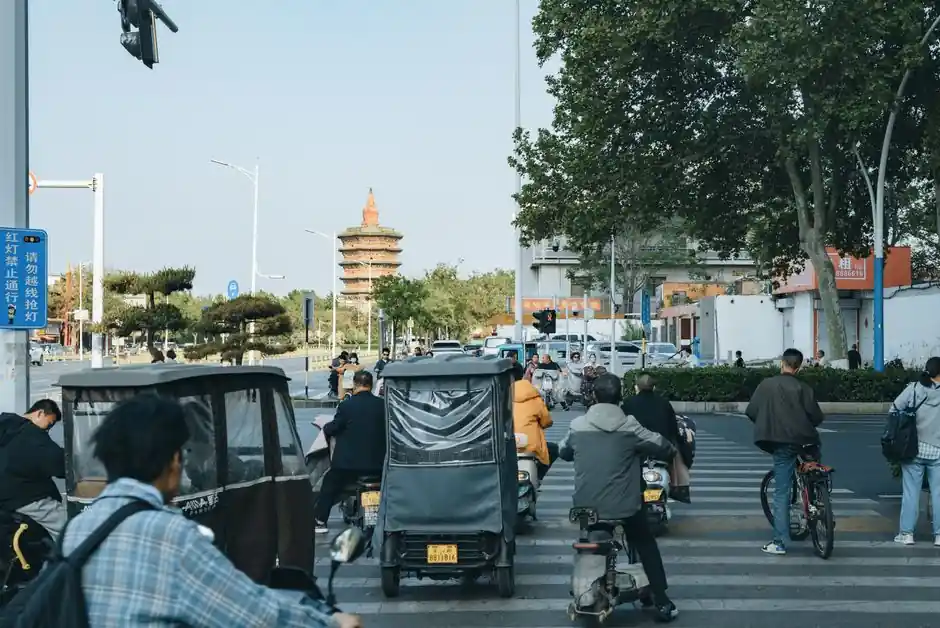
China remains the dominant manufacturing base for EV-grade lithium battery packs, with cell makers and pack integrators offering LFP and NMC chemistries across 12V to 800V architectures for passenger cars, commercial vehicles, electric boats, and off-road machinery [S1][S4].
For an engineering buyer in 2026, the sourcing question is not whether China can supply, but how to separate Tier-1 cell producers from module pack assemblers, and which certifications (IATF 16949, UN 38.3, IEC 62619) actually appear on the test report rather than on a marketing page [S4].
Cell chemistry and pack architecture: the real decision grid
LFP (LiFePO4) cells dominate new Chinese pack production for cost and cycle life, with typical 48V 10Ah modules rated at 3,000 deep cycles, and 12V 200Ah AGM/Gel-equivalent LiFePO4 drop-in replacements rated for 15-year design life in stationary or low-speed EV duty [S1]. High-voltage packs for excavators, bulldozers, and commercial trucks now ship at 540V, 614V, 768V, and 800V nominal architectures, using series-string BMS architectures to manage hundreds of cells per pack [S4].
NMC chemistry remains preferred where energy density per kilogram is the constraint, typically in passenger EV and premium e-boat segments, but LFP has captured the majority share of new Chinese stationary and mid-range mobility pack production [S1]. A useful first cut: LFP for cycle life and thermal stability in fleets and storage; NMC where pack mass or volume is the binding constraint.
Chemistry comparison: LFP vs NMC vs lead-acid legacy
Across four buyer-facing criteria, the chemistry split is concrete. Energy density: NMC roughly 200-260 Wh/kg at cell level, LFP 90-160 Wh/kg, VRLA lead-acid 30-50 Wh/kg. Cycle life: LFP commonly rated 3,000-6,000 cycles at 80% depth of discharge, NMC 1,000-2,000 cycles, VRLA 200-500 cycles. Design life in stationary duty: LFP 15+ years, OPzV tubular gel 20+ years, AGM 12 years, as published in current Chinese vendor datasheets [S1]. Thermal runaway onset: LFP around 250-300 degrees C, NMC around 150-200 degrees C, which is why LFP dominates Chinese commercial-vehicle and energy-storage SKUs.
For procurement, the actionable translation is straightforward: specify the chemistry by application band (LFP for fleets, NMC for range-critical passenger), and lock cycle life to a published 80% DoD figure rather than a vendor marketing claim [S1][S4].
What to verify on the supplier side before issuing a PO
Three documents separate a real Tier-1 pack vendor from a trading company. ISO 9001 covers baseline quality management, while IATF 16949 is the automotive-specific quality standard that tier-1 EV pack integrators in China now routinely hold, and Hunan CTS Technology publicly lists both certifications on its company profile [S4]. The third is UN 38.3, the UN transport test certificate required for any lithium battery shipped by air, sea, or road under the UN Model Regulations, without which a shipment can be rejected at port.
Other useful signals: IATF 16949 + ISO 9001 dual certification, in-house BMS design (not a re-branded third-party BMS), documented cycle test reports, and a stated annual production capacity in GWh. One mid-tier Chinese pack vendor in Hunan publicly states 1 GWh annual production capacity with 150+ staff and 80% export share, supporting 1,500+ served customers across 200+ electrification applications, including EVs, electric boats, golf carts, and construction machinery [S4].
Battery management system (BMS) integration is the most under-specified line item in cross-border pack sourcing. Confirm whether the BMS is cell-level monitored, what balancing current it supports, the communication protocol (CAN, RS485, Modbus), and whether the supplier provides firmware source or only binary. For high-voltage packs at 540V-800V, also confirm isolation monitoring, contactor control logic, and ISO 6469-1 or equivalent functional-safety evidence.
Operational backdrop: charging, swapping, and grid integration in China
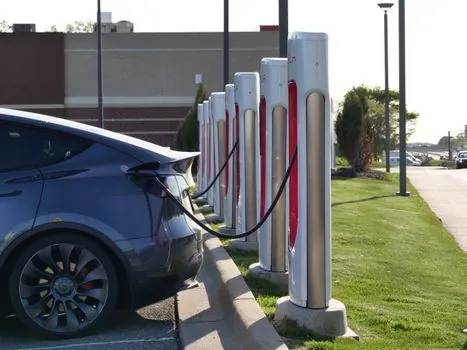
Procurement volumes in 2026 are anchored by a domestic Chinese NEV market that has already built out large-scale charging and battery-swapping infrastructure. The first smart EV charging and battery-swapping demonstration zone, completed in Jiangsu province in late 2024, covers nearly 500 square kilometers across Suzhou, Wuxi, and Changzhou, and operates about 1,300 charging piles serving over 500,000 NEV drivers [S2].
At one public station in Wuxi, operators reported a real-time price of 1.17 yuan ($0.16) per kWh plus a 0.51 yuan service fee, with platform discount coupons cutting the effective cost of a full charge by more than 10 yuan for the end user, a level of price transparency and load balancing that depends entirely on vehicle-to-station-to-grid data exchange [S2]. This domestic maturity translates into supply-side scale: the same integrators serving the domestic fleet also offer export-grade packs to overseas buyers.
For a buyer modeling a multi-year pack supply, the practical implication is that lead times for cells and modules from Chinese Tier-1 suppliers are now backed by a deeply tested domestic ecosystem, with V2G verification bases (such as the Xinwu district, Wuxi, solar-plus-storage-plus-V2G site referenced in State Grid Jiangsu work) actively running battery cycling and reverse-charging trials that no Western pack vendor can match at the same volume [S2].
Stationary and hybrid use cases beyond passenger cars

Chinese pack vendors are not single-vertical. The same factory line that produces an EV pack typically also ships e-boat batteries, e-scooter battery packs, solar battery storage systems, on-board chargers, mobile EV charging stations, and high-voltage wire harnesses, with the BMS and connectors sold as separate line items [S4]. For a B2B buyer, this means a single vendor can serve a forklift fleet, a solar-plus-storage site, and a small electric boat without three separate qualification processes.
Stationary LFP and OPzV gel batteries for renewable integration remain a parallel product line, with 2V 2,000Ah OPzV tubular gel cells rated at 20+ years design life, and 12V 200Ah AGM/Gel cells rated at 15 years, both with ABS cases and tubular positive plates [S1]. The link to broader industrial sensor and valve ecosystems matters: a pressure sensor on a battery enclosure pressure-relief valve, a flow meter on a coolant loop, and a pressure transmitter on the pack enclosure are all part of the same turnkey pack+ancillary bill of materials a Chinese integrator can quote as one package.
Sourcing channels, MOQ reality, and common failure modes
Most export-grade Chinese pack vendors operate on B2B platforms (Alibaba, Made-in-China, Guidechem for chemicals, dedicated factory sites) and accept MOQs as low as a sample pack for qualification, climbing to pallet or container quantities for production runs [S3][S4]. Lead time for a custom pack is typically 25-45 days after drawing approval, with 30% deposit and 70% balance before shipment as the standard term among smaller integrators; larger Tier-1 vendors negotiate net-30 or net-60 with framework agreements.
Common failure modes in EV battery sourcing from China: (1) datasheet cycle life claimed at 1C charge/1C discharge, while real fleet duty is 0.3C-0.5C, which inflates the apparent cycle count; (2) BMS firmware locked, blocking integration with the buyer's vehicle CAN stack; (3) cells without UN 38.3 certificates seized at customs, with the supplier offering only a copy of the test summary, not the full report; (4) the factory page lists IATF 16949, but the certificate scope excludes the specific product family being quoted, a frequent issue with re-sold or contract-manufactured SKUs. A useful due-diligence step is to request the certificate PDF and read the scope clause line by line [S4].
Next signals to track for 2026 procurement

Three concrete items worth monitoring for the rest of 2026. First, whether the State Grid Jiangsu V2G demonstration expands from the Wuxi base to a second province, a strong leading indicator of standardized vehicle-to-grid pack firmware demand [S2]. Second, IATF 16949 surveillance audit cycles for Chinese pack integrators, which in 2025-2026 have been tightening around traceability of cathode active material, a useful proxy for audit rigor. Third, CNC machine manufacturing quality standards at the cell stacking and laser-welding step, where Chinese tool-machine upgrades in 2026 are tightening cell-to-pack tolerance bands, a relevant parallel track for buyers tracking pack build quality. For an industrial buyer, the next concrete node is requesting a sample pack with full UN 38.3 and IATF 16949 PDFs in hand before any production PO.