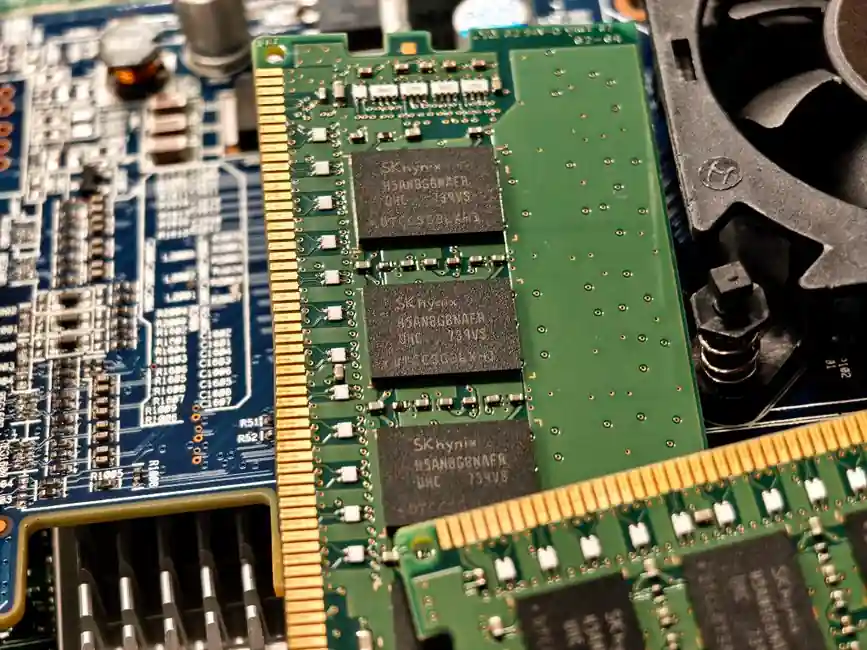
GPU procurement in 2026 is a structural allocation problem, not a price negotiation: TSMC's CoWoS packaging capacity is fully allocated through mid-2027, and hyperscalers absorbed most of NVIDIA's forward Blackwell contracts during 2024-2025, leaving 36-52 week hardware lead times for everyone else [S5].
Procurement teams that treat GPUs as a transactional SKU will miss their 2027-2028 inference roadmaps; the survivors are the ones who combine multi-year reserved capacity contracts, mixed-vendor sourcing, and explicit ECC / RAS monitoring from day one, per operator guidance published in May 2026 [S5][S4].
Defining the 2026 GPU procurement problem
The 2026 bottleneck is not wafer output. NVIDIA and TSMC have expanded both Hopper and Blackwell production since late 2024, with TSMC announcing a doubling of CoWoS capacity in 2025 followed by a second doubling during 2026; even that expansion still leaves a 1.4 to 1.6 demand-to-supply ratio over the next 18 to 24 months [S5].
Every high-density AI GPU pairs a TSMC compute die with HBM stacks from SK Hynix or Samsung, then assembles both on a silicon interposer through the CoWoS process; without that single industrial step, a finished GPU does not exist, which is why one packaging line dictates the entire market [S5]. Operator-side signals reinforce this: ECC double-bit and single-bit volatile error counters (dcgm_ecc_dbe_volatile_total, dcgm_ecc_sbe_volatile_total) are already standard Prometheus alerts on deployed cards, and any procurement plan must include a monitoring runbook, not just a delivery date [S2].
Selection criteria: which financial model fits which workload
Three financial models dominate 2026 GPU procurement, and the right one depends on workload volatility, board horizon, and tolerated lock-in. The matrix below lines them up against the four decision criteria an engineering buyer actually has to defend. [S3]
1) Outright purchase (capex). Best when utilization exceeds roughly 70% sustained over 36 months, when the workload pins a fixed SKU (for example, a specific HBM configuration), and when tax depreciation can be harvested. Drawback: capital is committed before the silicon is, and spot-market replacement is not an option if the SKU is re-architected.
2) Reserved capacity / multi-year colocation by capacity block. Best when the roadmap is 24-48 months and capacity must be locked ahead of inference demand. The 2026 European neocloud playbook increasingly uses dedicated colocation by capacity block, paying for guaranteed H100 / H200 / B200-class allocation rather than chasing spot instances [S5]. Lead-time discount is the real upside: those who booked in 2024-2025 sit ahead of 36-52 week queues.
3) Lease / consumption cloud. Best for bursty training, experimental fine-tuning, and any workload whose utilization curve is unknown. Operators under structural shortage can no longer rely on the hyperscaler "order and bill" assumption that worked during 2022-2024, because forward contracts have absorbed most allocation and spot capacity is now rationed [S5].
Procurement framework: standardize, then specialize

Supermicro's 2026 data-center procurement guidance is explicit: standardize first, specialize second. A structured infrastructure procurement strategy prioritizes standardization to reduce operational complexity and support long-term scalability, and only after that baseline should buyers select workload-specific accelerators [S4].
Concretely, that means fixing the platform (rack power budget, liquid-cooling loop, NIC topology, BMC firmware baseline) before selecting the GPU SKU; otherwise every procurement tranche becomes a one-off integration project. The same guidance recommends evaluating complete platforms rather than standalone hardware components, and accounting for compute performance, storage architecture, networking topology, power efficiency, scalability, and long-term operational impact in a single decision matrix [S4]. For buyers comparing options, a structured cost-and-capability review resembles the engineering discipline used in adjacent spec-driven purchases, such as this 2026 selection guide for industrial PCs in water treatment, where the same standardization-first principle applies to a different hardware class.
Who this is for, and who should not follow it
Reserved-capacity, multi-year colocation fits operators with a 24-48 month inference roadmap and a board that will accept capex or long opex commitments; it is the wrong tool for research labs running short experiments or startups still searching for product-market fit. Outright purchase fits only teams with sustained, predictable utilization and an internal hardware-ops function capable of running ECC telemetry, RMA flows, and firmware baselines themselves [S2][S4].
Buyers who should not chase forward contracts are the ones whose workload can re-platform quickly: if your model can run on H100 today and B200 in 18 months, paying a premium to lock a specific SKU in 2024-2025 was the right move for hyperscalers, but a mid-size neocloud that locked early may now be stuck with a generation it cannot use. The procurement decision is therefore as much about optionality as it is about price per FLOP [S5].
Operational failure modes the procurement contract must cover

Three failure modes bite 2026 GPU fleets and should be priced into the contract, not discovered in production. First, ECC volatility. Single-bit and double-bit volatile errors are normal on HBM-equipped cards and must be alertable from day one; the standard Prometheus pattern exposes dcgm_ecc_dbe_volatile_total and dcgm_ecc_sbe_volatile_total per UUID, with thresholds set against the vendor's RMA policy [S2].
Second, driver and software-stack churn. Adobe Premiere Pro users, for example, hit "this effect requires GPU acceleration" errors that are resolved by switching the renderer to Mercury Playback Engine GPU acceleration (CUDA), updating the driver to a Studio branch, or editing the raytracer supported cards.txt allowlist; the same class of incompatibility exists in AI stacks (CUDA / driver / framework versions) and is a procurement-relevant risk because it can render a card unusable for a specific workload [S1].
Third, lead-time slippage. A 36-52 week quoted lead time is a floor, not a ceiling, when CoWoS allocation moves; contracts should include penalty clauses tied to delivery slippage, milestone-based acceptance testing, and a defined substitution path (for example, H200 in place of B200) when the original SKU slips by more than one quarter [S5].
Decision comparison: financial models side by side
Three options, four criteria. Use this matrix to brief stakeholders before a procurement committee. [S5]
1) Outright purchase: capex efficiency = high at sustained utilization; supply security = medium, depends on booking date; flexibility = low, SKU is locked; operational burden = high, buyer owns ECC, RMA, driver stack. 2) Reserved capacity / colocation by block: capex efficiency = medium, but TCO predictable; supply security = high if signed before mid-2025; flexibility = medium, capacity can be re-mixed; operational burden = low to medium, datacenter runs ECC and RMA. 3) Cloud consumption: capex efficiency = low at sustained high utilization; supply security = low, capacity rationed; flexibility = high, switch SKUs; operational burden = lowest, provider-aggregated.
The 2026 supply window rewards the middle column. European neocloud providers specifically have shifted to dedicated colocation by capacity block to secure their 2027-2028 inference roadmap, an explicit departure from the pre-2024 hyperscaler assumption that GPUs could be ordered and billed on demand [S5].
Standards, telemetry, and the contract clause checklist

No single IEC or ISO standard governs GPU procurement, but the technical due-diligence checklist should still be explicit. Buyers should require per-card ECC counters (dcgm_ecc_dbe_volatile_total, dcgm_ecc_sbe_volatile_total) and a documented RMA threshold, a supported CUDA / driver version matrix at delivery, and a driver-branch policy (for example, NVIDIA Studio vs Game Ready) that matches the workload; the driver-branch question alone resolves real production errors in adjacent stacks such as Adobe Premiere Pro Mercury Playback Engine GPU acceleration (CUDA) [S1][S2].
On the supply side, demand evidence such as a 1.4 to 1.6 demand-to-supply ratio over 18-24 months and 36-52 week lead times should be cited in the contract's force-majeure and substitution clauses, so that allocation reprioritization by the upstream foundry or packager is treated as a known industry condition rather than a seller-side breach [S5]. A useful parallel is the way buyers of adjacent long-lead industrial assets (for example, gas generator sets priced in 2026) build kW-tier, fuel, and emissions clauses into the same purchase document; the structural discipline is identical.
What to track over the next two quarters
Two signals will tell you whether the 2026 framework still holds. First, watch TSMC's CoWoS capacity announcements: a third announced doubling in 2027 would compress the 1.4 to 1.6 demand-to-supply ratio toward parity and ease lead times below the 36-52 week band; absent that, the allocation regime continues [S5]. Second, watch hyperscaler order revisions: if Microsoft, Google, Amazon, or Meta release forward allocation, neoclouds and enterprise buyers will see spot capacity return within 2-3 quarters; if those contracts are extended, the colocation-by-block model becomes the default for the rest of 2026-2027 [S5]. Buyers building a 2027-2028 inference roadmap should treat both signals as triggers for re-pricing their reserved-capacity tranches, and for buyers cross-shopping adjacent constrained categories, the AI chip procurement strategy for the 2026 supply window covers the parallel ASIC-side allocation problem.
Spec-level background on the components involved: linear guide, crossed roller guide, and pressure transmitter.