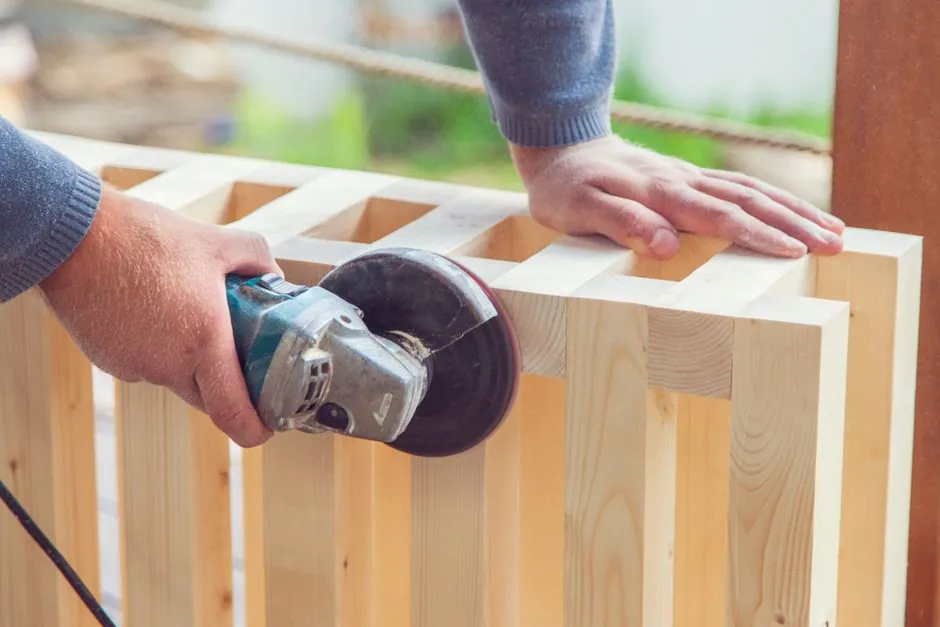
Floor grinder selection for concrete work turns on three coupled choices: grinding width matched to project scale, head architecture matched to the finish target, and diamond bond hardness matched to measured substrate hardness [S1][S2][S4].
Walk-behind planetary and rotary units cover 150 to 300 m² per day under typical conditions, while propane-powered rotary grinders dominate open-air commercial and industrial slabs where three-phase power is unavailable [S2][S4].
Match Grinding Width to Project Scale First
Grinding width is the single spec that decides daily production rate, and Xtreme Polishing Systems splits the market into three bands: 18 to 22 in for residential garages, basements, and small patios, 25 to 30 in for auto shops, retail floors, and restaurants, and 32 in+ for big-box retail, distribution centers, and aircraft hangars [S1].
Undersizing costs labour days per month; oversizing blocks doorway access on residential sites and inflates capital cost without a payback on smaller slabs [S1]. For home-renovation hire fleets, the PG 450 (best all-round residential unit) and PG 280 (compact, simpler small-job option) are the two consistent picks cited by UK rental suppliers [S3].
Substrate Technology's Prep/Master line maps similarly: 2418 and 2420 cover mid-to-large commercial rotary work, 2807 and 3030 step up for mid-to-large commercial and small industrial, and 4430 targets large commercial and industrial slabs [S2].
Planetary vs Rotary Head Architecture
Planetary grinders carry three or four counter-rotating heads and produce a swirl-free, flat finish at 1800 RPM capability in compact models, making them the default for concrete polishing and fine finishing [S1].
Rotary (direct-drive) grinders run one or two heads in a single direction and deliver higher aggression for thick coating removal (epoxy, mastic, urethane) at the cost of greater operator effort and a less uniform scratch pattern [S1][S2]. Prep/Master Jr, Sr, 2418, 2420, 2807, 3030, and 4430 are all rotary units in Substrate Technology's catalogue, while the Concrete Genie, Genie X550, Baby Mammoth, Mammoth, and Peanut Mammoth span planetary and heavy-duty planetary configurations from Xtreme Polishing Systems [S1][S2].
Selection rule grounded in the research: spec planetary when the deliverable is a polish or a sealed finish, spec rotary when the deliverable is coating or adhesive removal, and recognise that PCD (polycrystalline diamond) segments are the standard consumable for stripping epoxy and mastics [S2].
Diamond Bond, Grit Sequence, and Substrate Hardness
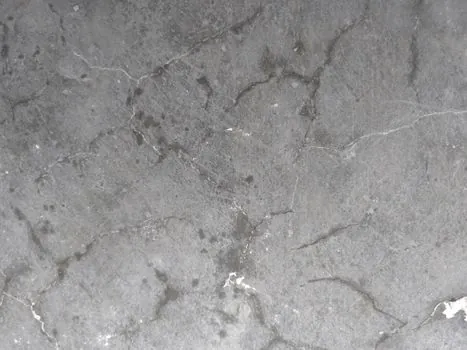
Tyrolit Construction's concrete grinding guide defines a four-stage grit progression: 16 to 30 grit for initial cut, 40 to 60 for levelling, 80 to 120 for refinement, and 400 to 3000 grit for polished gloss, with skipping stages leaving visible scratches that cost extra passes [S4].
Bond selection is driven by a rebound hammer reading on the slab: values below 25 indicate soft concrete requiring soft-bond diamonds, while values above 45 require hard-bond diamonds to prevent stalling, glazing, and premature wear [S4]. Coarse 16-grit segments are also the correct starting point when removing paint, because paint layers create heat that destroys finer diamond matrices [S4].
Contamination rules apply before any grinding pass: oil stains up to 6 mm deep need chemical degreasing to stop glazing, adhesive residues need solvent treatment plus scraping (otherwise grinding efficiency drops 25% or more), and structural cracks wider than 2 mm or any hollow-sounding delamination must be repaired before the machine rolls [S4]. A floor grinder paired to the wrong bond on contaminated concrete is the most expensive way to burn through tooling budgets.
Power Source and Site Constraints
Single-phase 220V powers the residential and light-commercial planetary models (Concrete Genie, Genie X550), three-phase 220V powers industrial four-head planetary units such as the Mammoth, and propane powers most rotary commercial grinders including the Prep/Master Jr, Sr, 2418, 2807, 3030, and 4430 [S1][S2].
Propane eliminates trailing cables and lets crews work on open slabs without site power, which is why most rental fleets and large-area coating-removal contractors default to propane rotary units [S2]. The trade-off is ventilation: indoor propane work needs a risk assessment and usually an electric alternative, which is where three-phase 380 to 480 V industrial planetary grinders take over on warehouse retrofits.
For polishing contractors moving between residential and small commercial sites, the Peanut Mammoth delivers double-gear-driven precision at 1800 RPM from a compact planetary footprint, fitting through standard doorways while still covering light-commercial square footage [S1].
Application Matrix: Epoxy Removal, Polishing, Levelling
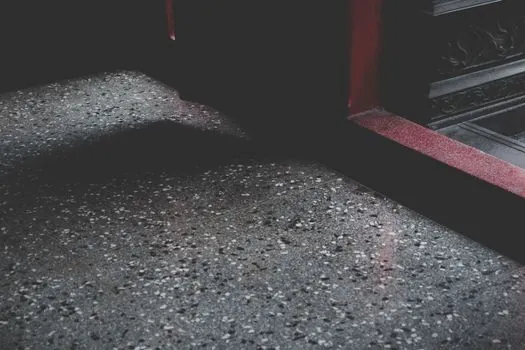
Application drives the machine: epoxy and coating removal calls for a rotary grinder with PCD segments, concrete polishing calls for a planetary grinder with the 16 to 3000 grit sequence, surface levelling and profiling sits between the two and tolerates either architecture, and terrazzo and stone restoration typically uses finer-bond planetary setups to preserve aggregate [S2].
Material removal in the first levelling pass is typically 2 to 5 mm, and a 5 to 10 mm height variation across a 10-metre span is the threshold at which foot traffic starts concentrating on high spots and cleaning equipment loses effectiveness [S4]. A 72-hour drying window after cleaning, rain, or moisture remediation is the standard pre-grind waiting period, verified with calcium chloride tests or electronic moisture meters [S4].
For contractors working around slab openings and conduit runs, the adjacent concrete groove cutter specs for electrical conduit routing article maps blade diameter and depth bands for the channel-cutting step that usually follows initial floor grinding on commercial fit-outs. Where floor prep meets wall chasing for HVAC or plumbing, the HVAC wall chaser selection reference covers dust-controlled chasing geometry.
Selection Criteria Summary Table
Decision matrix from the research: residential/garage work under 100 m² selects 18 to 22 in planetary single-phase 220V (Concrete Genie, PG 280, PG 450) with a soft to medium bond diamond, while 100 to 500 m² commercial spaces select 25 to 30 in planetary or propane rotary (Baby Mammoth, Prep/Master 2418/2420) with a medium bond, and 500 m²+ industrial slabs select 32 in+ propane rotary or three-phase planetary (Mammoth, Prep/Master 3030/4430) with a bond matched to rebound hammer readings above or below 40 [S1][S2][S4].
Finish target is the tiebreaker: a rotary propane unit on a PCD tool set is the correct pick for stripping failed epoxy, while a planetary electric unit on the 16 to 3000 grit progression is the correct pick when the same slab is heading to a polished finish [S2][S4].
Common Selection Failures and Limits
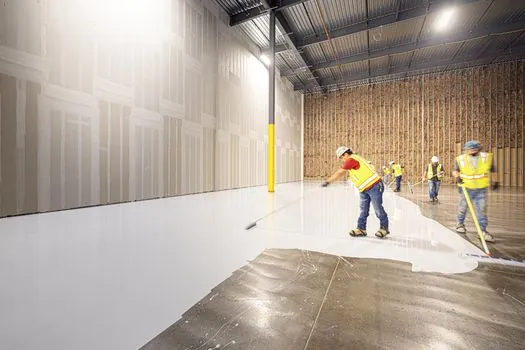
Four failure modes recur in the research: underspecifying width and losing labour days, overspecifying width and paying for production that never gets used, pushing too hard on a contaminated slab and glazing the diamonds, and skipping grit steps which leaves visible scratches that cost extra passes [S1][S4].
Hard limits worth noting: walk-behind productivity tops out around 300 m² per day, grinder selection does not compensate for structural defects wider than 2 mm or for hollow delamination, and any sealer or polish applied over a non-ground surface typically fails within weeks [S4]. Floor grinder selection is bounded by these physical limits, not by the marketing horsepower of any single model. For hand-held edge work and detail grinding adjacent to the main pass, an angle grinder fitted with a diamond cup wheel handles corners where the walk-behind cannot reach.
Trackable signals for the next planning cycle: rebound hammer reading on the target slab (must be taken before tooling is ordered), measured moisture content via calcium chloride or electronic meter (must be below the sealer or coating manufacturer's threshold), and confirmation of phase availability on site (single-phase 220V, three-phase 220V, or propane-only).
The underlying component specifications are covered under aerial work platform.