
For masonry substrates, a planetary or counter-rotary floor grinder in the 18 to 32 inch width band, paired with a soft-bond diamond segment and matched voltage (110V, 220V single-phase, or 480V three-phase), is the dominant spec pattern in current contractor guidance [S3][S5].
Masonry differs from steel or pure concrete in two ways that drive spec: the substrate is heterogeneous (mortar joints, brick, block, stone), and abrasive loading on the diamond segments is high because silicate dust fractures segments faster than calcium-silicate concrete fines. Selection therefore leans harder on bond hardness, segment shape, and dust extraction than on raw grinding pressure.
Grinder Class by Project Scale
Current contractor guidance segments floor grinders into three width bands tied to site footprint: 18 to 22 inch for residential and garage work, 25 to 30 inch for light commercial floors, and 32 inch and up for warehouse and hangar slabs [S3]. A 20 inch planetary unit typically fits a single van and a standard doorway, while a 32 inch four-head planetary with a 220V three-phase motor is built for continuous production on open slabs [S3]. For masonry restoration inside occupied buildings, the 18 to 22 inch class is the common pick because it pairs a HEPA dust extractor to a 110V or 220V single-phase outlet without requiring a three-phase drop.
Width alone does not decide productivity. Head count, head rotation direction, and gear-versus-belt drive decide cut aggressiveness. A 25 inch single-head rotary cuts deeper per pass than a 25 inch triple-head planetary running the same diamond tool, but the planetary leaves a flatter, swirl-free finish suitable for sealers and polishes [S1][S5].
Planetary vs. Counter-Rotary vs. Rotary Heads
Three head architectures show up in current floor grinder spec sheets: planetary with three or four counter-rotating heads for polishing and fine grinding, counter-rotary gear-driven for surface preparation, and single-direction rotary for aggressive coating removal [S3][S5]. ASCC guidance published on 2025-01-23 states that most true concrete polishing machines are planetary, while most surface preparation machines are counter-rotary gear-driven, and the two can be cross-used with degraded results [S5].
For masonry, the head choice splits by task. Removal of thin-set, epoxy, urethane, or mastic over concrete-masonry-unit (CMU) walls and floors is faster on a counter-rotary or single-direction rotary at 400 to 800 rpm head speed, because the single direction of cut pulls the segment into the coating. Honing and polishing masonry to a 400 to 1500 grit equivalent requires a planetary at 1500 to 1800 rpm so the swirl pattern cancels out across three or four heads [S3].
Power, Voltage, and Phase Matching
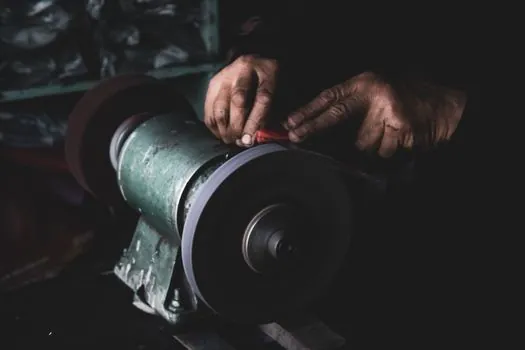
Voltage class is the most common spec error in floor grinder selection. Residential and small commercial sites in North America deliver 110V at 15 to 20A or 220V single-phase at 30A; warehouse and industrial sites deliver 220V or 480V three-phase at 30 to 60A [S3]. A 32 inch four-head planetary with a three-phase 220V motor will not run on a 110V site supply, and step-up transformers sized for the motor's full-load amps add cost that often exceeds the grinder price difference between classes [S3].
For masonry work inside existing buildings, the practical floor grinder is a 20 to 25 inch planetary on 220V single-phase, drawing roughly 15 to 25A under load. Propane and battery-electric platforms exist for sites without grid power, but their grinding head width is currently limited to about 30 inch in production equipment as of 2025-01-23 [S5].
Diamond Bond and Segment Selection for Masonry
Bond hardness controls cut rate and segment life. Hard-bond diamond segments retain abrasive longer but cut slowly; soft-bond segments expose fresh abrasive fast and wear quicker, which is preferred on hard, low-aggregate substrates. Masonry, especially CMU and brick, behaves more like a hard, abrasive substrate than like structural concrete, so soft to medium bonds are typically specified for stock removal, and harder bonds are reserved for polishing steps where segment glazing is a risk [S1][S3].
Segment shape also matters. Round-segment tools excel at coating removal because the leading edge contacts the surface at a low angle. Bar-segment and arrow-segment tools cut faster on hard masonry but leave a coarser scratch pattern that needs a follow-up pass with a finer grit before any sealer is applied. For polishing masonry to a satin or gloss finish, resin-bond diamond pads in 50, 100, 200, 400, 800, and 1500 grit are run sequentially under a planetary head [S3][S4].
Dust Control, Wet vs. Dry, and Operator Safety
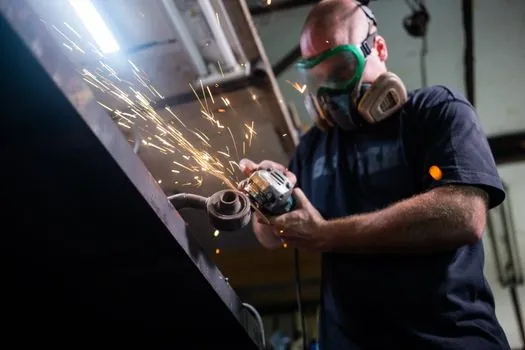
Silica-bearing dust from masonry grinding is regulated as a respirable crystalline silica exposure hazard, and dry grinding without a HEPA dust extractor violates current OSHA 1926.1153 construction silica rules in the United States, which is why nearly every floor grinder spec sheet published since 2023 lists an integrated or paired dust port sized for a HEPA extractor [S1][S4]. Wet grinding suppresses dust at the source but adds slurry management and a slip hazard on the freshly ground surface; it is preferred for indoor masonry restoration where dust capture is impractical [S4].
For floor grinder selection for concrete work, the same dust-control logic applies, but masonry's higher silicate content means dust extractors must be sized to at least 150 cubic feet per minute of airflow per 20 inch of grinding width to keep the filter from loading during a typical 500 square foot prep pass. A 25 inch planetary paired with a 350 CFM HEPA extractor is a common production pairing; an 18 inch handheld or edger needs a smaller 150 CFM unit but still requires a M-class or H-class filter to meet the construction silica standard.
Selection Criteria Compared Across Grinder Classes
Side-by-side on four decision criteria drawn from the research: (1) grinding width 18 to 22 inch suits masonry repair and small restoration, 25 to 30 inch suits light commercial, 32 inch and up suits warehouse slabs; (2) head type planetary for polish and fine grind, counter-rotary for surface prep, single-direction rotary for coating strip; (3) voltage 110V or 220V single-phase for the 18 to 22 inch class, 220V single-phase or three-phase for the 25 to 30 inch class, 220V or 480V three-phase for the 32 inch and up class; (4) typical application masonry restoration and prep, light commercial honing, and industrial polish respectively [S1][S3][S5].
The floor grinder spec map for steel construction is a useful reference for the head and width logic, but masonry and steel substrates invert the bond choice: masonry wants a soft to medium bond to keep the segment cutting, while steel substrate work uses a different tooling family altogether. For road maintenance grinding, the priority is high production rate over large open areas with a heavy rotary head, which is a poor match for masonry's tolerance for finer finish and dust-sensitive indoor sites.
Who a Floor Grinder is For, and Who Should Rent Instead

A purchased floor grinder pays back for contractors running 2000 or more square feet of prep or polish per week, or for masonry restoration specialists who need the machine on a truck for emergency callouts [S3]. For one-off garage coatings, a 250 to 500 square foot patio, or a single bathroom tile-mastic removal, rental is the rational choice because owning a 150 to 400 pound planetary brings storage, transport, and maintenance overhead that the job cannot recover.
Handheld angle grinders with diamond cup wheels are not a substitute for a floor grinder on masonry floors: they are correct for vertical joints, edge detail, and small patching, but they cannot hold flatness across a 100 square foot slab. The encyclopedia entry on angle grinders covers the handheld class; the floor grinder encyclopedia page covers the stand-up planetary and rotary class discussed here.
Limitations and Common Failure Modes
Floor grinder selection fails most often at three points: wrong voltage for the site supply, wrong bond for the substrate hardness, and undersized dust extraction. Each shows up as a slow cut, glazed segments, or an OSHA silica exceedance, respectively. A fourth failure mode is operator skill: a 32 inch four-head planetary at 1800 rpm will chatter and hog out soft mortar joints if the operator cannot keep the head flat, which is why ASCC recommends starting on a planetary for most new polishing contractors and stepping up to counter-rotary only after the operator has run 50 hours or more [S3][S5].
Masonry joints are the soft phase in any substrate. Running a 32 inch rotary on an old brick floor without lowering head pressure and slowing feed rate will dish out the mortar and leave the brick faces high, which is the opposite of the desired flat profile. For such substrates, the encyclopedia entry on masonry work is a useful cross-reference for the substrate side, while the encyclopedia entry on fettling grinders covers the heavier cleaning and casting-removal class, which is the wrong tool for floor grinding but a useful reference for the abrasive-loading logic.
Track the next data point on 2026-Q4 contractor surveys for bond-versus-substrate guidance, and watch for a wave of 30 inch battery-electric planetary units entering the rental channel, both of which will sharpen the spec map for masonry restoration sites where three-phase power is unavailable.