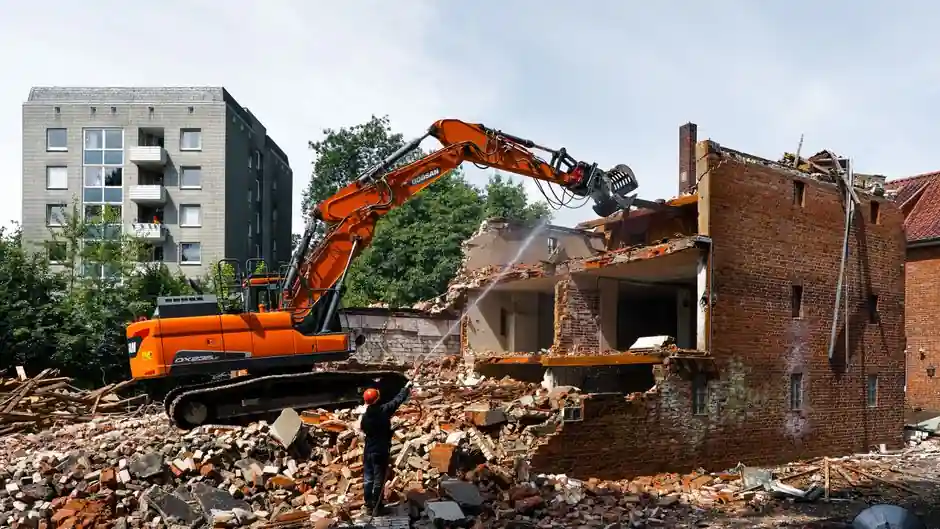
Floor grinders selected for demolition work must balance head geometry, machine mass, and diamond bond hardness against substrate condition; walk-behind units in the 80-100 kg class dominate concrete surface preparation and coating removal [S1][S2].
The Edco 2EC-NG-1.5 concrete floor grinder exemplifies the dual-disc configuration commonly used for surface preparation, leveling, and coating removal, with a power class suited to continuous slab work rather than edge detail [S2]. For heavier breaking of thick concrete and foundations, complementary breakers such as the Hilti TE 1000 AVR and TE 3000 AVR are paired with the grinder on the same demolition spread, as listed in current rental fleets [S2].
Matching Machine Class to Demolition Substrate
Walk-behind floor grinders apply consistent downward pressure across the tool head, and the 80-100 kg mass band gives even grit contact on concrete slabs, which directly determines whether coatings are stripped cleanly in a single pass [S1]. Lighter handheld machines are unsuitable for full-coverage slab demolition; angle grinders and die grinders cover edge work and rebar exposure but cannot sustain the 100-200 m²/hour coverage rate that walk-behind units deliver on warehouse-scale slabs [S3].
Substrate assessment must precede machine selection: a 200 m² warehouse that skips surface inspection typically loses 4-6 hours to rework when old coatings or cracks wider than 3 mm are encountered mid-pass, so mass class is chosen after, not before, the floor survey [S1]. For detailed comparison with interior finishing duty, see the interior finishing spec map which separates scale of work from the demolition profile covered here.
Diamond Bond and Opening Grit by Floor Condition
Opening grit selection is driven by coating and wear state: fresh uncoated concrete starts at 80 grit metal-bond diamond, heavily worn floors require 40 grit, and old epoxy or paint demands 16-30 grit resin-bonded diamond to strip the coating before any metal bond touches the slab [S1]. Resin-bond tooling is the correct first step on coated demolition floors because it loads with stripped paint and prevents the metal-bond segments from glazing on contaminated concrete.
The 16-30 grit resin-bond range covers the bulk of coating-removal demolition work; below 16 grit the cut rate climbs but segment cost rises disproportionately, and above 30 grit the diamond cannot penetrate aged epoxy without doubling pass count. Floor grinder selection for concrete maps the same bond and width logic when the substrate is bare structural slab rather than coated demolition surface.
Dust Extraction Class and Compliance Floor
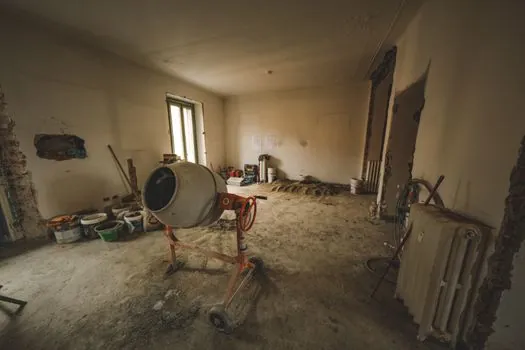
Australian Code of Practice 2022 mandates either continuous water delivery or dust collection rated M-Class or H-Class per AS/NZS 60335.2.69 during concrete grinding, and this is not a paperwork checkbox but a working-condition requirement [S1]. Without rated extraction, silica dust settles back onto the freshly ground surface, masks remaining swirl marks, and forces re-grinding of sections that would otherwise pass first inspection.
For demolition of coated slabs, H-Class extraction is the practical floor because lead-based paint and epoxy dusts sit above the M-Class threshold; under-spec'ing extraction on a 100 m² coated slab typically costs 2-3 hours of visibility-related rework per shift. Dust class also interacts with demolition hammer selection on the same site, since the TE 1000 AVR and TE 3000 AVR breakers generate coarse dust that the grinder extraction cannot capture.
Head Geometry: Dual-Disc vs Planetary vs Single-Disc
Dual-disc walk-behind heads, as fitted to the Edco 2EC-NG-1.5, deliver consistent grinding results on flat slabs and are the default for demolition coating removal [S2]. Planetary heads, with three or more satellite discs rotating against a driven sun gear, expose fresh diamond faster and are preferred when the operator needs aggressive cut on hard aggregate, at the cost of higher tooling cost per square metre.
Single-disc units under 50 kg are restricted to edge work and small-room preparation; their lower mass prevents the consistent head pressure that coating-stripping demands, and they are not interchangeable with the dual-disc class for full-slab demolition. For comparison against the smaller finishing category, the interior finishing spec map details the mass threshold below which single-disc geometry becomes the right answer.
Comparison: Grinder Type vs Demolition Criteria

Four grinder classes compete for demolition duty and the decision splits on mass, head count, primary output, and dust class: dual-disc walk-behind (80-100 kg, 2 heads, coating removal and leveling, M/H extraction), planetary walk-behind (100-150 kg, 3+ heads, hard aggregate and glue removal, H extraction), single-disc edge grinder (40-50 kg, 1 head, edge detail and small rooms, M extraction), and handheld angle grinder (4-7 kg, 1 disc, rebar and joint cutting, no integrated extraction). [S2]
On a coated warehouse slab the dual-disc class wins on cost per square metre; on uncoated hard aggregate the planetary class wins on cut rate despite higher tooling spend; single-disc and handheld classes are supplements, not primary demolition tools, because their coverage rate falls below 30 m²/hour on continuous slab work [S1][S3].
Pairing Grinders with Breakers on Demolition Spreads
Floor grinders cover surface preparation and coating removal; breakers cover slab thickness reduction and foundation demolition, and the two tool classes are deployed sequentially rather than as substitutes [S2]. The Hilti TE 1000 AVR suits concrete and masonry demolition with its Active Vibration Reduction system, while the TE 3000 AVR is the heavier unit for thick concrete and foundations where higher impact energy overrides the vibration-control weighting [S2].
Active Vibration Reduction on both TE 1000 and TE 3000 platforms is the relevant ergonomic spec for full-shift demolition, since uncushioned breakers limit operator exposure to roughly 2-3 hours per shift under typical HAVS thresholds, a constraint that does not apply to the floor grinder but does govern the breaker count on site.
When a Floor Grinder is the Wrong Primary Tool
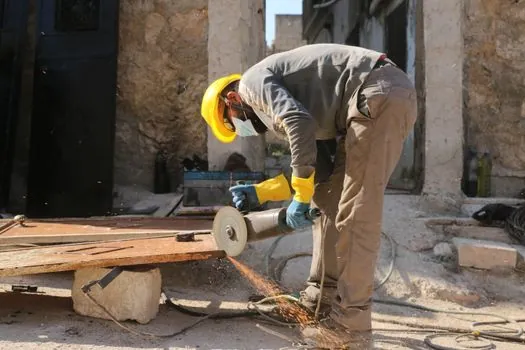
Floor grinders are not the right primary tool for structural slab demolition, foundation breaking, or rebar cutting; they are surface-preparation machines, and forcing them into breaking duty burns segments and motor windings without productive cut [S2]. The decision boundary sits at coating thickness above roughly 6 mm or substrate hardness above C50/60: beyond those limits, switch to a breaker for material removal and bring the grinder back in for surface finish.
Handheld angle grinders are also not interchangeable with floor grinders for slab work, despite overlapping disc sizes, because their 4-7 kg mass cannot sustain head pressure on horizontal concrete; they remain the correct tool for vertical cutting, rebar trimming, and joint detail where a walk-behind cannot physically reach.
Selection Checklist and Trackable Signals
A demolition floor-grinder spec should pin down: mass class (80-100 kg minimum for slab work), head count (dual-disc default, planetary for hard aggregate), opening grit by coating state (16-30 grit resin for old coatings, 40 grit metal for bare worn slab, 80 grit metal for fresh concrete), dust class (H-Class for coated slabs, M-Class minimum for bare concrete), and a paired breaker from the TE 1000/3000 AVR class for thickness reduction [S1][S2].
Trackable next signals: AS/NZS 60335.2.69 dust-class enforcement on coated slab sites, and the uptake of H-Class extractors as standard fitment rather than optional accessories on rental fleet dual-disc units. Cross-reference the concrete spec map when the substrate shifts from coated demolition surface to bare structural slab.