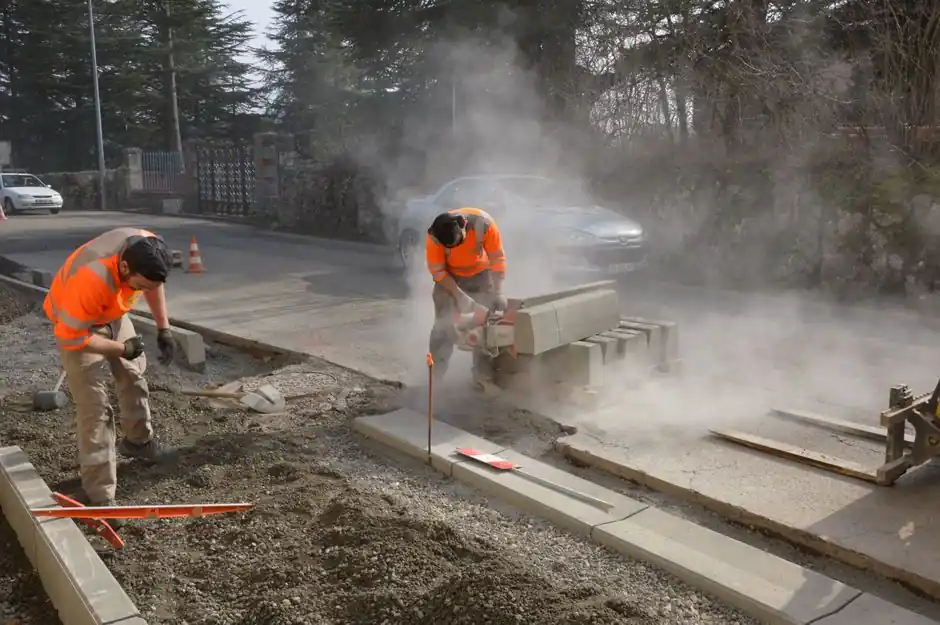
Road-maintenance crews specifying a floor grinder in 2026 should start with four numbers: slab area, removal depth, power phase available on site, and concrete hardness (Mohs or PSI). The first three decide machine class, the fourth decides diamond bond [S1][S4].
For continuous slab work above roughly 1,000 sqm, walk-behind units stop being economical; ride-on or remote-controlled planetary grinders (chassis mass 500 kg to over 1,500 kg) take over with automated tracking and counter-rotating heads that keep lateral force balanced and cut wave-pattern risk [S3].
Matching Grinder Size to Slab Area
Grinding width is the first hard spec to lock in because it sets daily production rate. Residential and garage-class work fits 18-22 inch single-head walk-behinds that pass through a standard doorway and run on single-phase 220 V [S2].
Medium commercial slabs (auto shops, retail, restaurant floors) sit in the 25-30 inch class, typically planetary with magnetic grinding heads counter-rotating inside an aluminum gearbox [S2]. Industrial warehouse, distribution-center, and hangar work above 32 inch moves to three-phase 220 V four-head planetary machines designed for continuous high-output run time [S2]. A 2026 buyer's guide groups its recommended line as 880, 850Pro, 850, 800, 720Pro, 720, and 630 mm working widths at 220 V / 380 V optional supply [S4].
Planetary vs Rotary Head Systems
Planetary grinders use three or four counter-rotating heads to deliver a swirl-free, flat finish and are the default choice when the end goal is polish or fine profiling [S2]. A compact planetary in the Peanut-class runs double-gear-driven at 1,800 RPM, which is enough to handle both grinding and polishing on residential and light-commercial slabs [S2].
Rotary (direct-drive) grinders spin one or two heads in a single direction, bite harder into thick epoxy, mastic, and urethane coatings, and demand more operator force to control [S1][S2]. Prep/Master-class propane rotaries from Substrate Technology (Jr, Sr, 2807, 2420, 2418, 3030, 4430) cover small-residential up to large commercial removal jobs where aggression beats finesse [S1]. For a deeper comparison of head mechanics and finish outcomes, see the floor grinder selection guide.
Power, Phase, and Site Constraints
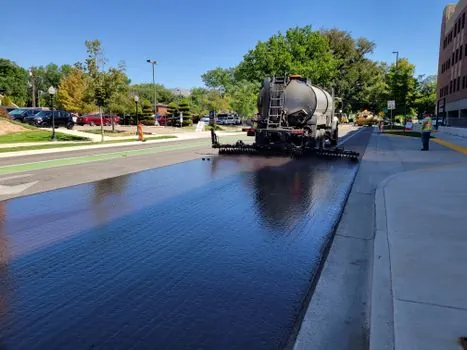
Single-phase 220 V is the entry ticket for residential grinders; three-phase 220 V or 380 V industrial supply unlocks the 32 inch-plus four-head planetary class and most remote-controlled units [S2][S4]. Propane rotaries free the crew from site power but add ventilation planning indoors and emissions control on tunnel or pit work [S1].
For slab grinding on the open road or in an airport apron, the practical envelope is dust extraction first, then power. Dry grinding is the default and requires an industrial vacuum matched in airflow to the grinder head width; wet grinding is reserved for niche hard-concrete profiling and adds slurry handling [S4].
Diamond Tooling and Bond Selection
A high-performance grinder is only as good as its diamonds. Wrong bond hardness for the slab produces slow cutting, glazing, or excessive segment wear; the 2026 industry-knowledge reference flags this as the single most common cause of underperforming grinding fleets [S6].
Match a soft bond on hard, dense concrete and a hard bond on soft, abrasive concrete; PCD (polycrystalline diamond) segments are specified for thick epoxy, mastic, and urethane removal where metal-bond diamonds glaze over [S1][S6]. Resin polishing pads step in after metal-bond grinding to bring the surface to the target gloss and CSP (concrete surface profile) rating before any coating is laid [S4].
Ride-On and Remote-Controlled Class
When the layout runs more than 1,000 sqm of continuous slab, ride-on or remote-controlled floor grinders outperform walk-behinds on three measurable axes: daily productivity, operator fatigue, and floor flatness consistency [S3]. Heavy steel chassis (500 kg to over 1,500 kg) convert structural mass into steady down-pressure, eliminating the bounce and skid that cause wave patterns on ultra-hard slabs [S3].
Gear-driven planetary systems give more consistent grinding performance than belt-driven machines in high-heat site conditions, where belt slippage wrecks cut uniformity [S3]. Seated or wireless-remote operation lets one operator manage a 32 inch-plus working width for full shifts, which is where labor-cost math finally flips in favor of capital cost. For crews also cutting expansion joints or grooved channels into the same pavement, the concrete groove cutter selection for tunnel construction 2026 spec map covers compatible cutting tools.
When a Floor Grinder Is the Wrong Tool
Floor grinders are designed for flat or near-flat horizontal slabs. They are the wrong tool for deep joint rehabilitation, full-depth pavement repair, or milling asphalt at depth, where a planer or cold milling machine is the correct attachment class. Specifying a floor grinder to remove more than about 5-6 mm of material in a single pass is also outside its design envelope and will overload the diamond segments and the drive train. [S3]
If the task is texture restoration on a road deck (diamond grinding for skid resistance) rather than coating removal, the correct pass is a purpose-built diamond grinder or groover, not a planetary polisher. For structural demolition adjacent to a road slab, the rotary drilling rig selection for urban infrastructure guide covers the heavier cutting class.
Procurement Checklist for August 2026
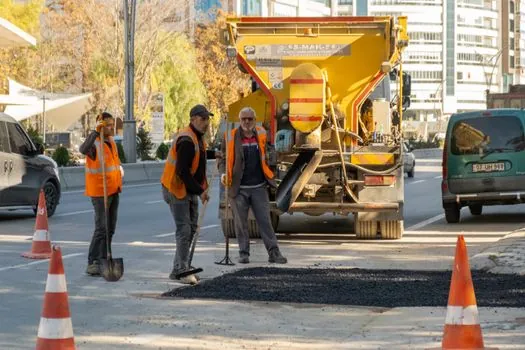
Send the vendor floor area in square meters, concrete hardness test result, coating thickness to remove, target CSP profile, voltage and phase available, and dust-extraction plan before requesting a quote [S4]. Match the grinder and vacuum capacity in a single package, and order diamond tools, filters, and hose spares with the unit so the first shift is productive [S4].
Track two signals into Q4 2026: OEM release notes for the next 880-class remote-controlled planetary platform, and any revision to the ride-on productivity thresholds as more than 1,000 sqm jobs become routine on US and EU highway resurfacing programs [S3][S4].
Spec-level background on the components involved: road roller, and angle grinder.