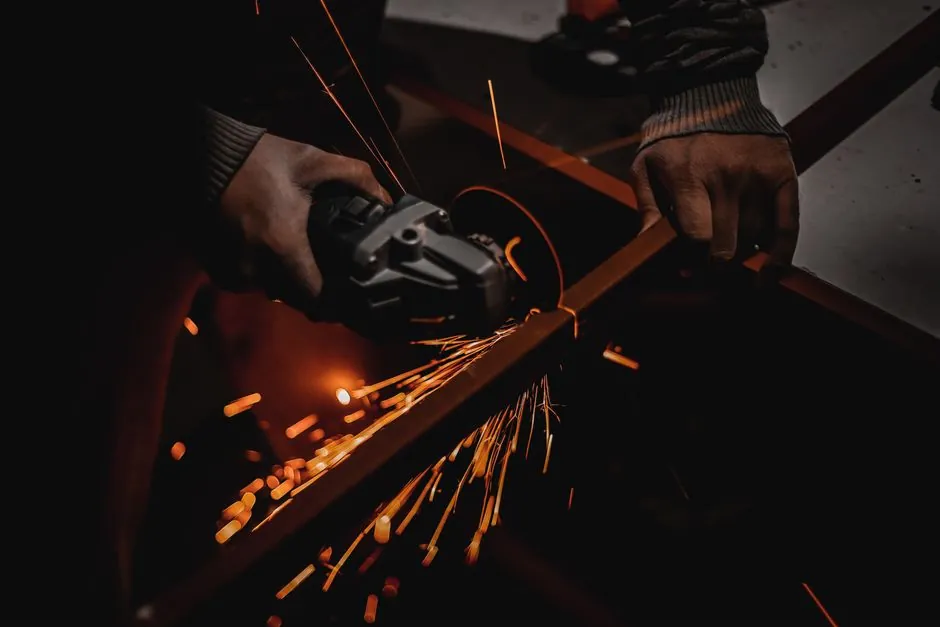
Steel-structure fab shops and erectors that pour or finish their own composite metal deck slabs in 2026 typically spec 32 inch or larger gear-driven planetary floor grinders running on 480V three-phase power, while confined welder cells and mezzanine prep fall back to 18-22 inch single-phase machines [S1][S3].
The decision driver on a steel job is rarely the grinder brand; it is matching grinding width, head kinematics, and supply voltage to the slab area, the coating system being removed, and the floor flatness (FF/FL) number the structural engineer has called out on the metal deck pour [S1][S3].
Match Grinding Width to Slab Area on Composite Deck
Three width bands dominate steel-construction floor prep in 2026: 18-22 inch for single-car and welder-bay pours, 25-30 inch for auto-shop and light-commercial slabs, and 32 inch and above for warehouse, hangar, and distribution-center decks [S1]. A walk-behind stops making economic sense above roughly 1,000 sqm, where ride-on or remote-controlled planetary platforms take over and cut hand-on hours sharply [S3]. For an interior steel-frame office building with a 600-800 sqm slab per floor, the 25-30 inch mid-band remains the productivity sweet spot [S1].
On metal deck slabs, the 32 inch class brings a side benefit beyond raw coverage: wider heads let the operator span across deck flute crowns in a single pass, reducing the risk of leaving un-ground ridges between flute valleys that later telegraph through thin-film coatings [S1]. Crews working on retrofit decks in occupied steel buildings still keep one 18-22 inch unit on the truck for elevator lobbies, stair cores, and MEP riser rooms where the bigger machine physically will not pass [S1].
Planetary vs. Rotary Heads for Weld-Slag and Coating Removal
Planetary grinders use three or four counter-rotating heads driven through a gear train, produce a swirl-free flat finish, and are easier to control on long deck runs; most modern polishing and fine-finishing work runs through planetary action [S1]. Rotary (direct-drive) machines use one or two heads spinning in a single direction, are more aggressive on thick coatings such as epoxy, mastic, and urethane, but demand more operator strength and leave a more pronounced scratch pattern [S1].
For steel-construction surface prep the practical split is straightforward: planetary for new metal deck slabs and any polish-grade finish, rotary only when a legacy coating has to come off before re-pour or topping installation [S1]. Gear-driven planetary systems, the kind using a heavy steel chassis in the 500 kg to over 1,500 kg range, hold cutting depth more consistently than belt-driven units in high-ambient-temperature yards and on ultra-hard concrete toppings [S3]. A mid-size four-head planetary on 220V three-phase, running roughly 1,800 RPM, is the default iron on most steel-erection site prep crews in 2026 [S1].
Power Supply: 110V, 220V, and 480V on a Steel Job Site
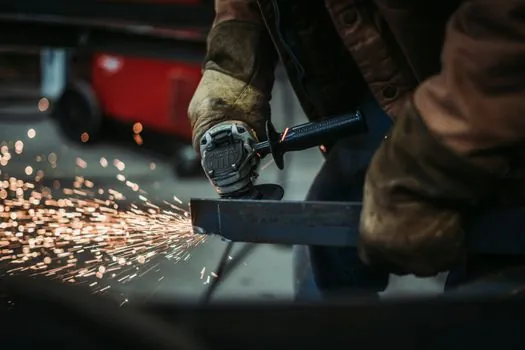
Single-phase 110V units cover the residential and small-garage band, single-phase 220V (e.g. the Genie X550 class) handles aggressive coating removal in the same compact category, and three-phase 220V or 480V drives the 32 inch and larger industrial machines such as the Mammoth four-head planetary [S1]. Where a structural steel site has only 480V three-phase available at the temp power panel, the crew is essentially forced into the industrial 32 inch class; tapping a single-phase 220V from a 480V three-phase source requires a step-down transformer and is rarely worth the rigging cost on a short prep campaign [S1].
On a 480V-dominated industrial site, picking a 25-30 inch mid-band machine that can also accept 220V three-phase gives the contractor the option to redeploy to a smaller commercial job without a separate trailer [S1]. Crews that stay on the 18-22 inch band can almost always run on existing 110V or 220V site outlets, with no generator upgrade [S1].
Head Pressure, Mass, and Floor Flatness Tolerance
Ride-on and remote-controlled planetary grinders convert heavy structural chassis weight, typically 500 kg to over 1,500 kg, directly into steady down-pressure on the diamond segments, preventing the bounce and skid that show up as wave patterns on a metal deck slab [S3]. Counter-rotating heads balance lateral forces and eliminate the drift walk-behind machines exhibit over long passes, which is the single biggest contributor to poor FF numbers on a structural slab [S3].
For steel-construction slabs the typical floor flatness target is FF50/FL35 for warehouse decks and FF75/FL50 or tighter for big-box retail and distribution centers using defined-traffic aisles, with the higher number demanding a heavier, more rigid grinder platform to hold tolerance [S3]. A lightweight 18-22 inch residential grinder simply cannot deliver the down-pressure consistency required at FF50 and above, and most spec writers reject its use on structural deck pours above roughly 200 sqm [S1][S3].
Diamond Tooling, Dust Extraction, and Site Safety
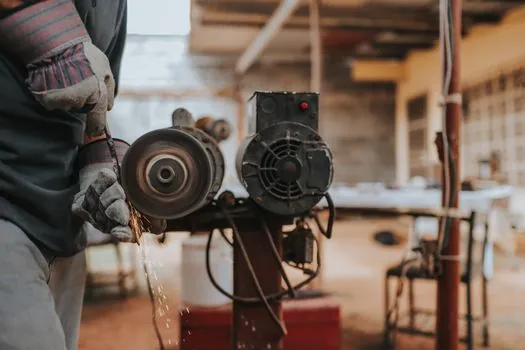
Selecting the correct diamond tooling and machine configuration improves grinding efficiency, extends tool life, and delivers better surface preparation results, with metal-bond diamonds for hard concrete toppings and resin-bond for the final polish steps [S3]. Integrated dust extraction systems, paired with industrial dust extractors, are no longer optional on structural steel sites because the alternative is silica-bearing slurry migrating onto freshly primed structural steel and contaminating weld prep surfaces [S3].
For confined steel-construction cells, handheld angle grinder work still handles bracket and anchor-bolt cleanup that the floor grinder physically cannot reach, with disc speeds typically in the 8,000-12,000 RPM range on standard 110mm and 125mm cups [S5]. The same dust-collection discipline applies: a 32 inch planetary without a HEPA-rated extractor is a specification gap that will show up in the punch-list walk [S3].
Criteria-Based Comparison: Three Grinder Bands on a Steel Job
On a structural steel deck pour, the 18-22 inch single-phase band scores high on maneuverability and low on productivity and floor flatness, the 25-30 inch three-phase band scores high on versatility and mid on productivity, and the 32 inch and above industrial planetary band scores high on productivity and flatness but low on maneuverability [S1][S3]. For slab area, the crossover from walk-behind to ride-on sits at roughly 1,000 sqm, and for power supply, the 480V three-phase site forces the 32 inch class while a 110V-only site forces the 18-22 inch class [S1][S3]. A practical selection rule: spec the 25-30 inch class as the default for new steel-frame commercial buildings up to about 800 sqm per floor, step up to the 32 inch+ ride-on for warehouse and hangar slabs above 1,000 sqm, and keep one 18-22 inch unit reserved for welder bays, stair cores, and MEP rooms [S1][S3].
Common Failure Modes and Constraints on Steel Decks
Undersizing the grinder on a typical project costs days of extra labor per month, and oversizing makes the machine unusable in tight residential or occupied-steel-building spaces while driving up capital cost with no real return [S1]. Belt-driven planetary systems lose grinding consistency in high-ambient-temperature yards, a real constraint in Middle East and Gulf steel-construction sites, where gear-driven planetary is the safer default [S3]. A grinder chosen for coating removal will often over-cut the metal deck surface profile, forcing an extra polishing pass before the specified coating system can be applied [S1].
For deeper slab work, crews that already own a floor grinder platform also need to understand the construction toolchain around it, from groove cutting on control joints to the construction tools used for surface prep, edge work, and finishing, since the wrong pairing in any one of those steps will offset the productivity gain the grinder itself delivers. Crews chasing FF numbers on composite deck should also confirm the diamond bond hardness against the concrete topping before the pour, because a soft-bond wheel on hard deck concrete burns through tooling in a single shift.
For follow-up reading on the concrete-side width and bond trade-offs that also apply to a steel deck pour, see the floor grinder selection map for concrete slabs, head types, and diamond bond, and for the joint-cutting tooling that has to match the grinder's surface profile on metal deck control joints, see the concrete groove cutter spec map for tunnel and structural slab work. Two trackable signals to watch in the next procurement cycle: tighter silica-dust enforcement on structural steel sites, which will force HEPA extraction on every 18-22 inch walk-behind, and more 480V three-phase temp-power panels arriving on steel-erection projects, which will push the default machine class from 25-30 inch to 32 inch+.