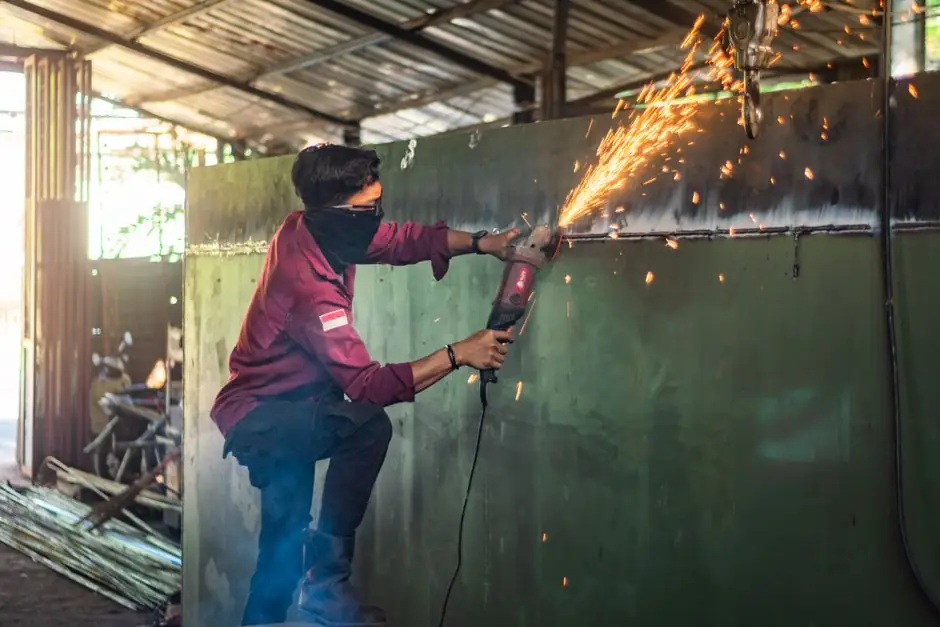
Floor grinders used for extended shifts should be selected against measured hand-arm vibration rather than engine power alone, with an A(8) below 2.5 m/s² requiring no further measures and an A(8) of 2.5–5.0 m/s² requiring further measures [S7].
A comfortable floor grinder combines a low vibration reading, manageable mass, effective isolation, and a workable disc system; a power rating cannot predict the vibration reaching the operator's hands.
What Vibration Measurements Mean for Operators
A(8) below 2.5 m/s² is below the action level, while A(8) from 2.5 to 5.0 m/s² reaches the action level and requires further risk-management measures [S7]. The action value is therefore a screening threshold, not a target for comfortable long-duration work.
For long grinding sessions, request the machine's declared vibration value and test method, then confirm the working configuration. Accessory diameter, abrasive type, pressure, grinding angle, and surface hardness can change the excitation transmitted to the handle [S1][S3]. The same model may also produce different results after wear or when a component becomes unbalanced.
Labelled vibration results are useful for comparing products, but they do not replace a task-specific exposure assessment. Surface-preparation guidance identifies acceleration, amplitude, and frequency as the principal vibration characteristics, all of which affect how strongly a machine is perceived by the operator [S3].
How to Compare Floor Grinder Vibration Controls
Vibration control options should be compared on at least four criteria: declared A(8), reduction at the operator contact point, machine mass or handling load, and compatibility with the production target.
That result matters because a lower acceleration reading does not automatically remove the dominant frequency responsible for the operator's sensation [S1].
For adjacent handheld grinding work, low HAVS performance, balanced construction, and ergonomic handling should remain separate selection criteria rather than being collapsed into one comfort claim [S5].
Mass, Balance, and Long-Session Fatigue

A low vibration value does not eliminate fatigue if the operator must support the full machine throughout the shift. Weight distribution, motor balance, handle position, and the operator's working posture determine how long a grinder can be controlled without excessive muscular effort [S3]. During sustained grinding, reduced grip quality or awkward wrist angles can increase fatigue even when the declared vibration reading is low.
Excessive vibration can also reduce surface consistency by destabilizing the tool, while worn rotating components can accelerate deterioration of machine parts [S3]. Preventive maintenance should therefore include inspection of rotating assemblies, drive components, isolation mounts, handles, and fasteners. Loose, clogged, or unevenly worn accessories can create additional vibration that was not present during the original acceptance test.
Concrete-floor production data provides a separate productivity reference. The HTC 420 and Scanmaskin 23 were reported to cover 150–200 m² per shift on medium-density concrete [S8]. This is an output reference, not a universal rate, because abrasive condition, concrete hardness, machine setup, and removal depth can materially change the result.
Where Floor Grinders and Angle Grinders Diverge
A floor grinder is a ride-on or walk-behind machine that applies rotating abrasive discs over broad concrete areas. An angle grinder is handheld and couples a small abrasive wheel to a powered spindle. The former places the operator's whole body near the work, while the latter concentrates vibration transmission through the hands and arms. [S5]
This distinction changes the assessment. Floor-grinder comfort depends on machine mass, vibration at the controls, posture, and the duration of repetitive passes. Handheld grinding depends more heavily on handle transmission, side-handle design, balance, and the operator's grip force. A Metabo example reported that an anti-vibration side handle reduced the vibration felt by an operator by up to 60%, a result specific to that example rather than a universal value for all angle grinders [S6].
A concrete vibrator is not a substitute for a grinder: it consolidates fresh concrete rather than removing a hardened surface layer. Its vibration transmission and operating position are different, so its comfort data should not be used to specify a grinding machine.
Accessory Choice Can Change Exposure
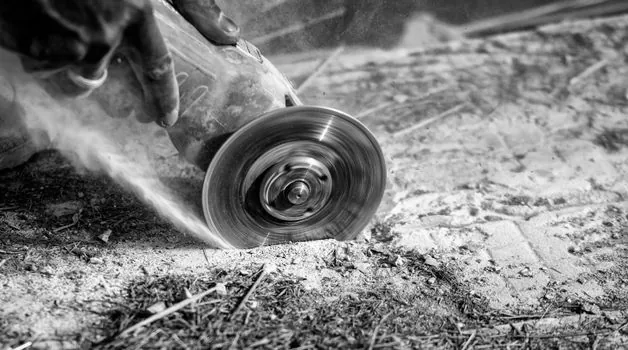
Tool geometry affects both production rate and operator exposure. In manual concrete surface grinding, a 6-inch cup wheel generated a minute peak noise level of 115 ± 5.3, compared with 112 ± 4.5 for a 5-inch wheel and 111 ± 5.4 for a 4-inch wheel [S2]. That study addresses sound rather than vibration, but it demonstrates that accessory geometry materially changes the operating load and should not be assumed equivalent across disc sizes.
For vibration control, specify the complete operating set: machine, disc diameter, abrasive grade, segment count, working pressure, and travel rate. Compare A(8) values only when the test configuration and duration basis are equivalent. If they are not, request separate data or run a representative trial on the actual concrete.
Operators also need training that matches the machine. Correct pressure, stance, wheel replacement, and maintenance reduce avoidable shock and improve control, while adjustable grips and handles can reduce posture stress [S3]. Comfort is an operating system, not a property of the motor alone.
Health Effects, Limits, and Failure Modes
Prolonged floor-grinder use exposes the operator to vibration that can contribute to whitefinger disease, also known as Raynaud's phenomenon [S4]. Hand-Arm Vibration Syndrome affects the nerves, blood vessels, and muscles of the hands and arms, with tingling, numbness, and reduced grip strength listed as warning symptoms [S3]. Whole-body vibration can also contribute to back pain, poor posture, and musculoskeletal strain [S3].
The principal failure modes are identifiable. An imbalanced rotor creates periodic force; worn bearings or damaged mounts transmit more shock; aggressive pressure raises the contact force; poor abrasive loading causes chatter; and prolonged tool use without scheduled recovery extends daily exposure. None of these conditions should be accepted merely because the machine once passed a specification test.
The key limitation is that the available evidence cannot produce one universal floor-grinder vibration limit for comfort. Workplace measurements were substantially higher than laboratory measurements, and laboratory rankings differed from workplace rankings in the portable-grinder study [S1]. ISO 28927-1 (2009) was used for the laboratory simulation, but the study found it doubtful for estimating workplace grinder exposure or predicting workplace acceleration rankings [S1].
Procurement and Field Acceptance Tests
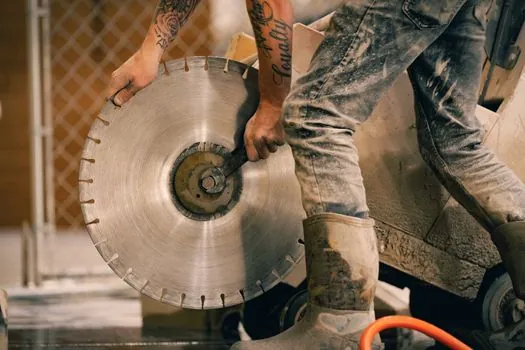
A defensible procurement specification should request the machine model, declared A(8), test standard, frequency range, operating configuration, total mass, handle arrangement, isolation features, maintenance requirements, and available accessories. The acceptance record should also identify disc diameter and abrasive type because changing either can invalidate a like-for-like vibration comparison. [S3]
Before fleet deployment, conduct a representative trial on the intended concrete and compare the machine with the incumbent unit. Record A(8), task duration, operator feedback, stopping and restart behavior, visible surface finish, and any vibration drift after a defined operating period. A machine that starts below 2.5 m/s² A(8) but rises because of a worn component has not maintained its accepted condition.
For production planning, check the relationship between floor grinder RPM and the selected abrasive. Then track two service signals: A(8) drift and tool-mass or balance changes. Either can indicate that the vibration-control system is no longer performing as accepted.