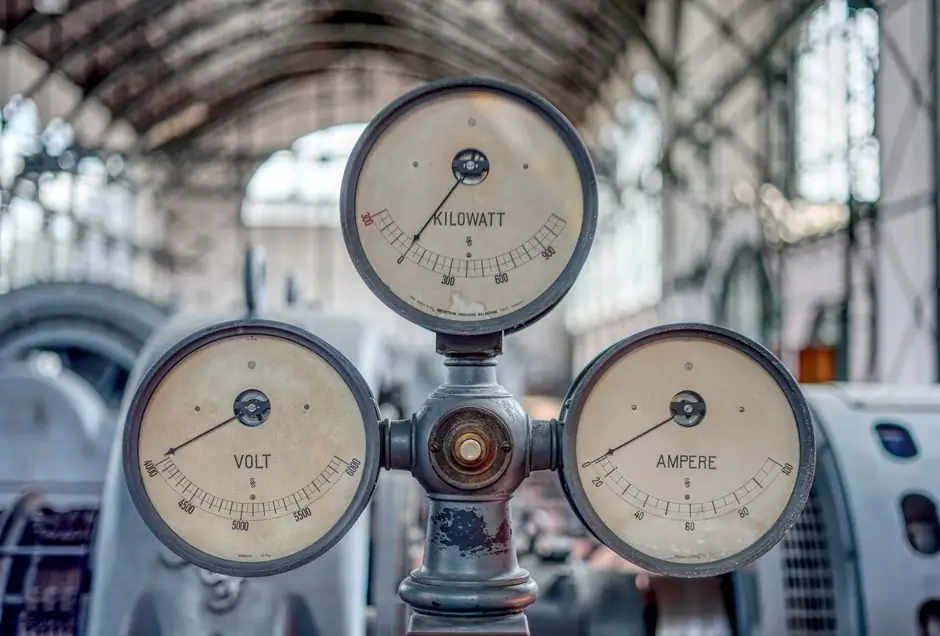
List prices on the public B2B channel as of 2026-08-13 show a Supmea FCC-300 electromagnetic flowmeter for liquid cooling plate offered at US$799.00-899.00 per piece with a 2-piece MOQ [S4], while a DN15-DN1000 argon/methane thermal-mass flowmeter with ±1% accuracy ships at US$1,850/piece FOB with 12 months warranty from a Shandong ISO 9001/14001/OHSAS 18001 vendor [S6].
That spread, more than 2x for instruments that both call themselves flowmeters, is a direct function of measuring principle, line size, wetted material, and the calibration/communications stack, and a specifier who treats the headline number as the project cost will mis-budget by a factor of 3-5 once installation and life-cycle recalibration are folded in.
Four cost drivers that actually move the quoted number
Principle is the first split. Electromagnetic, vortex, and turbine bodies are commodity-priced on Made-in-China-style channels (typical FOB US$800-1,500 for DN15-DN100), while Coriolis mass and ultrasonic gas bodies commonly land two to four times higher because the sensors need tighter mechanical tolerance, multi-parameter compensation, and per-unit wet calibration against a reference standard [S1][S4].
Line size and flange class scale cost almost linearly with bore. The Shandong argon/methane entry at DN15-DN1000, US$1,850, illustrates that a single SKU bracket covers a 60x range in bore, with the larger flanges driving most of the mass and the smaller bores the per-unit electronics overhead [S6]. A 1% accuracy class, common in custody-transfer gas applications, generally commands a 15-30% premium over the 2-3% standard class on the same body [S6].
Wetted material and liner choice matter for chemical and abrasive service. PTFE/ETFE liners and Hastelloy or tantalum electrodes raise an electromagnetic body by 40-100% versus an EPDM/neoprene/stainless baseline, but for concentrated acid, slurry, or hygienic dairy service the user has no cheaper route that survives six months in service.
Certification, the fourth driver, is where bills get fat. CE, ISO 9001, and MID are commonly bundled; ATEX/IECEx for zone 1 or 2 adds a single-digit to low-double-digit percentage of the body price on commodity meters and a larger percentage on low-cost magnetic units. Water utility and heat-meter channels take a different stack: MID (Measuring Instruments Directive) for billing, plus drinking-water approvals (e.g. WRAS, ACS, KTW) on wetted parts, with Flommit-style ultrasonic water meters sitting alongside electromagnetic and thermal-energy bodies in this compliance frame [S2].
Selection criteria that decide which principle you pay for
A flowmeter either measures volume or true mass, and the choice between the two is application-locked rather than preference-driven, with volumetric units in ml/min or m³/h being temperature- and pressure-dependent, especially for gas, while mass units in kg/h or g/min are independent of those process variables [S1]. Gas is compressible, so standardized volume units (mls/min, m³n/h) are the more usable currency in air and fuel-gas work.
Three principles dominate industrial practice: thermal (for low gas flow, high accuracy), Coriolis (for true mass on liquids, slurries, and aggressive gas), and ultrasonic (for non-intrusive, large-bore water/steam) [S1]. Electromagnetic meters add a fourth axis for conductive liquids; vortex and turbine cover steam and clean process gas. For spec-first selection across these options, the related Flow Meter Buying Guide 2026 walks the same principles against line size, fluid conductivity, and accuracy class.
Pressure drop, often forgotten at quote time, can dictate the meter class. Differential-pressure meters (orifice, vortex) eat 1-5 kPa of line pressure; magnetic and ultrasonic bodies are virtually obstruction-free. On a high-pressure gas header with limited supply pressure, a 2 kPa drop can force a larger pipe class, adding far more than the meter cost itself.
Comparison: principal types against the four buying criteria
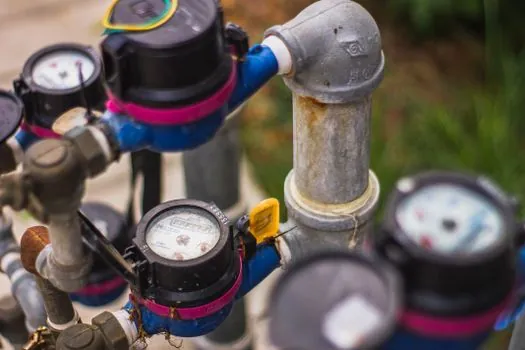
The criteria that actually decide a buy are fluid type, accuracy class, line size, and total installed cost. A side-by-side against those four axes: electromagnetic (EM) meters suit conductive liquids (water, slurries, acids) with ±0.3-0.5% typical accuracy and DN6-DN3000 coverage, low pressure drop, and a list-price band that starts under US$1,000 on the public B2B channel [S4].
Coriolis suits liquids and high-pressure gas needing true mass measurement, ±0.1% accuracy in custody transfer, and density readout, with pricing typically above the EM band and a 1-piece MOQ reflecting the calibration cost per unit [S1]. Vortex suits steam and clean gas with ±1% typical and DN15-DN300 coverage, while ultrasonic covers large-bore, non-intrusive water and thermal-energy metering with high accuracy over the meter's lifetime, often deployed where maintenance access is restricted and where MID and drinking-water certifications are required [S1][S2].
Thermal mass meters sit at the low-flow, high-accuracy end of gas measurement, used for clean gases such as air, N2, and natural gas, with argon/methane gas thermal mass units in the DN15-DN1000 bracket cited above at US$1,850 per piece and ±1% accuracy [S6]. Across all five, the principle, not the brand, sets the 60-80% baseline cost floor; the remaining 20-40% is the calibration, certification, and connector stack.
Who the various principles are for, and who they are not for
Electromagnetic is for conductive liquids above roughly 5 µS/cm. It is the wrong tool for hydrocarbons, deionized water in semiconductor fabs, or any non-conductive fluid, where ultrasonic or Coriolis picks up the work [S1][S2].
Coriolis is for high-value liquids and aggressive gas where density and mass accuracy matter, not for low-pressure steam or low-budget utility water. Vortex is for clean, single-phase steam and gas, and fails in wet or two-phase flow where it gives unstable readings. Ultrasonic is for clean, single-phase liquids and large bores; air entrainment or heavy particulates destroy its accuracy. Thermal mass is for clean gas at low to medium flow rates, and it is the wrong choice for dirty, wet, or coating gases that foul the sensor.
For the trade buyer, a Temperature transmitter price and cost guide for 2026 specifiers and a Pressure Transmitter vs Pressure Switch reference are useful adjacent reads when a flow loop is being built out with pressure and temperature compensation, because flow signal integrity on gas depends on live P and T inputs, and the wrong pairing of transmitter class to flow class is a common audit finding.
Total cost of ownership: what the headline number leaves out
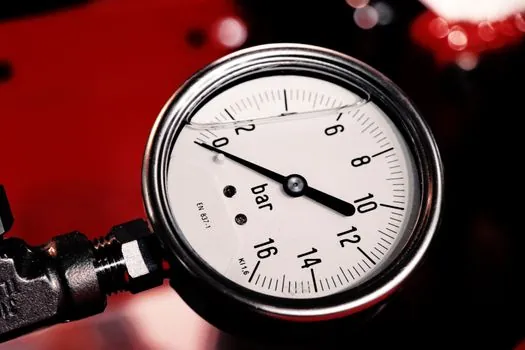
Purchase price is the smallest line on a 10-year cost sheet. The four cost layers that follow are installation, verification, energy, and recalibration, and on process gas meters they routinely total 1.5-3x the purchase price. [S1]
Installation includes hot-tap or cold-tap fittings, isolation valves, grounding rings for EM meters on lined or plastic pipe (often US$200-500 per ring set), straight-pipe run requirements (5-10D upstream on most turbulence-sensitive types), and signal cable in conduit. Verification on custody-transfer meters is annual or biannual in-situ proving against a reference meter; that is a service contract item, not a line on the meter quote. Recalibration, on thermal mass and Coriolis bodies, is typically a 12-24 month return-to-factory or field-traceable cycle, and the calibration certificate is what holds a 1% accuracy claim [S6].
Energy is the hidden line on differential-pressure meters. A vortex shedding a 2 kPa drop across a 24/7 gas line costs the operator compressed-gas compressor energy continuously. The headline saving on a magnetic or ultrasonic body over a 10-year horizon often pays back the higher capex within 2-3 years on a continuous-flow utility.
Specifications and standards that anchor the quote
The acceptance framework around these meters is fixed by an interlocking set of standards. ISO 9001:2005, ISO 14001, ISO 18001 (OHSAS 18001), and ISO 17025 with the CE mark are the four-system stack cited by an export-grade ultrasonic water and energy meter manufacturer with more than 30 years of experience and a distribution network in over 30 countries [S2]. For drinking-water and billing-grade meters, MID is the mandatory European directive; a non-MID meter cannot legally bill a tenant in the EU.
On accuracy, suppliers publish their claim as a percentage of reading or full scale. The Shandong argon/methane gas flowmeter is offered with accuracy better than ±1% and a 12-month warranty, sized DN15-DN1000, with plug-in or insertion sensor variants for in-line installation on natural gas, coal gas, and N2 lines [S6]. That 1% figure is comparable to what a well-specified vortex or mid-class Coriolis offers on clean service, while a flange electromagnetic liquid meter on conductive water typically sits in the ±0.3-0.5% band under lab conditions.
For a spec-first comparison with adjacent instrumentation, the Vacuum Gauge Buying Guide 2026 and the Vacuum Gauge Selection Criteria: Pressure-Range and Gas-Type Map cover the pressure-side context that pairs with gas flow measurement, while a Thermocouple price and cost guide covers the temperature compensation leg. The flow meter encyclopedia entry anchors the principle and selection-criteria baseline, and the electromagnetic flowmeter and Coriolis flowmeter entries give the per-principle drill-down that the price discussion here assumes.
Trackable signals for the next buying cycle
Two signals worth watching between 2026-08-13 and the next bid cycle: first, whether the public FOB band on Made-in-China-class channels for DN15-DN100 electromagnetic liquid bodies moves out of the US$799-899 corridor cited above [S4], because that band is the de-facto floor on commodity liquid metering and a rise there is a leading indicator of magnet, liner, and stainless price moves. Second, whether MID and drinking-water-certified ultrasonic water/heat meters continue to compress in price as more China-volume vendors reach the certification bar, since that segment has been the fastest-falling price band in the 2024-2026 window [S2].