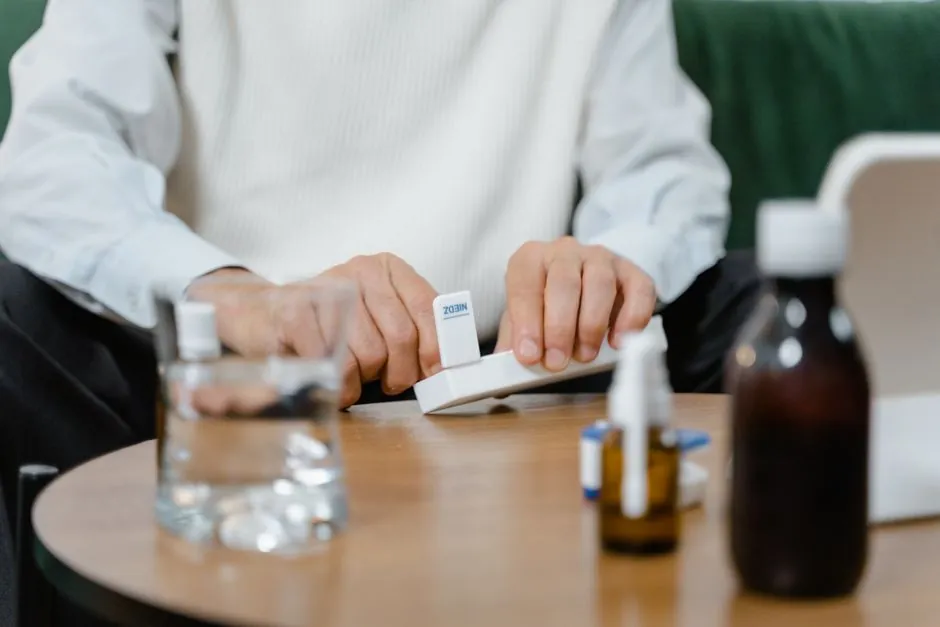
Industrial temperature recorders in 2026 fall into four practical duty classes, and the right pick hinges on sensor count, accuracy, and the I/O the plant already runs.
This guide covers portable USB loggers, bench/panel chart recorders, multi-channel paperless recorders, and wireless IIoT nodes, with a comparison map across accuracy, channel count, memory, and price band. For a deep-dive companion on the same selection logic, see the temperature recorder selection: 5-criteria spec map for process engineers.
The Four Duty Classes and Where Each Fits
Single-use and reusable USB temperature loggers cover cold-chain and shipping audits, with typical accuracy of ±0.3–0.5°C over 0–70°C and on-board flash of 8–32 k samples, priced in the US$5–40 retail band and US$20–60 for industrial-grade units with calibration certificates [S3]. They plug into a PC for PDF/CSV export and require no gateway; the limit is single-channel and no real-time alarm.
Multi-channel paperless recorders, the workhorse for process plants, handle 4 to 64 inputs (universal: thermocouple, RTD, mA, V) on a 5.6″–12.1″ color HMI, with 0.1°C/1°C resolution, 0.2% FS accuracy, 32–128 GB SD storage, and Modbus TCP/RTU plus Ethernet; list prices on the export portal range US$530–2,700 per piece at 1-unit MOQ [S3]. These are the default for paperless recorder applications in pharmaceutical, food, and chemical lines.
Strip-chart and circular chart paper recorders remain in service for utilities, kiln profiling, and any site that still archives signed paper traces for regulatory record retention; 1–4 pen models cover 0–200 mV / 4–20 mA / TC inputs with ±0.25% FS accuracy. Wireless IIoT nodes, the newest class, push LoRaWAN, NB-IoT, or Wi-Fi telemetry with 0.2–0.5°C accuracy and battery life of 1–5 years, and are most often picked when the wiring cost of a wired recorder exceeds the cost of the node itself.
Accuracy, Resolution, and Sample Rate: Numbers That Matter
Paperless recorders in 2026 typically quote 0.2% of full-scale accuracy with 0.1°C/1°C display resolution and a 1-second to 60-minute selectable sample rate; for SCADA historians, the bottleneck is rarely the recorder, it is the network and the OPC-UA gateway, and a 0.1°C resolution over a 0–1,200°C type-K span is 1 part in 12,000, which exceeds the 16-bit ADC most units ship. For tighter work, a 24-bit input module and 4-wire RTD connection drops RTD loop error below ±0.1°C at PT100. [S3]
For comparison, a temperature controller in the same panel does closed-loop PID and writes to internal memory, while a paperless recorder just captures; the two are complementary on a heat exchanger outlet skid. Engineers who already know they need a controller can shortlist units that share the Modbus register map with the controller, which removes one protocol gateway.
Sensor Compatibility and Wiring
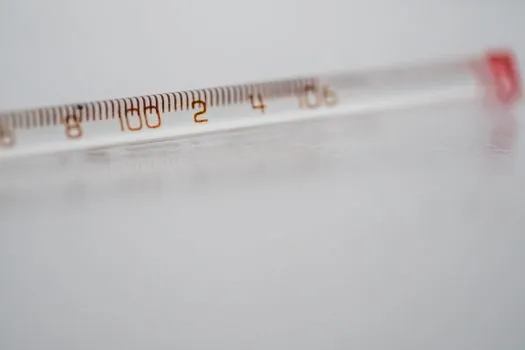
A 16-channel universal input paperless recorder will accept J/K/T/E/R/S/B/N thermocouples, PT100/PT1000 RTDs (2-/3-/4-wire), 0–10 V, and 4–20 mA on any channel, switched in software; this removes the per-channel module cost that locked older strip-chart recorders to a fixed input mix. For hazardous-area temperature points, see the thermocouple selection for hazardous-area temperature points companion, which covers IEC 60079-0/1 zone-1 sensor assemblies. [S3]
For plant retrofits where 4-wire RTDs already land in the panel, budget one 24-bit analog input module per eight RTD channels; cheaper 16-bit inputs are fine for type-K thermocouples where the cold-junction compensation error dominates anyway. When the recorder is paired with a bimetal thermometer on the same loop, the bimetal is a local visual readout and the recorder is the audit trail, not a redundant sensor pair.
Memory, Connectivity, and IIoT Integration
32 GB SD storage at a 1-second sample rate on 16 channels fills in roughly 90 days, so plants on a 3-year retention cycle budget a 128 GB card or a Modbus TCP push to an external historian; the trade-off is local-buffer survivability after a network drop. The cheapest path for a small lab is a 4-channel paperless unit with 8 GB internal memory and a USB stick dump, which still meets 21 CFR Part 11 if the unit ships an audit-trail log and password-protected logins. [S3]
IIoT wireless recorders pair with cloud platforms via MQTT or HTTP POST; for a heat-exchanger-outlet audit, see the heat exchanger outlet temperature recorder selection spec map, which lays out the wireless node vs wired paperless decision. For sites that already run a SCADA historian, a recorder that exports Modbus TCP saves the cost of an OPC-UA bridge and keeps the data path native to the rest of the plant.
Selection Criteria Comparison: Which Class Fits Which Duty

Cold-chain shipping and GDP pharma: pick a single-use USB logger, ±0.3°C, no gateway, US$20–60 each, discard after one trip [S3]. Pilot plant or R&D lab: 4–8 channel bench-top paperless recorder, 0.1°C, color display, USB export, US$400–900. Process line (food, pharma, chemical): 16–32 channel panel-mount paperless recorder, 0.2% FS, 32–128 GB, Modbus TCP, US$530–2,700 per piece [S3]. Remote tank farm or utility substation: wireless IIoT node, LoRaWAN or NB-IoT, battery life 1–5 years, 0.3–0.5°C.
What does not fit: a single-use USB logger is wrong for a process line that needs real-time alarm and SCADA push; a paper chart recorder is wrong for a 21 CFR Part 11 audit where an electronic signature is required. For adjacent sensing decisions outside the recorder box, see the thermal imaging camera buyer's guide 2026 for non-contact spot scanning and the thermocouple price and cost guide for the upstream sensor cost stack.
Compliance, Calibration, and Failure Modes
For pharmaceutical and food plants, a 21 CFR Part 11 compliant paperless recorder with audit-trail, password, and electronic signature covers the data-integrity side; for HACCP and GDP cold chain, look for EN 12830 conformance and a calibration certificate traceable to NIST or a national lab. For a fuller cost-side comparison, see the pressure sensor price 2026 cost driver guide which uses the same total-cost-of-ownership framework that applies to calibrated recorders. [S3]
Common failure modes worth spec'ing against: SD card write failure on long retention cycles (spec an industrial-grade SLC card, not consumer TLC), cold-junction compensation drift on type-K panels in high-vibration cabinets (spec a remote CJC module), and wireless node battery loss in sub-zero cold storage (spec a lithium-thionyl chloride primary cell rated to -40°C). For the related question of transmitter selection on a process line, see DP vs AP pressure transmitter: spec-driven selection for 2026 and how to select a differential pressure transmitter.
Shortlist Logic and Trackable Signals
Shortlist by three numbers: required channel count, required accuracy class (0.1°C vs 0.5°C), and required retention (90 days vs 3 years). If channel count is 1–2 and retention is one trip, stop at a USB logger. If channel count is 4–16 and retention is 1+ years, move to a paperless recorder with Modbus TCP. If the site is a tank farm with no panel power, move to wireless IIoT nodes. For a temperature humidity recorder on the same panel, pick a recorder that accepts a humidity probe input on at least one channel, so the same unit covers both signals. [S3]
Trackable next nodes: published export price list refresh on Made-in-China.com (checked 2025-11-17 [S3], expect Q1 2026 refresh), and IEC 61010-1 safety updates for panel-mount electrical instrument enclosures, which govern the recorder chassis itself. A simple temperature recorder on a 4-channel paperless chassis remains the lowest-risk default for most process plants building through 2026.