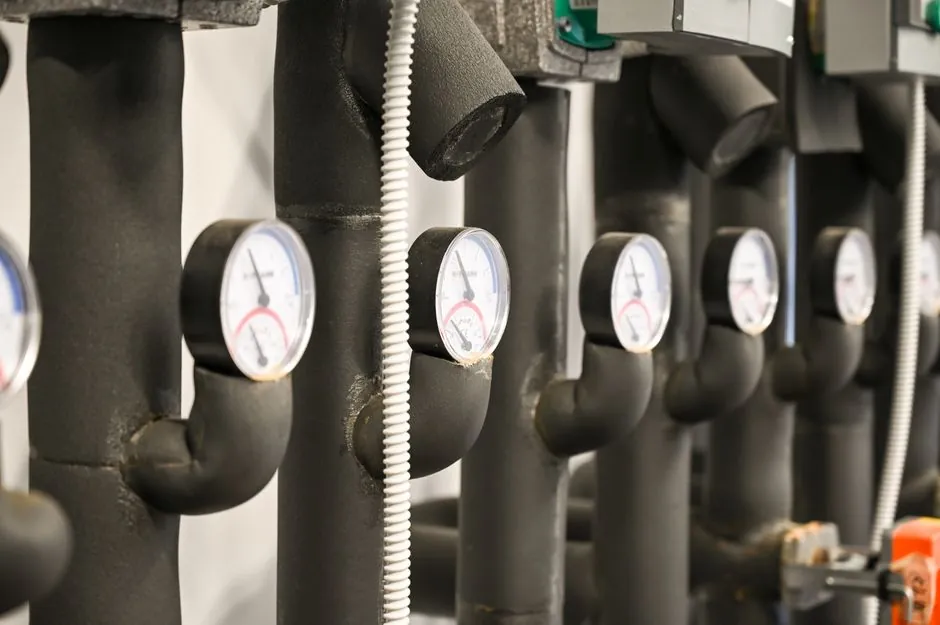
Flow meter selection is governed by five hard spec gates: fluid type, flow range and turndown, accuracy class, the line's pressure and temperature envelope, and the output protocol you can wire to your DCS [S3][S4]. Get any one wrong and you pay twice, once for the meter and again for the rework.
A flow meter is any instrument that converts fluid motion through a pipe into a usable rate signal, volumetric or mass, analog or digital. The catalog spans positive-displacement oval gears, turbine flow meter rotors, vortex flowmeter shedders, electromagnetic flowmeter coils, transit-time and Doppler ultrasonics, and Coriolis flow meter twin tubes, and the right pick is decided by your fluid, not by brand.
The Five Selection Gates, In Order
Gate 1 is fluid compatibility: magnetic meters require a conductive liquid above roughly 5 µS/cm and will not see hydrocarbons, oils, or most gases; ultrasonics work on most clean liquids but struggle with aerated or high-solids streams; Coriolis handles almost any fluid including slurries and cryogenic LNG at the cost of a higher pressure drop [S3][S4].
Gate 2 is flow range and turndown ratio: published ranges commonly span 0.1 to 30 ft/s for magmeters, 0.3 to 40 ft/s for clamp-on ultrasonics, and 0.5 to 100 GPM for turbine models, with the meter sized to operate inside its optimal band, not at the edge of it [S3]. Repeatability on premium positive-displacement and Coriolis designs can hit 0.05% to 0.1% of reading, which matters for custody transfer and batching, not just SCADA trending [S1][S3].
Gate 3 is the pressure-temperature envelope: published ratings reach 5000 psi and 450°F for turbines, 1450 psi and 200°C for Coriolis mass, 1480 psi and 400°C for vortex, and a 25 bar working-pressure ceiling on the Safecon cross-technology spec sheet covering DN15 to DN600 service [S3][S4]. Always cross-check the meter body, liner, and electronics against your design minimum and maximum, including upset cases.
Gate 4 is accuracy class: published figures run ±0.1% of rate for Coriolis mass, ±0.2% of reading for oval-gear PD meters such as the Laku M-50/M-80 series, ±0.25% of reading for turbines, ±0.5% of rate for magmeters, and ±1% of full scale for variable-area and most vortex designs [S1][S2][S3]. Decide whether you need % of reading (better at the low end) or % of full scale (cheaper but degrading as flow falls) before you compare brochures.
Gate 5 is output and integration: 4-20 mA with HART, pulse, Modbus RTU/TCP, and Foundation Fieldbus are the realistic options across the Safecon, Tanış, and GEMÜ datasheets; pair this with the available straight-run pipe length, grounding on conductive pipe for magmeters, and any custody-transfer approval (OIML R49, R117, or API MPMS Ch. 5) your accounting team requires [S3][S4][S9].
Technology Comparison on Real Spec Criteria
Comparing the main technologies against four decision criteria gives a clean shortlist. For a clean, conductive water or slurry service with mid-range accuracy, an electromagnetic flowmeter at ±0.5% of rate, zero pressure drop, and a PTFE or rubber liner is the default OEM pick, with published ranges from 0.1 to 30 ft/s and operating temperatures up to 120°C (248°F) on the FM-2000 family [S3].
For clean liquids, low-viscosity fuels, or gases where a 0.25% of reading error budget is acceptable, a turbine flow meter delivers a wide 0.5 to 100 GPM band, 5000 psi pressure rating, and 450°F ceiling in a compact spool body, but it needs 10 to 15 diameters of upstream straight pipe and will eat bearings if the fluid is abrasive [S3].
For steam, saturated gas, and high-temperature liquid lines, a vortex flowmeter operates from 2 to 200 ft/s, holds ±1.0% of reading up to 400°C (752°F) and 1480 psi, and has no moving parts, but it loses accuracy below its minimum velocity and chokes on low-flow night-setpoint conditions [S3].
For the highest accuracy, simultaneous mass and density measurement, or aggressive chemicals where you need wetted parts in 316L or C-22, a Coriolis flow meter is the only sensible answer: ±0.1% of rate on mass flow, ±0.5% on density, and 1450 psi / 200°C headroom, with the trade-off of 1 to 2 bar pressure drop per tube and a unit cost roughly 5x to 10x a magmeter at the same line size [S3].
For retrofit, temporary, or non-invasive service on existing pipework, an ultrasonic flowmeter clamp-on avoids any pipe cut, handles 0.3 to 40 ft/s with ±1.0% of rate accuracy across -40°C to 150°C, and can be installed in under an hour on a DN100 or larger line, but it needs a full pipe, a clean wall, and a calibrated fluid-sound-speed database [S3].
Real-World Duty Mapping
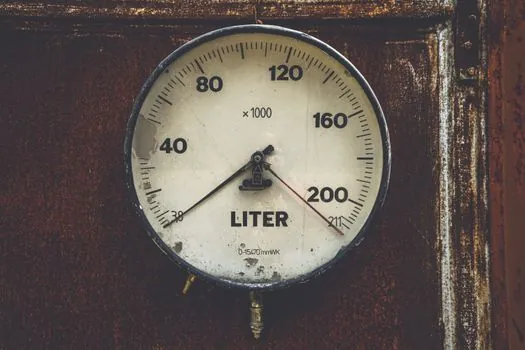
Water and wastewater treatment, plus chemical dosing skids, map to magmeters almost every time: conductive fluid, low-to-mid accuracy need, and a liner that survives the chemistry [S3][S4]. Published flow ranges of 0.1 to 30 ft/s on FM-2000 magmeters comfortably cover plant service lines from DN25 to DN600, and the lack of moving parts keeps maintenance to a periodic electrode cleaning.
Oil and gas custody transfer, aviation fuel, and high-value batching map to Coriolis or turbine, with Coriolis preferred when you also need density, BSW detection, or net-oil calculation. Tanış's TMAM-100 to TMAM-500 series covers 0 to 5000 kg/h on DN50 to DN80 304SS bodies with ±0.4% to ±0.5% accuracy and 4-20 mA plus Modbus output, sitting between the magmeter and Coriolis cost bands [S9].
HVAC, chiller water, energy metering, and large-line retrofits in occupied buildings map to clamp-on ultrasonics, where the value is no pipe shutdown and no corrosion risk on the wetted side. The published 0.3 to 40 ft/s range covers most building-side hydronic circuits, and the lack of pressure drop is a quiet win for pumped systems [S3].
Steam, saturated and superheated, plus clean dry gases at moderate pressure, map to vortex shedding: no moving parts, ±1.0% of reading, and a body rated to 400°C means the meter survives a steam header that would cook a turbine bearing [S3]. Pair it with a pressure and temperature compensation input if you need mass flow on steam.
Positive-displacement oval-gear and gear meters, the Laku M-50-1 (DN50, 38 to 380 L/min) and M-80-1 (DN80, 75 to 750 L/min) class, hit ±0.2% of reading with repeatability of 0.05% on viscous fluids from 30 SSU up to 1,500,000 SSU, which is the niche where magmeters struggle (low conductivity hydrocarbons) and where Coriolis is overkill at the price [S1].
Who Should NOT Pick the Mainstream Choice
Buyers who only need a totalised volume number, not a continuous rate signal, should not buy a magmeter or Coriolis: a simple mechanical positive-displacement meter with a pulse output is one-third the cost and survives dirty water, fuel, and oil equally well [S1][S4].
Buyers specifying Coriolis on a DN250 or larger line for water service should reconsider: the pressure drop per tube becomes a real pumping cost over the asset life, and a magmeter with a ±0.5% accuracy spec is a fraction of the capital cost [S3].
Buyers specifying clamp-on ultrasonic on a slurry, aerated, or low-pressure partial-fill line should expect failure: the technology needs a full, degassed pipe with known sound speed to hit ±1% of rate, and a magmeter or DP cell will be both cheaper and more reliable in those conditions [S3].
Buyers who only need % of full-scale accuracy should not pay for a Coriolis or premium turbine: a variable-area or vortex meter at ±1% of full scale handles indication and alarm duty for 20% of the unit cost, and the apparent accuracy gap disappears in service [S3].
Standards, Installation, and Sourcing Discipline
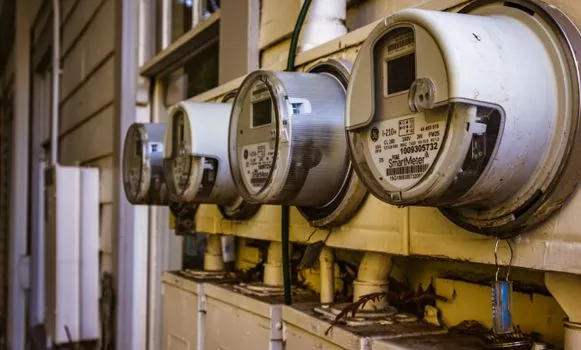
Common governing references in the flow meter space include ISO 4064 for cold and hot water metering, ISO 5167 for differential-pressure primary elements, ASME MFC-3M and MFC-4M for Coriolis and vortex measurement of fluid flow, API MPMS Ch. 5 for petroleum custody transfer, and OIML R49/R117 for legal metrology. Always confirm the certificate on the vendor's datasheet before ordering a meter for invoiced or regulated service, since published accuracies and on-site accuracies diverge by roughly 0.5% to 1.0% of rate once installation effects are added [S3][S4].
Installation discipline matters as much as the spec: upstream straight run of 10D to 15D, a fully filled pipe, proper grounding for magmeters on lined or non-conductive pipe, and a mounting location that avoids pump-induced swirl or control-valve turbulence are the four most common reasons a good meter reads badly in the field [S3].
For custody transfer and fiscal metering, the vendor-published spec sheet is not the controlling document: the calibration certificate traceable to a national institute, the approved installation drawing, and the periodic reverification plan are what your auditor will check first.
Catalog data from the 2026-08-29 research window shows industrial flow meter bodies in 304 SS, 316 SS, PVC-U, PVDF, PTFE-lined ductile iron, and ceramic, with the GEMÜ 3020/3021 series spanning DN25 to DN50 in PVC-U or PVDF and media temperatures from -20°C to 80°C, while Safecon's cross-technology spec sheet covers DN15 to DN600 at up to 25 bar and -20°C to 180°C depending on liner and electronics [S2][S4]. The cross-line takeaway: a meter priced at the magmeter tier is rarely the wrong answer on water, slurry, or conductive chemical service, while a Coriolis is the right answer wherever the fluid is non-conductive, the batch is high-value, or density must be tracked simultaneously.
For a related view on the broader instrumentation selection map, including how flow meters sit alongside temperature recorders and process valves on a 2026 spec sheet, the control cable sizing and selection guide walks through the wiring side that any installed flow meter will eventually depend on. Trackable next signals for a 2026 buying cycle: any vendor datasheet update that revises Coriolis mass accuracy below ±0.1% of rate, and any new OIML R49 or R117 certificate issued in the past six months for residential or commercial water meters.