
PTFE spot prices climbed roughly 30% in July 2026, driven by sulfuric acid cost inflation traced to Strait of Hormuz shipping disruption and a fluorspar supply chain in which China holds approximately 63% of mined output and more than 70% of hydrofluoric acid (HF) production capacity [S1]. PFA and FEP supply has tightened on top of that move, with high-purity PFA grades reported on allocation and lead times of 8-14 weeks at some producers [S2].
Procurement teams specifying gaskets, lined fittings, semiconductor wet-bench components, and wire insulation can no longer treat fluoropolymers as a commodity line item; feedstock, regulatory and shipping risk now reach directly into project schedules. For context on the broader spec-driven sourcing environment, the [S2] guide frames fluoropolymers as one of the more punitive categories inside a 2026 buyer landscape that is also reshaping chemicals, steels and energy hardware procurement.
Feedstock chain: fluorspar, sulfuric acid, HF, TFE
Every commercial fluoropolymer traces back to the same upstream chain: fluorspar (CaF₂) is reacted with sulfuric acid to produce hydrogen fluoride, which is then processed into monomers such as tetrafluoroethylene (TFE) for PTFE, with parallel routes to hexafluoropropylene for FEP and perfluoroalkoxy monomers for PFA [S1]. Sulfuric acid historically represented about 30% of anhydrous hydrogen fluoride (AHF) production cost; industry data cited by TrendForce in May 2026 indicated that share had risen above 50% after tanker traffic through the Strait of Hormuz was disrupted, with the agency reporting that more than 30% of global sulfur supply was affected [S1].
Margin in this chain sits predominantly with vertically integrated producers that control fluorspar sourcing or hold long-term HF contracts, because merchant HF buyers face both price and volume risk from the same concentrated upstream [S5]. South Korean AHF processors, including Solbrain, ENF Technology and Huseong, were sourcing Chinese AHF at roughly 40% above start-of-year levels as of 19 May 2026, with downstream electronic-grade HF flowing into semiconductor fabs at Samsung and peers [S1].
PTFE, PFA and FEP: which grade earns its premium
All three perfluorinated grades share the carbon-fluorine bond that delivers chemical inertness and continuous service near 260°C for PTFE and PFA, with FEP limited to about 200°C [S2]. The buyer decision is dominated by processability: PTFE cannot be melt-processed and is compression-molded then machined, which limits geometry and adds conversion cost; PFA is melt-processable and supports injection molding, tubing extrusion and lined fittings with weldable joints; FEP is also melt-processable, cheaper than PFA, and dominates plenum-rated LAN cable, aerospace hookup wire, heat-shrink tubing and transparent fluid lines [S2].
Selection by application follows from those properties. Semiconductor wet process specifies high-purity PFA for tubing, valves and wafer carriers with extractable metal ion data at ppb level and lot-level certificates; chemical processing equipment defaults to PTFE for gaskets, seals and machined liners and to PFA for rotolined vessels, dip tubes and spargers where weld integrity matters above 200°C; wire and cable is dominated by FEP except for high-temperature sensor and downhole cables that justify PFA [S2]. Medical and lab buyers should request USP Class VI or ISO 10993 documentation where device contact applies [S2]. A practical decision rule: if the part is machinable and sees the harshest chemistry, specify PTFE; if molded or welded geometry is required at PTFE-level performance, specify PFA; if service stays below 200°C and cost matters, FEP usually wins [S2].
PFAS regulation and Western capacity exits
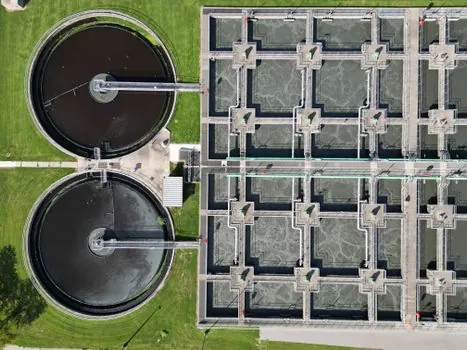
PFAS-driven regulatory pressure has shut or converted fluoropolymer capacity in Europe and the US, with compliance investment for fluorosurfactant-free processes being passed downstream into resin prices [S2]. Producers outside China have struggled to secure reliably priced fluorspar, which constrains their ability to expand output and compete on cost with vertically integrated Chinese manufacturers, a structural feature reinforced by environmental compliance overhead on legacy chemistries [S4].
Market-side response includes capacity diversification moves; The Chemours Company announced strategic agreements with India's SRF Limited on 19 August 2025 to secure additional fluoropolymer and fluoroelastomer manufacturing capacity without upfront capital, broadening its supply footprint for semiconductor, automotive and aerospace customers [S5]. That kind of contract-based capacity expansion is the practical shape of how Western buyers are absorbing PFAS-related exits: locking resin volumes through tolling and licensing rather than relying on merchant spot purchases.
Demand pull: semiconductor capex, EV batteries, energy
Three end markets are absorbing available PFA and PTFE fine powder in 2026. Semiconductor fabrication is the dominant demand center, with electrical and electronics representing 32.4% of fluorinated polymer revenue in 2025 and PTFE the largest product at 38.5% share of the same base, while Chemours, Daikin and 3M are positioned as the principal global suppliers [S3]. PVDF demand is being pulled by lithium-ion battery electrodes, where it functions as both an electrode binder and a separator-coating component, with EV gigafactory build-out in Asia, Europe and North America driving structural growth [S4].
Architectural coatings, photovoltaic backsheets and hydrogen-infrastructure seals are smaller but durable incremental sinks for PVDF and high-purity PFA. FEP is dominant in plenum LAN cable and aerospace hookup wire, where its low dissipation factor and fast extrusion speeds offset the 200°C ceiling [S2]. A rough segmentation check: PTFE led 2025 fluoropolymer revenue at 61.8%, coatings and films led applications at 36.4%, and the electrical/electronics/semiconductor end-use block led at 34.8% [S5].
Sourcing strategy for H2 2026
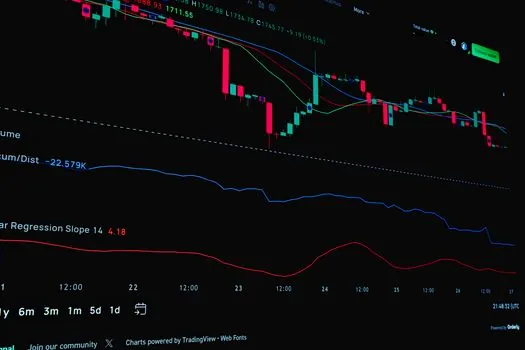
Procurement should plan for PTFE suspension and dispersion grades holding at elevated levels after the July jump, high-purity PFA on allocation at some producers with 8-14 week lead times, and budget envelopes set 10-20% above early-2026 baselines [S2]. Practical actions: lock volumes under 6-12 month contracts with at least one primary and one secondary qualified supplier; request extractables data and lot certificates for any PFA entering semiconductor wet process; qualify FEP as a lower-cost alternative wherever the 200°C ceiling is not breached; and pre-validate Chinese and Indian resin sources to offset concentrated fluorspar exposure [S2].
Verify that any switch from PTFE to PFA, or from PFA to FEP, is matched by a documented re-qualification of weld procedures, since melt-processed linings have different thermal-expansion and permeation behaviour than compression-molded PTFE [S2]. For EV battery lines, isolate PVDF binder sourcing from semiconductor-grade PVDF because the two grades have very different purity and rheology requirements, even though they share a chemistry code. The same caution applies to architectural PVDF versus chemical-processing PVDF.
Limitations, watchpoints and failure modes
Substitution risk is real but bounded: FEP cannot replace PFA above 200°C, and standard PFA grades cannot substitute for high-purity PFA in ultrapure water or chemical delivery loops without extractables data and lot traceability [S2]. PTFE cannot be specified for molded or welded geometry without paying for machining or accepting the limits of compression molding. PFAS regulation continues to evolve and could accelerate Western capacity exits, with downstream price pass-through already in motion [S2].
Watchpoints for the next two quarters: a single Chinese fluorspar export disruption would propagate into HF and then into every perfluorinated grade within weeks, given the 63% mining and 70% HF concentration [S1]; a sustained Strait of Hormuz normalization would relieve sulfuric acid pressure but would not unwind PFAS-driven capacity exits; and any new semiconductor fab or gigafactory commissioning in late 2026 will tighten high-purity PFA further. For background on how concentrated upstream risk is reshaping adjacent spec-driven categories, see the ferrosilicon outlook and the battery management system supply chain note, which sit in the same concentrated-feedstock risk pattern.
For component-level specifications, see construction machinery and equipment, lamps and light fittings, and lighting equipment and electric lamps.