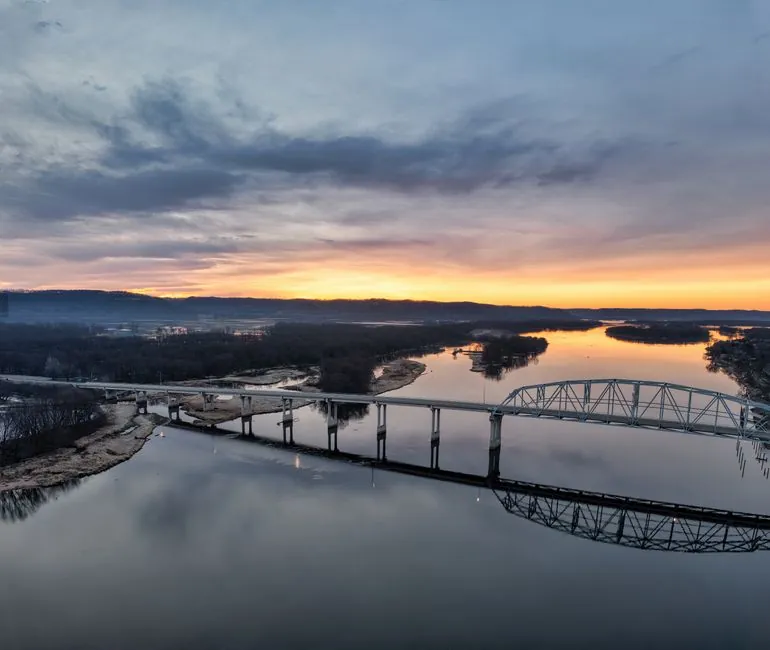
Electrolyzer manufacturing capacity hit 25 GW/year in 2023 and is on track to clear 40 GW/year in 2024, with 165 GW/year projected by 2030, split roughly 30% China, 20% Europe, 15% North America [S1].
Four electrolyzer technologies now compete across the upstream-to-downstream chain: alkaline, proton exchange membrane (PEM), anion exchange membrane (AEM), and solid oxide electrolyzer cell (SOEC), each with different water-purity, temperature, and pressure specs that dictate the upstream pressure transmitter and flow meter build [S1].
Upstream Inputs: Power, Water, and Critical Minerals
Upstream of the stack, the spec-driving inputs are renewable power, deionized water, and platinum-group-metal (PGM) catalysts, with iridium loadings on PEM anodes and platinum loadings on PEM cathodes remaining the dominant cost and supply constraints [S1]. A single 100 MW PEM unit pulls roughly 8-10 m³/h of high-purity deionized water at <1 µS/cm conductivity, which sets the upstream industrial valve and flow meter spec class (typically alloy-C body, PTFE seats, Coriolis or magnetic meters) [S1].
Cost of green hydrogen sits at $5-6/kg against a $1/kg by 2030 target set by the EU Green Hydrogen Strategy, India's National Green Hydrogen Mission, and the US Hydrogen Earthshot, with high costs, reliance on rare materials like platinum and iridium, inefficiencies in production processes, and fragmented supply chains limiting scalability [S1]. SMR still produces over 95% of global H2 at roughly 7 t CO2/t H2, which is the baseline green must beat across the full upstream-downstream envelope [S2].
Stack Technologies: Selection Criteria Compared
Alkaline runs at 60-90°C with 25-30% KOH electrolyte, no PGM, and proven 1-2 MW skid sizes; PEM runs at 50-80°C with proton membranes and PGM catalysts, delivering higher current density (1-3 A/cm² vs 0.2-0.6 A/cm² alkaline) and dynamic load-following for renewable input [S1].
AEM is the emerging lower-PGM option but sits at 0.1-1 MW demonstration scale with <30,000 h membrane life; SOEC operates at 600-850°C with steam feed and can reach >80% electrical-to-H2 efficiency, but requires aggressive heat-integration design and pressure transmitter classes rated above 250°C [S1]. For most spec-first buyers in 2026, alkaline wins on cost and lifetime, PEM wins on dynamic response, AEM is a watch-and-wait technology, and SOEC is justified only where waste heat is free.
Stack-pressure ratio (typically 30-80 bar differential in PEM, atmospheric to 30 bar in alkaline) is the single largest spec driver for the upstream pressure transmitter and the hydrogen-side flow meter, and is why dual-rated HART/4-20 mA instruments are the default in 2026 plant builds [S1].
Downstream Offtake: Ammonia, Methanol, and Cryogenic H2
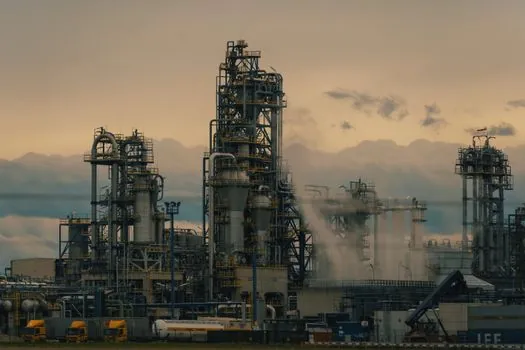
Downstream of the stack, three carrier routes dominate: ammonia, methanol, and cryogenic LH2, with ammonia currently the preferred long-distance carrier because at -33°C it carries roughly 17 wt% H2 and uses existing shipping infrastructure [S2]. Methanol offers simpler handling at ambient temperature with ~12 wt% H2 but requires a reformer step back to H2 at the offtake; cryogenic LH2 is energy-intensive (boil-off losses of 0.1-0.3%/day on modern tanks) and only competitive on shorter routes [S2].
IMOs reduced-emission mandates have shipbuilders evaluating LNG, ammonia, and methanol in parallel, with no single winner locked in, which is why EPCs are freezing midstream fuel choice and sourcing dual-fuel-capable industrial valve skids [S2]. The downstream instrument package (H2 mass-flow, purity, dew point, O2 in H2) is typically 8-12 measurement loops per electrolyzer skid, all feeding the same DCS layer that the upstream pressure transmitter and flow meter report into [S1].
Vertical Integration and Supply-Chain Control
With over 200 OEMs now active, vertical integration is the dominant 2024-2026 strategy, with Cummins and Nel ASA explicitly expanding into both upstream (catalyst supply, BoP) and downstream (H2 fueling, ammonia offtake) to lock in margin and de-risk PGM volatility [S1]. John Cockerill, Plug Power, and Cummins have set up localized manufacturing in Europe, China, the US, and broader Asia, while in India Thermax is partnering with Ceres on SOEC, L&T with McPhy on electrolyzer manufacturing, and Ohmium with NTPC on domestic production [S1].
The five-track material list below is the one a spec-first buyer should pin in a 2026 RFQ, with each item a verifiable anchor for vendor comparison: (1) PGM loading (mg/cm²) and type (Pt/Ir), (2) membrane type and rated lifetime hours, (3) stack differential pressure bar at nameplate, (4) BoP water conductivity and flow spec, (5) downstream interface pressure/temperature/phase [S1].
Who This Is For, and Where It Breaks
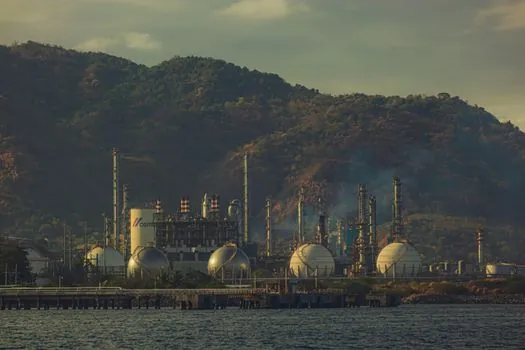
Vertical integration makes sense for OEMs with >500 MW/year nameplate ambition; for sub-50 MW project developers, the same trend means fewer independent BoP suppliers and longer lead times on instrument skids [S1]. The technology split is also uneven: AEM and SOEC are still at demonstration scale, so any spec pinning 10-year lifetime or 60,000 h membrane life on those two will fail procurement review.
Reference design rules that hold across all four technologies: keep water feed at <1 µS/cm, specify instrument wetted parts in 316L or alloy-C for the wet H2 side, derate any elastomer in the O2 stream, and require a pressure transmitter HART layer for valve-position and safety interlocks on every skid [S1]. The fluoropolymer and gas-analyzer content feeds adjacent spec workflows: buyers pulling H2 purity analyzers should reuse the same spec-first discipline covered in Gas Analyzer Sizing and Selection Guide: Technology, Duty, and Sample Conditioning and Gas Analyzer Suppliers 2026: Four-Tier Map and Spec Anchors.
Limits, Failure Modes, and Trackable 2026 Signals
Three failure modes dominate the 2024-2026 commissioned-base data: PGM catalyst dissolution on hard-cycled PEM stacks (>2,000 on/off cycles/year), membrane creep in AEM at >60°C, and SOEC thermal-shock failures during cold-start events [S1]. The "by 2030 cost of $1/kg" target is a policy number, not a vendor commitment: current OEM list prices still cluster at $5-6/kg, so a buyer signing a 2026 PPA should expect a 2-3 year cost glide-path, not a step change [S1].
For buyers pairing electrolyzer RFQs with adjacent flow meter and pressure transmitter RFQs, the Industrial filter sourcing from China: spec-first buyer's playbook and Liquid Cooling Process Control: Sensor Stack and PLC Architecture for AI-Class Loops workflows apply to the same BoP loop, since PEM stack cooling and rectifier cooling are the same sensor topology at the PLC layer.