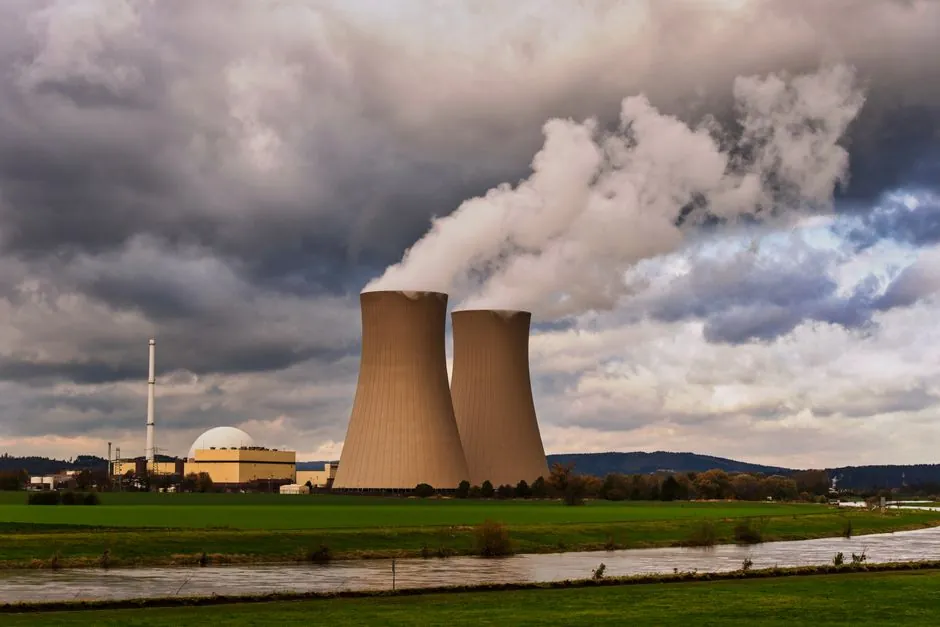
Liquid cooling is not one market but two: the oil and gas sector rejects process heat through open cooling towers, closed shell-and-tube loops, and plate-and-frame heat exchangers [S1], while the data center sector absorbs chip heat through dielectric cold plates, coolant distribution units, and two-phase immersion tanks [S2][S3].
The two tracks share physics (higher heat capacity of water or dielectric fluids vs air) but diverge sharply on fluid chemistry, pressure class, and certification path. A spec-first buyer must therefore keep the selection criteria separate, then map common sub-components (pumps, valves, flow meters, and pressure transmitters) onto the right loop class.
Two industry tracks, one shared physics
In oil and gas, cooling system capacity directly limits fractionation throughput: if heat removal bottlenecks, the entire production train bottlenecks, so operators apply a systems approach to pumps, fans, drift losses, blowdown, and makeup rate [S1]. Common architectures are open (cooling tower, cooling pond) and closed (shell-and-tube or plate-and-frame heat exchangers, air-cooled fin-fan exchangers), each paired with once-through or recirculated coolant routing [S1].
In data centers, the same liquid-vs-air advantage is cited as roughly 3,000 times more effective than air-only heat transfer for HPC silicon, and direct-to-chip cold plates are increasingly specified as rack densities climb from 20 kW toward 50 kW per rack [S3]. Boyd's product line typifies the downstream segment, with in-rack or in-row coolant distribution units, liquid-to-liquid or liquid-to-air secondary loops, and cold plates bonded to CPU/GPU lids [S2].
Heat load and fluid chemistry: where the two specs diverge
O&G cooling typically uses treated cooling water, glycol blends, or process-side hydrocarbon streams; corrosion, fouling, and biological growth drive the water-treatment program and the material selection for tubes, gaskets, and industrial valves [S1]. ASHRAE TC 9.9 (white paper, 2019 errata) lays out the parallel data center spec, covering coolant distribution unit design, non-CDU designs, water quality limits, wetted materials, filtration, pressure testing, fluid couplings, and flexible hose ratings for server loops [S4].
The two fluids behave nothing alike: data center dielectric coolants are engineered to be non-conductive and chemically inert to PCB substrates, while O&G cooling water is treated for scale, Legionella control, and pH stability. Wetted materials in the data center loop typically include copper, aluminum, nickel-plated cold plates, and EPDM or FKM seals, whereas O&G loops commonly use carbon steel, copper-nickel, titanium, or stainless heat-exchanger tubes depending on chloride and H2S exposure [S4].
Comparison: O&G process cooling vs data center liquid cooling

Four decision criteria separate the two tracks cleanly. Heat load: O&G process exchangers move MW-class duties per train, while data center CDUs move 40–200 kW per rack cluster at the secondary side [S1][S3]. Fluid: treated water, glycol, or process hydrocarbon vs dielectric fluid or deionized water-glycol [S1][S4]. Compliance driver: API/ASME pressure-vessel codes and EPA discharge limits vs ASHRAE TC 9.9 guidelines and increasingly ASHRAE A1/A2/A3/B class fluid compatibility windows [S4]. Retrofit path: brownfield O&G plants typically add fin-fan coolers or replace tube bundles, while brownfield data halls usually integrate rear-door heat exchangers or in-row CDUs before going full direct-to-chip or immersion [S3].
Both segments nonetheless reuse the same instrumentation stack: flow metering on the supply and return headers, differential pressure transmitter pairs for filter status and heat-exchanger fouling trending, and temperature probes upstream and downstream of the cold plate or tube bundle. The transmitter body, diaphragm, and process connection are the only variables that change between an offshore produced-water cooler and a 50 kW AI rack. For a deeper look at how those instruments close the loop on AI-class cooling, see this sensor stack and PLC architecture map.
Supply chain: components, materials, and where China sits
The O&G cooling bill of materials is dominated by fabricated carbon-steel and stainless shell-and-tube exchangers, FRP or concrete cooling-tower fills, large-diameter butterfly and control industrial valves, and engineered industrial pumps; Chinese fabricators supply a large share of mid-range shell-and-tube units and cooling-tower packages into ASEAN, Middle East, and African projects. The data center BOM is built around precision-machined cold plates, quick-disconnect couplings, CDUs with redundant pumps and brazed-plate heat exchangers, and immersion tank skids with integrated dry coolers, fire suppression, and leak detection [S2][S5].
Major data center liquid cooling suppliers named in published market research include DCX (Warsaw, liquid and immersion portfolio), Asetek (Aalborg, AIO and D2C cold-plate loops), LiquidStack (Marlborough, two-phase immersion), and Solvay (Brussels, dielectric fluid chemistry) [S5]. Project pipeline demand for dielectric fluids, EPDM seals, and aluminum cold-plate forgings has pulled Chinese CNC shops and aluminum-extrusion houses into Tier-2 supplier roles, often via OEM contracts rather than direct hyperscaler POs.
Failure modes and operating limits buyers must engineer against
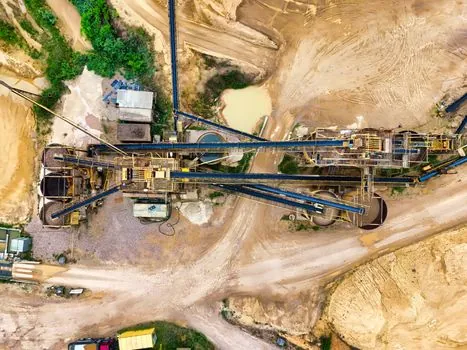
In O&G loops the dominant failure modes are fouling, under-deposit corrosion, and microbiologically influenced corrosion; the published compendium calls for monitoring flow rates, pressure drop, and chemistry makeup rate to keep the system from becoming the production bottleneck [S1]. Once-through seawater cooling also faces strict discharge temperature and biocide limits, which has pushed many operators toward closed-loop fresh water with plate-and-frame exchangers at the seawater interface.
In data center loops the dominant failure modes are coolant leak onto live PCBs, galvanic corrosion between dissimilar cold-plate metals, and pump cavitation when the CDU is undersized for transient AI workloads [S3][S4]. ASHRAE TC 9.9 documents pressure-test requirements, fluid-coupling ratings, and flexible-hose specifications specifically to bound these risks, while operators retrofitting air-cooled halls typically start with rear-door heat exchangers before committing to full direct-to-chip conversion [S3].
Selection criteria: who should pick which track
Specifying a cooling system for an O&G plant, a thermal management loop for AI servers, or a hybrid industrial chiller for medical imaging hardware is governed by the heat flux per unit area, the dielectric or corrosion requirement of the coolant, the available footprint, and the brownfield vs greenfield status of the site [S1][S2][S3]. Buyers with MW-class duties, hydrocarbon or saline exposure, and ASME-coded pressure vessels belong in the O&G track with shell-and-tube or plate-frame exchangers, fin-fan coolers, and engineered cooling towers [S1].
Buyers with kW-to-tens-of-kW per rack duties, leak-intolerance near live electronics, and ASHRAE-aligned fluid classes belong in the data center track with CDUs, cold plates, RDHx retrofits, or immersion tanks [S2][S3][S4]. Equipment that does not fit either profile, such as a 500 kW process heat dump or a sub-5 kW edge cabinet, can usually be served by a packaged industrial chiller or a sealed heat-exchanger skid sourced off-the-shelf. For related procurement discipline on filtration upstream of the cooling loop, the industrial filter sourcing playbook walks through the same spec-first logic.
Standards, guidelines, and where to anchor the spec
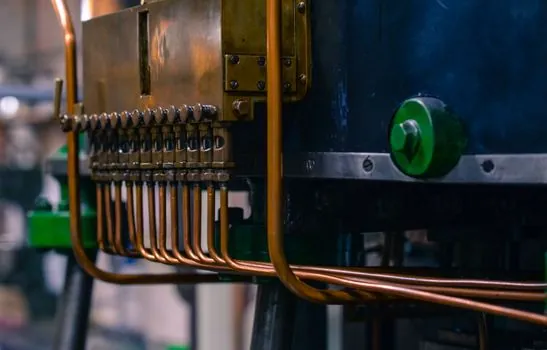
Anchor O&G cooling specs in the IPIECA energy efficiency compendium (cooling systems, last reviewed November 2022), which gives the canonical open/closed, once-through/recirculated taxonomy and the systems-approach checklist [S1]. Anchor data center specs in the ASHRAE TC 9.9 white paper on water-cooled servers, which covers CDU design, water quality, wetted materials, filtration, pressure testing, fluid couplings, and flexible hose ratings across 50 pages of working text [S4].
Cross-cutting building blocks, including industrial valves, flow meters, and lighting or pump-motor lamps and light fittings for control panels, should be spec'd to the loop class (process vs dielectric) rather than carried over by habit from the other industry. Generic valves, sensors, and connectors that ignore the fluid class are the most common cause of leakage, fouling, or warranty disputes on cross-industry liquid cooling projects.
Trackable signals over the next two quarters: ASHRAE A1–A4 fluid class expansion in published TC 9.9 guidance, hyperscaler direct-liquid-cooling deployment tonnage, and any new IPIECA or IOGP revision to the 2022 cooling-systems info sheet. Watch also for CDU vendor consolidation announcements and Chinese fabricator qualifications into Tier-1 immersion tank skids, since both will reset the cost curve for downstream AI cooling builds in 2026.