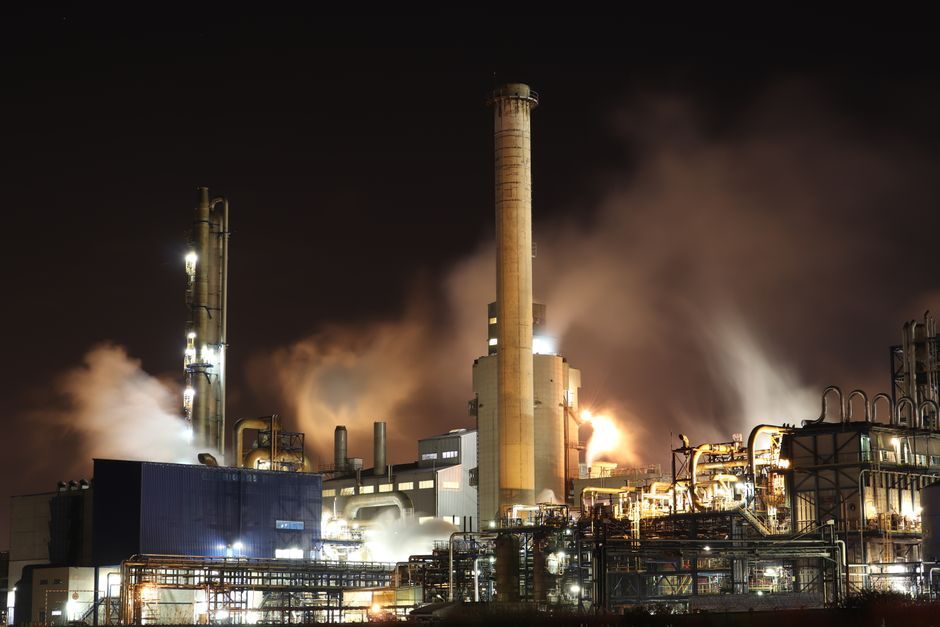
Fluoropolymer supply chains run from mined fluorspar (CaF2) and hydrogen fluoride (HF) through TFE/HFP/VE monomers to PTFE, PFA, FEP, ETFE and PVDF grades, with each tier carrying distinct purity, ASTM/ISO spec and sourcing risks [S2].
Wind's Product Chain Database (PDB) covers 5,154 industries and over 160,000 upstream and downstream relationships across A-share, H-share and major US-listed firms, providing the chain-mapping backbone that fluoropolymer spec engineers now lean on [S3].
Upstream Raw Materials and Monomer Tier
Upstream of any fluoropolymer resin sits the fluorspar-to-HF chain: acid-grade fluorspar (≥97% CaF2) reacts with sulfuric acid to produce HF, which is then converted to R22 (chlorodifluoromethane) and cracked into TFE (tetrafluoroethylene) monomer for PTFE/PFA/FEP, while HFP feeds FEP and PFA and vinylidene fluoride (VDF) feeds PVDF [S2]. HFP and VDF production lines typically run as co-product streams off the same HF acid train, which is why a single HF plant outage can ripple through multiple fluoropolymer families simultaneously.
Upstream of PVF (polyvinyl fluoride) coating service formulations, the chain adds an acetylene-to-VF (vinyl fluoride) monomer step plus specialty solvent carriers and adhesion promoters; the upstream-material section on ChemicalBook is structured as a direct mapping table that procurement teams cross-reference against their own pressure transmitter and reactor-instrumentation bills [S1].
Downstream Conversion and Coating Services
Downstream of PTFE/PFA/FEP resins, the chain splits into two main branches: (1) melt-processable fluoropolymer stock shapes (rod, tube, sheet) machined into seals, gaskets, valve seats and industrial valve liners, and (2) aqueous or solvent dispersions coated onto substrates for chemical-processing equipment, semiconductor wafer carriers, release films and architectural membrane [S2]. PVF coating services sit in branch (2) as a film-form dispersion, typically applied as a weatherable topcoat on metal panels, with one Chinese supplier (A.T.CHEMICAL, product-catalog index 6,589, Edge Rate 51) currently listed on ChemicalBook [S1].
PVDF and ETFE grades are widely specified for chemical-lining service, while PTFE-impregnated glass fabrics and PVF films are standard for outdoor-architectural and photovoltaic backsheet duty; the end-product dispersion in the Wind PDB map directly overlaps with the flow meter and PLC housing supply chain, since most wetted flow instruments and control-panel enclosures rely on a fluoropolymer barrier somewhere in their stack-up [S3].
Sourcing Map: Two ChemicalBook Suppliers Indexed
ChemicalBook's "Fluoropolymer" record (CB21127775, last refreshed 2026-07-18) currently lists 2 global suppliers: Hangzhou Ruilipu Commerce Co., Ltd (catalog index 31, Edge Rate 34, China) and Huanxin Fluoro Material Company Ltd (catalog index 75, Edge Rate 42, China, [email protected]) [S2]. The PVF coating record (CB5955147) is narrower — a single listed supplier — which is consistent with the much smaller global PVF film supply base relative to PTFE/PVDF commodity grades [S1].
Procurement engineers should treat the Edge Rate field as a transaction-history score rather than a quality certification, and cross-check both the resin grade (e.g. ASTM D4894 for PTFE, ASTM D3222 for PVDF) and the pressure sensor diaphragm-coating spec before locking a vendor for chemical-service duty [S2].
Criteria Comparison: PTFE vs PVDF vs PFA vs PVF
Four fluoropolymer families dominate the B2B spec sheet, and they line up against decision criteria as follows. (a) Continuous service temperature: PTFE ≈ 260 °C, PFA ≈ 260 °C, PVDF ≈ 150 °C, PVF film ≈ 107 °C — PVF is the lowest of the four. (b) Chemical resistance to strong acids/alkalis/solvents: PTFE ≈ PFA > PVDF > PVF for aggressive halogens and aromatics. (c) Processability: PFA and FEP are melt-processable; PTFE is not (sintered); PVDF is melt-processable and weldable; PVF is supplied only as film or dispersion. (d) Cost/lead-time: PVF coating services are the longest-lead and highest-cost per kg in the group, with single-supplier risk in the indexed ChemicalBook map [S1][S2].
For wetted servo-motor seal pots, chemical dosing lines and semiconductor wet-etch tools the PTFE/PFA pair is the default; for architectural and PV-backsheet duty the PVF film route is the conventional choice; for chemical-lining where weldability matters, PVDF is the workhorse.
Cross-Industry Linkages and the Wind PDB View
The Wind PDB map runs vertically from primary raw materials (fluorspar mining, sulfuric acid, HF) up through production equipment (HF acid towers, TFE reactors, plasma-cracking units, dispersion-coating lines) to downstream end-products that span chemicals, electronics, automotive, aerospace, medical and renewable energy [S3]. SDB (Supply Chain Database) layers customer-supplier disclosures from over 20,000 A-share and H-share companies on top, so a fluoropolymer plant outage can be cross-referenced to its downstream exposure in chemical dosing skids, diaphragm pump wetted parts and PV backsheet lines in the same query.
For spec engineers evaluating fluoropolymer-grade substitution, the Industry Map module aggregates listed and unlisted companies by region with bubble-chart visualization, which lets a sourcing team compare, for example, Zhejiang vs Jiangsu PVDF clusters in one view — a useful proxy for freight and lead-time risk [S3].
Limitations and Selection Watch-Outs
The ChemicalBook upstream/downstream tables in [S1] and [S2] are scaffold-only — both pages list the section headers (Upstream-Materialien, Downstream Produkte) with the data tables themselves unpopulated for these CB numbers, so the only verifiable items are the supplier count and the Edge Rate. Cross-referencing against the Wind PDB Industry Map and Supply Chain Database is necessary to get an actionable chain view [S3].
PVF coating services are not a drop-in for PTFE/PVDF: the lower service ceiling (~107 °C continuous) and the single-supplier index entry mean that any substitution decision needs a written delta on temperature, chemical-exposure and UV/weatherability duty, and ideally a sample trial on the actual substrate [S1]. For resin-grade decisions, the silicone rubber supply chain reference provides a useful side-by-side sourcing methodology when a fluoropolymer line is being qualified for the first time at a chemical plant.
Two trackable signals for the next quarter: (1) the count of Chinese fluoropolymer suppliers indexed on ChemicalBook for CB21127775 and CB5955147 — currently 2 and 1 respectively as of the 2026-07-18 and 2026-06-10 captures; (2) any update to the Wind PDB Industry Map that adds HF/TFE producers to the chemical sub-cluster, which would sharpen downstream risk-rotation work for PTFE/PVDF/PVF spec engineers [S1][S2][S3].