
Selection starts with four hard numbers — flow, head, viscosity and duty cycle — and four hard constraints — drive type, certification zone, wetted-material compatibility, and suction lift [S1][S3].
A diaphragm pump is a positive-displacement, reciprocating device in which a flexible membrane displaces fluid on the back stroke and draws it in on the front stroke, so it self-primes, runs dry without damage, and handles slurries and shear-sensitive media that would destroy a centrifugal pump [S3]. Industrial grades now span micro gas-pumps below 1 L/min up to bulk-transfer AODD (air-operated double diaphragm) units moving several hundred L/min [S1][S2].
Match Drive Type to Service First
AODD pumps dominate hazardous-area, abrasive-slurry, and high-viscosity transfer service because they run on plant air, tolerate stall, and need no electric certification in flammable atmospheres; the trade-off is air-supply cost at 1-3 Nm³/min per 100 L/min of liquid moved and audible exhaust noise above ~85 dB(A) [S3].
Electric-driven EODD pumps replace the air motor with a gear/motor drive, cutting energy use by roughly 50% versus equivalent AODD, and they integrate 4-20 mA, IO-Link or CANopen control for batch dosing; electric units carry ATEX/IECEx zone ratings and food-grade compliance to EC 1935/2004, FDA and 3-A for sanitary service [S5]. Micro diaphragm vacuum pumps and compressors — typically under 30 L/min and below 1 kg — are specified for medical suction, gas sampling, prosthetics and drug-infusion where size, weight, battery life and smooth flow dominate [S2].
Decode the Three Performance Curves Before Sizing
Average flow at atmospheric conditions (L/min) defines steady-state throughput for both gas and liquid pumps and is the number used for normal-duty sizing [S1].
For gas duty two figures matter: average flow (measured by soap-film flowmeter at NTP) and peak flow (measured by rotameter via velocity-pressure drop); a 20-30% derating margin must be subtracted for piping, valves and filter pressure loss in the gas circuit [S1]. For liquid duty the analogous numbers are liquid flow at zero pumping head, suction height (self-priming lift) and pressure height (discharge head); the working point is read from the pressure-flow curve, which is approximately linear between the dead-head condition (flow = 0) and the free-flow condition (head = 0) [S1]. Maximum starting positive pressure on a D-series dual-purpose pump must be checked against the worst-case downstream pressure at start-up, or the motor will stall [S1].
Wetted-Material and Seal Selection: Where Failures Actually Start

Body material choice (aluminium, cast iron, stainless 316, polypropylene, PVDF, PTFE-lined aluminium) and elastomer choice (NBR, EPDM, FKM/Viton, PTFE, Santoprene, Hytrel, TPE) set the chemical, temperature and abrasion envelope; PTFE and EPDM cover most aggressive chemicals to ~95 °C, while NBR suits oils and mild solvents below ~80 °C [S3].
Solids-handling capability scales with ball-valve seat geometry and check-valve clearance — typically up to 1.5-10 mm particle passage for industrial AODD, with semi-immersed or full-immersed diaphragm designs extending abrasive-slurry life by 50-100% [S3]. Sanitary service requires FDA / EC 1935/2004 / 3-A compliant elastomers and stainless wetted paths, plus CIP (clean-in-place) steam-sterilisation compatibility to 130 °C for dairy, beverage and pharma lines [S5]. For gas-side micro pumps used in medical and lab service, oilless construction with diaphragm-only compression eliminates the risk of lubricant carry-over into the patient or instrument stream [S2].
Certification and Hazardous-Area Mapping
ATEX 2014/34/EU and IECEx certification must match the actual zone — Group II Cat 2 (Zone 1+21) for normal hazardous-area operation, Group II Cat 3 (Zone 2+22) for the lighter end — and the gas group (IIA/IIB/IIC) plus temperature class (T1-T6) must each be checked against the worst-case fluid and ambient temperature [S5].
Electric EODD pumps ship from the factory with the certification plate welded to the centre section; the pneumatic exhaust path on an AODD can be ducted to a safe area for vapour recovery, and conductive diaphragm/ball materials prevent static charge build-up when transferring low-conductivity solvents below 50 pS/m [S3][S5]. For high-purity pharmaceutical or food service, surface finish to 3-A Standard 63-03 (Ra ≤ 0.8 µm on wetted surfaces) and FDA 21 CFR elastomer listings are non-negotiable, with documentation supplied per lot [S5].
Who Should NOT Pick the Mainstream AODD
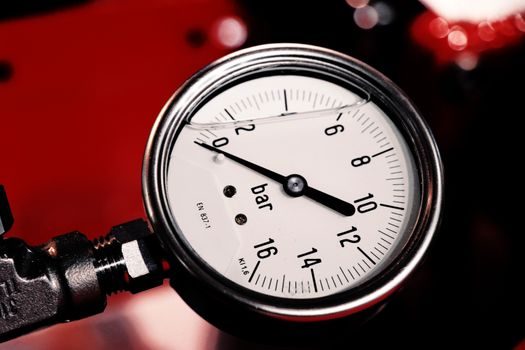
Continuous high-pressure service above 8 bar (116 psi) is outside the comfort zone of most AODD pumps, which are typically rated to 8 bar on the air side and 7-8 bar on the liquid side; for that duty a gear pump or a small piston pump is a better match [S3].
High-flow, low-viscosity clean-water transfer above ~200 L/min is also poor AODD economics — the air consumption per litre moved is roughly 4-10× that of a centrifugal pump on the same duty, and the air compressor's parasitic load dominates the total cost of ownership [S3]. For ultra-low-flow, high-precision dosing below 1 mL/min a peristaltic or syringe pump outperforms a diaphragm pump on pulse and accuracy. For cryogenic service below -40 °C, standard elastomers (NBR, EPDM, FKM) harden and crack; PTFE or metal-bellows alternatives become mandatory.
Quick Comparison of the Four Main Variants
AODD (air-operated double diaphragm) — typical 0-800 L/min, 0-8 bar, viscosity to 8000 cP, solids up to 10 mm, ATEX/IECEx via air drive; low purchase cost, high operating cost, stall-safe, 85-95 dB(A) [S3].
EODD (electric double diaphragm) — typical 0-500 L/min, 0-7 bar, ATEX/IECEx zone-rated, IO-Link/CANopen control; ~50% energy saving versus AODD, higher capex, quieter at 70-78 dB(A) [S5]. Micro diaphragm gas pump (miniature vacuum/pressure) — typical 0.1-30 L/min, up to -80 kPa vacuum or +1.5 bar pressure, 12/24 VDC, 50-500 g; medical, gas-sampling, prosthetic, infusion and lab [S2]. Sealless PTFE-lined process diaphragm pump (industrial process) — typical 0-150 L/min, 0-16 bar, full-PTFE wetted path for strong acids, HF and high-purity chemicals; premium capex, 0 ppm leakage. A reader cross-checking these against a different process discipline will find the same duty-first logic in our centrifugal pump selection map.
Acceptance-Test and Sourcing Checklist
A 2026-07 vendor datasheet should list measured average flow and peak flow, dead-head pressure, maximum solid size, sound level in dB(A) at 1 m, air consumption curve in Nm³/min per 100 L/min liquid, full ATEX/IECEx certificate number and notified-body ID, plus a written elastomer compatibility table for the specific process fluid [S1][S5].
Demand a factory hydrostatic test certificate (typically 1.5× rated pressure for 10 minutes) and a witnessed performance curve for the production serial range; an OEM capable of custom motor voltages, manifold ports, diaphragm materials and low-vibration tuning is the safer bet for medical and lab service, where a 3000-RPM pump versus a 6000-RPM pump can shift smooth flow output by 2-3× [S2]. A buyer mapping adjacent process needs — for example, gas-detection zoning in a plant that also handles flammable solvents — will recognise the same ATEX zone logic in our food-plant combustible gas detector spec map and can apply the certification read-across directly.