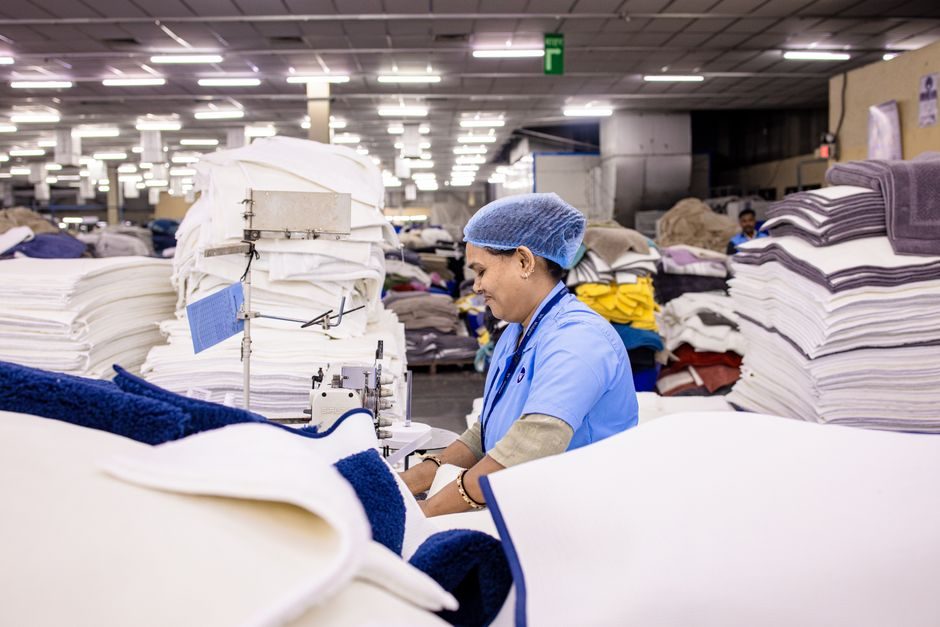
Full-service foam fabricators — those running 3-D CNC cutting, water-jet, die-cutting, adhesive lamination, skiving, and thermoforming on a single shop floor — now set the 2026 supply benchmark, with Heubach (Dallas, TX) advertising a new Tennessee plant that doubles capacity and vertical integration across foam, packaging, corrugated, and wooden crates [S3].
The addressable market sits inside a broader plastic-fabrication services pool valued near $350 billion in 2025 with a projected 7% CAGR through 2033, where North America retains the largest share and flexible/converted foam products form one of the densest sub-segments [S1].
What "foam fabrication" actually means in 2026 sourcing
Fabrication is the converting step that sits between the foam bun/block producer (e.g., Armacell engineered foams) and the end-customer, turning roll stock or slab stock into gaskets, inserts, orthopedic pads, and packaging [S3]. Converters like Heubach run nine in-house processes — 3-D CNC cutting, die cutting, adhesive lamination, heat sealing/bonding, skiving, heat thermoforming, water-jet cutting, slitting, and assembly — which is the practical minimum for taking an R&D sketch into production without sub-tier hand-offs [S3]. Asian fabricators such as TOPSUN and Foamty offer the same conversion envelope on plastic/rubber foam blocks and roll foams, but with PE, EVA, EPDM, IXPE and melamine foam as their base materials rather than PU [S7][S10].
Custom Foam Fabricators (customfoam.com) frames itself as a polyurethane specialist running lean manufacturing to ISO 9001:2015 and FDA standards, signalling that medical and food-contact PU is its primary lane, distinct from Heubach's mixed-material converting shop [S6].
Process capability vs. material family — the decision axis
Specifiers should separate two questions: which process do I need, and which foam chemistry fits the duty cycle. Heubach's published process menu is the cleanest reference: 3-D CNC for complex 3-D contours in PU/EPE, water-jet for closed-cell foams where thermal cut edges are unacceptable, die cutting for high-volume flat parts (Heubach cites "thousands of parts a day"), and skiving for tight thickness tolerance on bun stock [S3]. ARPLANK SALES, listed as a Heubach upstream supplier, sells EPE and EPP closed-cell planks only in 48″ × 72″ footprints at 4″ and 6″ thicknesses — a hard constraint to design around if you need those chemistries [S3].
On the PU/PE/EVA axis, SINKERY (Sinkeryfoam) and Foamty both advertise EVA, PE, EPDM, IXPE and melamine foam with custom density, hardness, and dimensional spec [S4][S10]. Modern Foam Industries (Mumbai) anchors the flexible PU side: flame-retardant foam, sponge rollers, and camping-mat grades, with no published ISO/FDA cert — typical for regional mattress-and-craft converters [S2]. For comparison: a chemical/medical specifier typically lands on a Heubach- or Custom-Foam-tier shop; an EVA case-insert or sports-mat specifier lands on a Foamty/TOPSUN-tier shop; a commodity bedding or craft buyer lands on a Modern Foam-tier shop.
Quality systems, regulatory hooks, and capacity signals
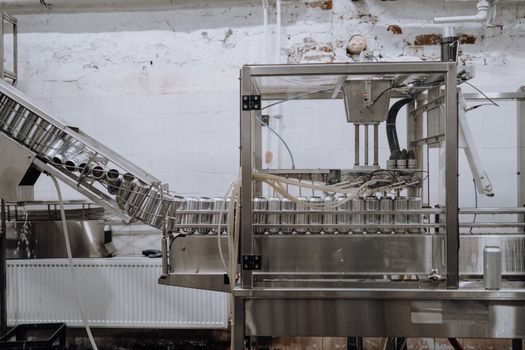
Custom Foam Fabricators declares ISO 9001:2015 plus FDA compliance for its PU work, which is the floor expectation for medical, food-contact, and automotive interior Tier-1 programs [S6]. Heubach's quality policy commits to "conformance to all Statutory and Regulatory requirements" without naming a specific ISO standard on the home page, but lists Armacell (a global engineered-foam major with two operating segments — Advanced Insulation and Engineered Foams) as a key upstream manufacturer [S3].
Capacity signals to track: Heubach's Tennessee plant doubles its in-house converting footprint [S3]; Foam Products Corporation explicitly positions itself as a manufacturer plus bulk distributor plus custom fabricator, meaning a single PO can pull from converted stock rather than waiting on a job-shop queue [S8]. For sourcing, a fabricator that also distributes bulk foam typically compresses lead time by 2–4 weeks versus a pure job shop — a fact procurement teams can verify by asking whether the supplier holds raw bun stock on-site.
Material selection map for engineers
PU flexible foam (Modern Foam Industries) — open-cell, comfort and packaging grades, ASTM D3574-style testing implied but not stated; flame-retardant variants available [S2]. PU custom molded/rigid — Custom Foam Fabricators' lane, ISO 9001:2015 + FDA, suitable for medical, orthopedic, and industrial gaskets [S6]. EPE/EPP closed cell (ARPLANK via Heubach) — 48″ × 72″ × 4″/6″ planks, used for automotive dunnage, helmet liners, returnable packaging [S3]. EVA / PE / EPDM / IXPE / melamine (Foamty, TOPSUN, SINKERY) — densities, hardness, and dimensions cut to spec; melamine foam is the only one that doubles as an acoustic + abrasive cleaner [S4][S7][S10].
For a controlled comparison, run your shortlist against four criteria: (1) chemistry fit (PU open-cell vs PE/EVA closed-cell vs EPP impact-grade), (2) process menu (does the shop run 3-D CNC + water-jet + die cut, or only 2-D die cut?), (3) cert floor (ISO 9001:2015 minimum; FDA needed for medical/food), and (4) vertical integration (bulk distributor + converter vs job-shop-only). Heubach scores on (2) and (4) but does not publish an ISO badge on the home page; Custom Foam Fabricators scores on (3) and PU depth; Modern Foam scores on commodity flexible-PU pricing but lacks cert transparency [S2][S3][S6].
Common sourcing pitfalls and how to avoid them
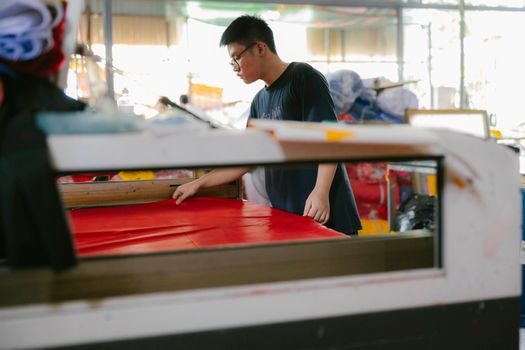
The first pitfall is treating "foam supplier" and "foam fabricator" as interchangeable. A maker of foam buns does not necessarily run water-jet or thermoforming — that capability lives at the converter. Foam Products Corporation's three-in-one positioning (manufacturer, distributor, fabricator) is rare and worth the RFQ even at a slightly higher unit cost [S8].
The second pitfall is the platform-listing illusion. Alibaba and Made-in-China list "600+" fabrication-factory suppliers and "foam box" factories respectively, but those pages mix paper-box, gift-box, and foam vendors with no filtering by chemistry or process [S5][S9]. Treat those listings as leads, not as vetted fabricators — always re-confirm the exact chemistry (PU vs PE vs EVA) and the cutting process on the supplier's own site before issuing an RFQ.
The third pitfall is over-specifying. PU is not mandatory if the duty cycle is dunnage, returnable packaging, or a case insert — EPE/EPP/EVA/XPE close-cell foams deliver better impact absorption per dollar and resist water [S3][S4][S10]. Conversely, EVA is the wrong choice for a medical position pad — stick with PU and an ISO 9001:2015 + FDA shop [S6].
How to write the RFQ that actually gets a clean quote
Send a single PDF with: foam chemistry (PU / PE / EVA / EPP / melamine / EPDM / IXPE), density in kg/m³ or pcf, finished part dimensions with GD&T, tolerance on thickness (skiving can hold ±0.005″ on PU bun, die cutting typically ±0.015″), annual volume, required certs (ISO 9001:2015, FDA, UL 94 if flame rating matters), and any in-house process preference (e.g., "water-jet only — no thermal cut on edges") [S3][S6]. A fabricator that responds within 48 hours with a DFM note rather than a generic "we can do it" is the shop that will hold schedule on the third PO. A practical sourcing playbook for this category is laid out in How to Choose a Foam Fabrication Supplier: Spec Map for 2026; for a related converting-and-fabrication cross-reference, see Industrial Magnet Types and Applications: A Specifier's Working Map and Knife Gate Valve Suppliers: 2026 China Sourcing Map, Price Bands, and Capacity Signals.
Two trackable signals to watch into Q4 2026: Heubach's Tennessee plant ramp curve (it has just gone live and capacity is reportedly doubled — watch for lead-time compression on converting work) [S3], and the share of fabricators publishing ISO 9001:2015 cert numbers directly on the home page rather than only on a "Quality" subpage. Both move the credible-shortlist count in the same direction that quality teams want it to move.
The underlying component specifications are covered under lost foam casting line, pressure transmitter, and flow meter.