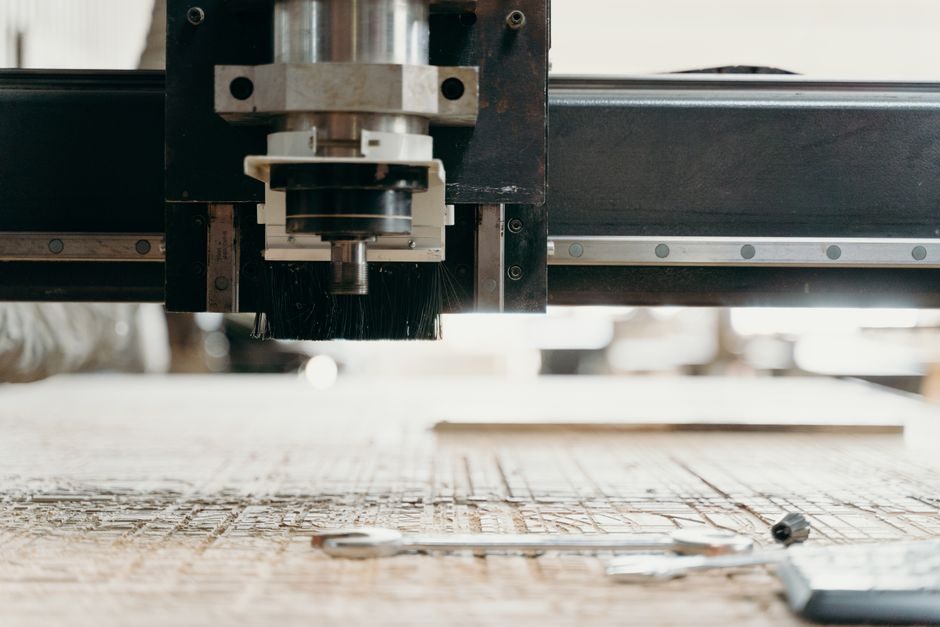
Foam fabrication is the conversion of buns, sheets, and rolls of cellular polymer (PU, PE, EVA, neoprene, EPDM, melamine) into finished parts via waterjet, CNC contour cutting, die-cutting, compression molding, lamination, or thermoforming, and the right shop is the one that publishes density (lb/ft³), IFD/ILD firmness, and flammability data against the standard your part must clear.
The U.S. custom foam fabricator market is dense and segmented: Keystone Foam (Western PA, 40+ years) [S2], Precision Fab Products (Versailles, OH) [S3], Foamcraft (1952 vintage, polyurethane specialist) [S4], Pak-Lite / PLI (Commerce, CA, custom converting) [S6], kristoFOAM (SKB-case licensed converter) [S7], American Foam Rubber / Southwest Foam Fabricators (Texas, 70+ years, woman-owned) [S8], Sterling Manufacturing (Houston, PU packaging + fabrication) [S9], G&T Industries (100% employee-owned) [S10], and CF Cushions (retail cushions and pillows) [S5] all currently quote to the same buyer RFQs but serve noticeably different niches.
Anchor the Decision on Material Family, Not on Shop Name
Two polyurethane foams of identical appearance can diverge by 30–50% in compressive strength and by an order of magnitude in resilience, because the dominant variables are density (lb/ft³) and IFD/ILD firmness (force in lb at 25% indentation, 4 in² foot) rather than chemistry alone [S3]. Buyers who specify only "PU foam cushion" routinely receive the cheapest open-cell slab the shop has on the floor, which is the single most common root cause of field returns in seating and bedding [S2].
For medical and bedding use, antimicrobial and flame-resistant PU, latex, and viscoelastic (memory) foams dominate the shortlist; for industrial packaging, anti-static (typically 10⁶–10⁹ Ω surface resistivity) and moisture-protected PE, EPE, and EVA take over; for military and aerospace, Mil-Spec–qualified foams are non-negotiable, with Keystone Foam explicitly listing Mil Spec-PRF-26514 G among the standards it builds to [S2]. Industrial-Vibration and acoustic-control projects most often use melamine (basotect-class) or high-density PU, while gasket and sealing work shifts toward closed-cell neoprene, EPDM, PVC, and PE foam tapes [S3].
Map Fabrication Method to Tolerance, Geometry, and Run Size
Foam conversion is not one process: waterjet cutting routinely holds ±0.005 in (≈0.13 mm) edge tolerance on sheets up to 60 in wide with no thermal HAZ, which is why medical, aerospace, and gasket shops default to it for small lots; CNC contour cutting (oscillating knife, router, or hot wire) handles 3-D contouring of thick buns at production scale; die-cutting and clicker presses win on flat 2-D parts in runs above a few thousand pieces; lamination and PSA coating add value when the part must bond to fabric, film, or another foam [S2][S3]. Buyers should confirm which of these methods a shop runs in-house, because sub-contracted waterjet typically adds 5–10 working days versus an integrated cell [S3].
For projects that demand cast-metal-like surface finish on foam patterns — for example, lost-foam casting patterns used in metalfoundries — the fabrication discipline crosses into the lost-foam casting line workflow, where EPS bead density, fusion bead integrity, and tool path control matter as much as the cutting tolerance. Foam fabricators serving both industrial-packaging and casting-pattern customers, such as PLI's PLI Fabrication arm [S6], explicitly position around this dual-use capability.
Spec Sheet Demands: Density, IFD/ILD, Flammability, and Cell Structure

For anti-static or ESD packaging, surface resistivity in Ω/sq must also be on the data sheet, and for acoustical foam, NRC (Noise Reduction Coefficient) above 0.5 is the typical specifier threshold [S2].
Reviewers should reject any quote that returns only a part number and a price. Confirmed, traceable published examples in this segment include Foamcraft's 65+ year polyurethane focus since 1952 [S4], American Foam Rubber's 70+ year history across foam fabrication and upholstery supplies [S8], and Keystone Foam's explicit medical / military / bedding / furniture / packaging split with antimicrobial and flame-resistant options called out as standard SKUs [S2]. Material breadth itself is a signal: a shop that lists PU, latex, memory, PE, EPE, EVA, neoprene, EPDM, melamine, and reticulated foams on one capabilities page, as Precision Fab Products does [S3], can typically cross-substitute when a single resin is allocation-constrained.
Compliance and Certification: When the Standard Itself Filters the Shop List
Mil Spec-PRF-26514 G is the gating citation for U.S. Department of Defense foam packaging and is one of the few lines on a fabricator's homepage that proves audited military capability [S2]. For automotive seating and trim, FMVSS 302 (horizontal burn rate) and CMVSS 302 are routine; for California furniture, CAL TB 117-2013 (smolder, not open flame) is the current cite, with the older CAL TB 117 Section A still appearing in legacy drawings; for building and acoustic products, UL 94 HF-1 and ASTM E84 Class A/B ratings are the typical ask. Where a project crosses into process-control instrumentation — for example, foam-in-place dispense machines tied to a pressure sensor loop or a flow meter on the polyol line — the foam supplier's competence no longer carries the build alone, and the buyer should verify the equipment side against the same audit trail.
Medical foam brings its own compliance layer: ISO 13485 for the converting shop, USP Class VI or ISO 10993 cytotoxicity for the foam itself when the part contacts skin or wound dressings, and RoHS / REACH declarations for any antimicrobial or flame-retardant additive. Shops that publish these documents on the customer portal shorten incoming-QA time and are the safer pick for Class I and Class II device builds [S2]. When the foam part is part of a broader automated line — kitting, case insert, or robotics-friendly packaging — a PLC–driven converting cell with documented recipe control is a stronger signal than a quote sheet alone.
Capacity, Lead Time, and the Run-Size Filter
Shop size is a real decision variable: a 40-year-old single-site custom shop like Keystone Foam (Western PA) [S2] will prototype a 50-piece medical kit in days, while a multi-facility converter like Pak-Lite / PLI with its newer Commerce, CA facility [S6] is built for higher-volume custom converting runs and Fortune 500 kitting. G&T Industries' 100% employee-owned structure [S10] and Foamcraft's 65+ year polyurethane specialization [S4] both signal long-horizon operational stability, which matters when a foam part has a 10-year OEM service obligation.
For a parallel selection exercise on related industrial components, the draw-wire sensor selection guide uses the same shop-vs-spec trade-off framework, and the carrying-case spec map overlaps directly with foam insert sourcing — most SKB and Pelican-style cases ship with fabricated foam interiors, and kristoFOAM [S7] sits exactly at that intersection. A side-by-side comparison of the realistic options for a 1,000-piece medical device cushion RFQ in 2026 looks like this: (1) a Mil-Spec shop like Keystone [S2] — highest compliance, premium price, 3–5 week lead time; (2) a general PU fabricator like Precision Fab Products [S3] or Sterling [S9] — broad material access, mid price, 2–3 week lead time; (3) a retail-cushion specialist like CF Cushions [S5] — fastest quote turnaround, lowest price, but limited ISO 13485 / Mil-Spec support; (4) a foam-to-case integrator like kristoFOAM [S7] — best when the part is an insert inside a licensed case, not when it stands alone.
Quality Systems, Audits, and What to Ask on the First Call
The first supplier call should land on five questions: which density and IFD/ILD values are you quoting against (ask for the data sheet, not the catalog number), what flammability standard does this part need to pass and can you ship a tested sample (CAL 117, FMVSS 302, UL 94 HF-1, or Mil Spec-PRF-26514 G) [S2], what is the cell structure and is it reticulated where the drawing implies it, what is your published dimensional tolerance on the cutting method in play (waterjet, CNC, die), and can you provide lot-traceable raw material certificates. A fabricator that answers all five with documents in hand is a different risk profile than one that answers with "we'll match whatever you send."
When the foam component sits inside a sealed industrial enclosure or skid, it may share a bill of materials with industrial valves or pressure transmitters that also have to pass the same audit, and the fabricator's traceability paperwork should look the same as those peers' paperwork. If the supplier cannot produce a sample, a data sheet, a flammability certificate, and a capacity statement on the first call, the project risk is being pushed downstream into incoming-QA, which is the most expensive place to find it.
Red Flags and Who Should NOT Pick the Mainstream Option
Do not pick a general PU/PE fabricator when the part is going into a defense, aerospace, or sterile medical device build; the audit gap with a Mil-Spec or ISO 13485 shop will surface in qualification testing, not in the quote stage. Do not pick a retail-cushion shop for an industrial anti-static or vibration-damping job, because their material breadth and additive inventory typically do not cover ESD or UL 94 HF-1. Do not pick a foam-to-case integrator for a freestanding foam component, because their throughput math assumes a captive case build. And do not pick on lead time alone — a 5-day quote from a shop that has never cut the requested material is more expensive in the long run than a 15-day quote from a shop that cuts it every week [S3][S2].
Trackable signals to watch in the next buying cycle: whether candidate shops publish lot-level certificates of conformance on the customer portal (still rare in mid-market fabricators), whether flammability data sheets name the issuing lab rather than the reseller, and whether CNC cell capacity is documented in hours/week or in machine count. A shortlist for a 2026 industrial foam RFQ therefore runs: a Mil-Spec-qualified shop for defense and medical, a multi-material general fabricator for packaging and kitting, a case-integrator for SKB/Pelican-style inserts, and a retail-cushion specialist for short-run consumer builds — with the actual award driven by the four numeric data points (density, IFD/ILD, flammability, cell structure) rather than by homepage claims.