Industrial magnets divide cleanly into four functional families — permanent magnets, electromagnets, soft-magnetic materials, and finished magnetic assemblies — with permanent grades alone covering NdFeB, SmCo, Alnico, and hard ferrite across lifting, holding, separation, sensing and motion duties [S1][S4].
The decision rarely turns on "strength" alone; it pivots on remanence (Br), maximum operating temperature, corrosion resistance, mechanical brittleness, and whether the field must be switchable on demand, which is why ferrite, Alnico, SmCo, and NdFeB coexist rather than one replacing the others [S1][S3].
Permanent Magnet Materials and Where Each Wins
Neodymium-iron-boron (NdFeB) discs, rings, rods, spheres, Halbach arrays, and pot-magnet housings dominate the high-energy-density SKUs listed by tier-one distributors, with pot-magnet formats supplied in countersunk, threaded-stud, internal-thread, through-hole, deep-pot and shallow-pot variants for one-step mechanical mounting [S1]. NdFeB is the default for compact high-force lifting, holding, and motor assemblies where temperature stays inside roughly 80–150 °C grade limits, and Magnet Applications reports a cumulative one billion compression-bonded neodymium magnets produced to date as evidence of the scale at which this grade is consumed [S3].
Samarium-cobalt (SmCo) discs, central-hole discs, rectangles and Halbach arrays sit in a separate high-temperature lane, trading energy product for thermal headroom and corrosion resistance that suits aerospace, defence, and downhole sensing — SmCo does not require the surface coatings that nickel-plated NdFeB demands for humid service [S1]. Alnico rods, buttons, round bars, rectangular bars, large power magnets, and pocket-format magnets round out the high-temperature permanent family, retaining useful flux at temperatures where NdFeB grades have already passed their Curie point but at a fraction of the coercivity, which is why Alnico is specified for guitar pickups, magnetos, and legacy instrumentation rather than modern brushless DC rotors [S1].
Electromagnets, Pot Magnets, and Switchable Holding
UK-manufactured round and rectangular electromagnets in 12 V and 24 V coils, plus "energise-to-release" variants, are listed as standard catalogue items — the energise-to-release architecture is the conventional safety pattern for machine doors and access guarding, where loss of power must drop the load [S1]. Round pot magnets with internal/external threads, countersunk heads, hook attachments, eyebolts, and through-hole bores are listed as configurable housings, and the same supplier groups magnetic catches into Elite S2/S5/S8, Elite F5, Shaker, IF1/IF2/IF4, and economy/clip-in/knock-in recessed patterns, indicating a mature fit-and-finish map for cabinet and enclosure latching rather than a single part number [S1].
Lifting Magnets, Separators, and Sweepers
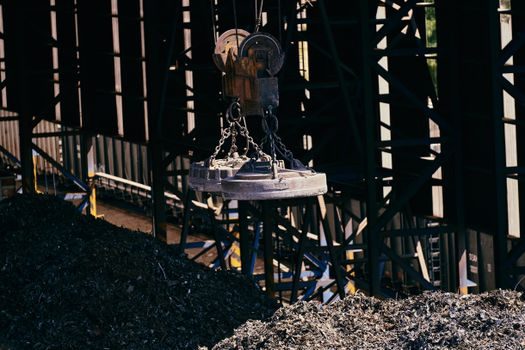
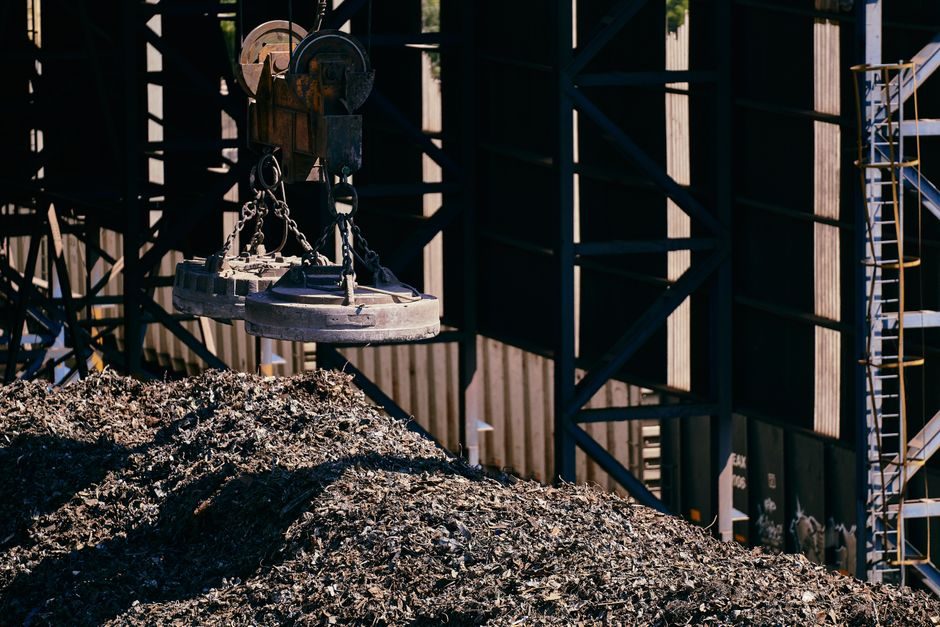
Permanent lifting-magnet SKUs from a US family-run builder span 400 lb (Model 350), 600 lb (Model 750), 1000 lb (Model 1037JR), 1500 lb (Model 1037), and 2500 lb (Model 1057) nameplate capacities, with the 2500 lb unit listed at $1,260 and the 400 lb unit at $340, giving a concrete price-per-pound reference for permanent (non-powered) lifters rather than electromagnets [S2]. Magnetic Specialties, in operation since 1950, frames its product line around lifting iron castings, plate and sheet steel, plus overhead magnetic separators, magnetic sweepers for nail and steel-filings recovery, and hand magnets for positioning and sign-capping duties [S2].
On the separation side, magnetic grids and grates (round and square), magnetic tubes and rods, drawer magnets, overband magnets, plate magnets, torpedo in-line magnets, and grinder-plate magnets form a complete foreign-material-removal toolkit for bulk-handling lines, while hand-held magnetic sweepers, 36" walk-behind sweepers, and forklift-mounted combi sweepers with easy-clean discharge cover the floor-recovery duty [S1][S2]. Industrial Magnetics Inc. (IMI) explicitly markets "On the Shelf. On Your Line." in-stock welding clamps and lifting magnets alongside engineered separation systems, reflecting that magnetic separation is split between standard catalogue hardware and engineered process skids [S4].
Flexible Magnets, Halbach Arrays, and Generator-Grade Assemblies
Magnetic rubber sheet, coloured vinyl-faced sheet, flexible strips, warehouse magnets, kiss-cut squares, magnetic labels, planning squares/circles, neodymium-backed magnetic rubber tape, printable magnetic sheet, magnetic tape, and steel tape form the flexible-magnet family used in retail signage, OEM fixtures, and warehouse racking rather than load-bearing lift [S1]. Halbach arrays — self-shielding permanent-magnet patterns that concentrate flux on one face while cancelling it on the other — are stocked as both neodymium and samarium-cobalt variants, indicating a mature catalogue understanding of their role in generator rotors, magnetic refrigeration research rigs, and particle-beam focusing [S1].
Generator magnets appear as a dedicated SKU family, signalling that pre-charged, balanced, and dimensionally graded magnet sets are sold as sub-assemblies for wind and small-engine generator builds rather than as raw NdFeB bricks, which a buyer would otherwise have to magnetise and balance in-house [S1]. For motion and process equipment buyers weighing motor and drive selection alongside magnet grade, the engineering references in Electric Motors and Drives: Fundamentals, Types and Applications treat magnet materials as a subsystem choice inside the broader drivetrain, not as a stand-alone component.
Selection Criteria Comparison: Which Grade Fits Which Duty

Buyers should match grade to four criteria simultaneously: peak energy product, maximum service temperature, corrosion/coating requirement, and whether the field must be switchable. NdFeB wins on raw energy product but needs protective plating and is the most temperature-limited; SmCo trades energy product for thermal headroom and intrinsic corrosion resistance; Alnico holds the highest useful service temperature at low coercivity; hard ferrite is the lowest-cost, corrosion-immune, lowest-energy option; and electromagnets in 12 V/24 V coils add the on/off axis at the cost of continuous power and cabling [S1][S3].
Two further dimensions decide between catalogue and engineered supply: the required geometry (disc, ring, pot, block, Halbach, assembly) and the volume of supply. Magnet Applications sells 6–12+ month stocking agreements and highlights reduced reliance on China for buyers navigating current export-control friction, which is a sourcing-architecture decision independent of the magnetic spec [S3]. For integrators pairing magnetic fixturing with structural housings, the Gasket Selection Map and Aluminum Coil Types references sit on the same drawing and follow the same answer-first logic — name the spec band, then the part number.
Supply-Chain Signals Worth Tracking
Three signals are worth watching into Q4 2026: (1) export-control-driven stocking programmes, with manufacturers explicitly offering long-term agreements and U.S./U.K. held inventory to de-risk China-dependent rare-earth supply [S3]; (2) a MarketsandMarkets "Magnetic Materials Market" report tracking the magnetic-materials segment by type (semi-hard, soft) and application, with a July 2026 update cycle, useful for sanity-checking volume assumptions against in-house forecasts [S5]; and (3) the continuing bifurcation between standardised in-stock hardware (lifting magnets, pot magnets, sweepers, electromagnets) and engineered assemblies sold on application-engineering support, which IMI positions as its "Industries / Applications" value-add [S4].
For buyers cross-checking magnet grade against adjacent process equipment, the Gasket Suppliers 2026 and Plug Valve Selection Map references on SourceBySpec apply the same family-by-family, spec-band-first discipline to fluid-handling components, and reinforce the principle that magnet selection is a property-driven engineering choice, not a brand-driven one.
Component reference pages worth checking: industrial adhesive, industrial borescope, and industrial buzzer.