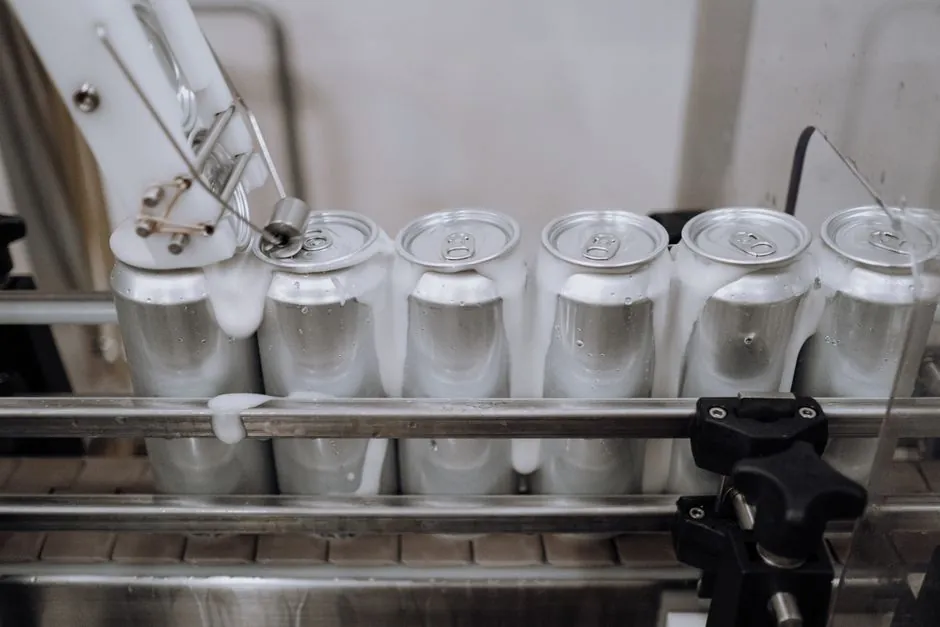
AMR selection for food and beverage lines in 2026 is gated by three engineering facts: chassis material and surface finish, washdown tolerance, and navigation robustness on wet or reflective floors. The class of vehicle sits inside the broader AMR robot family, distinct from AGV robot systems that follow fixed magnetic or QR-tape paths [S1][S3].
On 2026-05-30, Shanghai Xixi Intelligent announced a joint venture (Xiyang Jiuyao) targeting airline-catering meal assembly, claiming 99.99% tray-build accuracy and a 1–2 month public rollout window [S7]. The deployment is a useful signal that food-grade mobile manipulation is moving from pilot to production in adjacent catering verticals, and the same engineering gates apply to beverage, dairy, and bakery plants.
Chassis material, surface finish, and corrosion gates
Stainless steel 304 or 316L chassis with electro-polished or brushed finishes is the default specification for direct-food-contact zones in beverage and dairy plants, because plain cold-rolled steel corrodes inside 6–12 months under daily caustic washdown [S1]. ABB's AMR T702 documents Visual SLAM navigation and a safety-rated architecture but does not in itself list a food-grade variant, so integrators pair the navigation stack with a third-party stainless skid [S1].
Surface roughness below Ra 0.8 µm is a common food-zone cut, because bacterial biofilm retention scales with finish roughness on horizontal ledges. Avoid painted or powder-coated steel for any zone exposed to daily CIP (clean-in-place) foam, since alkaline detergents at 60–80 °C lift powder coat inside 18 months.
Washdown rating: IP65, IP66, IP67, IP69K gates
IP65 is the minimum ingress protection generally accepted for splash zones, IP66 adds resistance to powerful water jets, IP67 permits temporary immersion to 1 m for 30 min, and IP69K specifies high-temperature, high-pressure close-range spray, which matches the 80 °C, 80–100 bar CIP jets used in dairy fillers [S1]. The four ratings are not equivalent, and specifying IP65 where IP69K is required is a documented failure mode in beverage retrofit projects.
Connectors, cable glands, and wheel hubs are the typical leak paths. M12 stainless-steel connectors with IP67 ratings are the floor for new builds, while IP69K is reserved for washdown zones directly above filler and bottle-rinse stations. Battery enclosures warrant a separate ingress rating because condensation on Li-ion cells is a safety hazard, not just a reliability one.
Navigation stack: SLAM, QR, magnetic tape, and reflective floors

Visual SLAM, 2D LiDAR SLAM, and QR-code floor tape are the three navigation families a food-plant buyer will see on 2026 quote sheets [S1][S3]. The Springer retail-AMR study documents a differential-drive platform fusing a depth camera and an RP LiDAR for real-time navigation, with YOLO-based object detection for carton counting, which is a representative sensor pair for ambient and chilled zones [S3].
Wet, oily, or polished-stone floors create specular returns that confuse 2D LiDAR, and stainless steel racking adds multi-path reflections. Counter-measures available in commercial stacks include multi-echo LiDAR receivers, 3D time-of-flight cameras, and ceiling-mounted reference fiducials; budget quotes rarely include all three. Compare the four main navigation options against four decision criteria below to anchor the spec conversation.
The Cartographer algorithm paired with an LQG controller, as documented in the CNC metal-shaving AMR study, demonstrates one open-source SLAM path that lowers cumulative error through loop closure, a method buyers can request integrators to demonstrate on-site [S5]. Map-edit tooling matters: if a conveyor is moved, the AMR map should re-localize without a vendor service call.
Payload, lift, and roller-top integration
Payload classes split into low (50–200 kg) for case-picking, mid (500–1000 kg) for pallet transfer, and high (1500–2500 kg) for full-pallet jack replacement, with a small number of heavy-class units above 3000 kg for bulk container handling [S4]. MSI's AMR-AI-Lift demonstrates a QR-code shelf recognition lift module that picks and delivers shelving, while the AMR-AI-Roller variant integrates powered top rollers to dock with fixed line conveyors [S4].
Lift mechanism hygiene is a frequent miss in specifications: a powder-coated scissor lift will corrode inside the same washdown window as a painted chassis, so specify stainless lift columns and food-grade grease (NSF H1 registered) on all pivot points. For dairy fillers running 24/7, mean-time-between-failure on the lift actuator is a hard gate, and most vendors will not publish a figure without an NDA.
Safety, fleet management, and standards floor
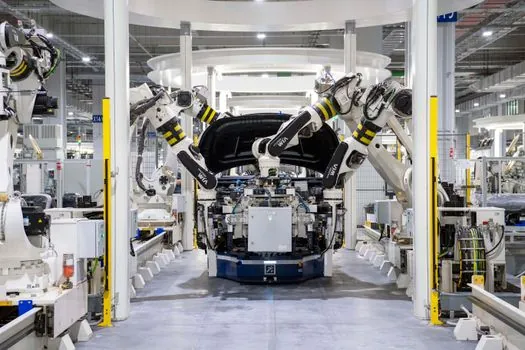
ISO 3691-4 is the driverless industrial truck safety standard, and EN 1525 historically covered the same ground for older fleets; any 2026 quote should reference one of the two. Functional safety on the vehicle is typically structured around PL d per ISO 13849-1, with safety LiDAR scanners rated to Performance Level d and Category 3 forming the perimeter guard [S1].
Fleet management software sits above the hardware: ABB AMR Studio, MSI's fleet controller, and the Xixi Intelligent orchestration stack each support traffic management, map sharing, and order dispatch [S1][S4][S7]. For plants mixing AMRs with collaborative robot cells, the fleet manager must publish shared map frames so a cobot picker and an AMR runner do not fight over a shared handover zone.
Sanitation, lubrication, and cleanability gates
Food-grade H1 lubricant on every lubrication point is a hard minimum for any zone with open product exposure, and H1 incidental-contact grease is a separate, more conservative specification. Wheel materials split between polyurethane (quiet, but can absorb water and harbor bacteria in crevices) and solid rubber or phenolic (cleaner, but harder on tile floors). For more on how bearing and lubricant choices cascade into washdown performance, see this thrust bearing selection for food processing lines reference. [S5]
Crevice-free fork pockets, sloped top surfaces for runoff, and tool-free wheel removal for sanitation are the three mechanical features that most often separate a food-grade build from a general-purpose unit with a stainless cover. Drain holes must be designed so they do not become bio-load reservoirs themselves.
Who this specification is for, and where it breaks
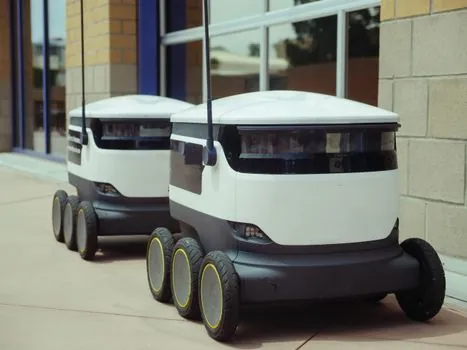
This stack fits beverage, dairy, bakery, and ready-meal plants with daily CIP, ambient-to-chilled (-25 °C to +30 °C) zones, and pallet or rack payloads up to about 1500 kg per vehicle. It does not fit explosive-dust grain elevators, which require ATEX category 2 or 3 certified vehicles with dust-ignition-proof enclosures, nor does it fit raw-meat primary processing, where USDA-FSIS sanitation rules add requirements beyond typical NSF or 3-A standards [S1].
For plants where ambient lighting and floor reflectivity are uncontrollable, treat the navigation decision as a vendor pilot, not a paper spec. For plants running close to 24/7 with minimal shutdown windows, battery chemistry and opportunity-charging tolerance are the dominant uptime gates, and a LiFePO4 pack with opportunity charging at 80% depth-of-discharge typically outpaces NMC on cycle life at the cost of lower energy density.
Trackable signals through the rest of 2026: vendor disclosures of NSF/3-A certified AMR variants, integrator case studies in dairy and brewery retrofits, and any 2026 revisions to ISO 3691-4 that touch mixed-fleet traffic with manual forklifts. Adjacent reference material on adjacent plant equipment, such as lighting equipment and electric lamps for hygiene-rated facility lighting, rounds out the food-plant spec package.