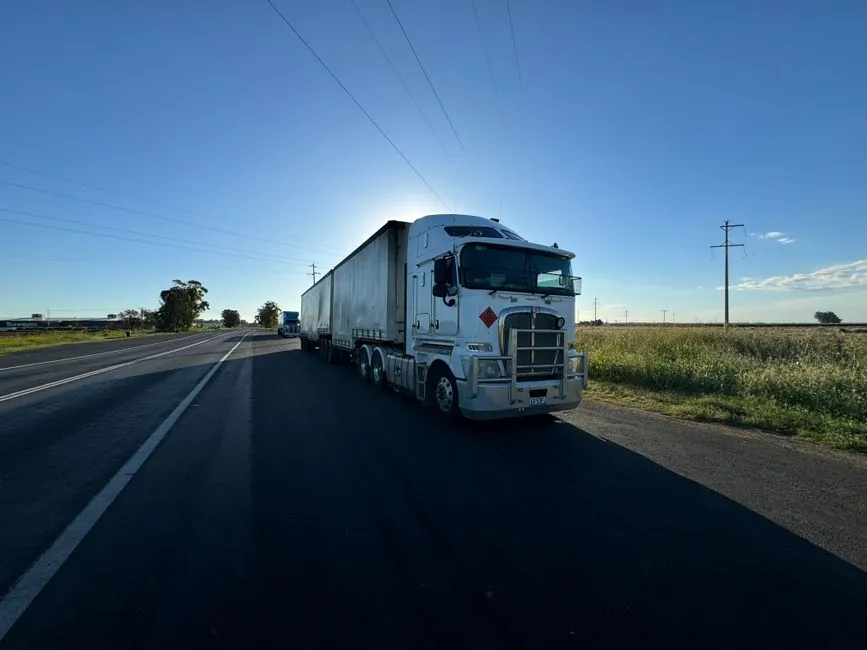
Food and beverage plants spec truck scales against three non-negotiable gates: NTEP or OIML legal-for-trade certification to NIST Handbook 44 Section 2.20 (Class III for bulk commodity receiving), IP66-69K washdown protection for daily high-pressure cleaning, and a platform capacity sized to truck tare plus maximum payload with a 10-20% forward buffer [S2][S4].
Selection is driven by the heaviest inbound vehicle and the harshest sanitation cycle, not by average load: a 15-ton tri-axle truck at 30-ton payload needs a minimum 45-ton scale, with 50-60 ton models recommended for growth headroom [S4]. Receiving accuracy directly stops shrinkage, since a typical distributor catches invoice-to-actual discrepancies at the dock before payment is released [S2].
Capacity, Platform Geometry, and Vehicle Match
Capacity is governed by the equation Truck Tare + Maximum Payload = minimum scale capacity, with platform length exceeding the longest wheelbase by 1.5 m and platform width exceeding the widest track by 0.8 m to prevent wheel overhang during weighment [S4]. For a mixed fleet, size to the largest anticipated vehicle, not the most common one, because retrofitting a second scale is far more expensive than overbuilding the first [S3].
Food plants handling tanker trucks of liquid sugar, milk, or edible oils typically land in the 50-80 ton range with platforms 3 m wide by 12-24 m long, while dry-bulk flour or sugar receiving in standard tri-axle trailers falls in the 45-60 ton band [S4]. Going above the rated capacity damages load cells and produces readings that fail audit, so a 10-20% buffer is mandatory, not optional [S2][S4].
Washdown, Sanitation Cycles, and IP Ratings
Sanitation is the single biggest failure driver in food-plant scales; the closer the scale sits to splash zones, foamers, and COP wash stations, the tougher the enclosure spec must be [S6]. List every chemical, concentration, water temperature, and spray pressure the platform will see in a single shift, then design for the harshest cycle, because hot wash water on a cold platform pulls moisture into load cell cavities and degrades accuracy over time [S6].
For raw receiving and wet processing areas, specify IP66 or IP69K load cells, stainless steel or hot-dip galvanized decks, and hermetically sealed junction boxes; standard Munsell N6.5 paint coatings are adequate only for dry-goods warehouses with minimal washdown exposure [S4][S6]. Floor scales used in food distribution typically rate 1,000-20,000 lb capacity on platforms from 2 ft x 2 ft up to 5 ft x 7 ft, and the same IP logic applies at the smaller end [S5].
Legal-for-Trade Accuracy: NIST Handbook 44 Class III
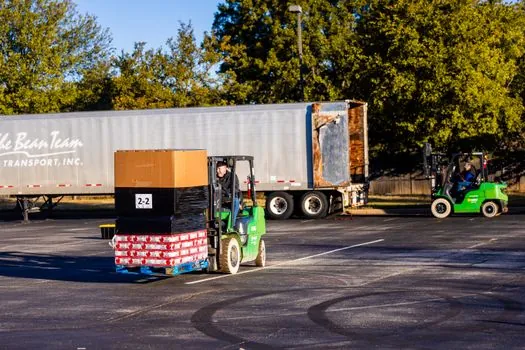
NIST Handbook 44 Section 2.20 is the governing document, and a food warehouse receiving bulk commodities almost always needs a Class III scale to satisfy billing, inventory verification, and chain-of-custody recordkeeping [S2]. A Class III installation carries specific n(max) and tolerance requirements that the indicator, load cells, and installation must satisfy as a system, not as individual components, which is why matched NTEP-certified kits are the safe default for new builds [S2][S5].
OIML R76 is the international equivalent commonly required on equipment shipped outside North America, and dual NTEP/OIML certification is now standard on most mid-range industrial indicators from established suppliers [S5]. Skipping the certification step to save 5-15% on hardware typically disqualifies the scale from legal billing and creates audit exposure during USDA FSIS or FDA net-content reviews [S2][S5].
Mounting Type and Site Drainage
Four configurations compete: pit-mounted (flush deck, lower civil cost for driver, requires drainage), surface-mounted (above-ground, needs approach ramps, simplest to service), low-profile (reduced deck height for height-restricted sites), and portable (temporary or multi-site duty) [S4]. For food plants, pit mounting is common at receiving because the flush deck eliminates tire-shed water pooling on the platform, but the installer must provide positive drainage to a floor drain or trench to prevent standing water under the deck [S4][S6].
Surface mounting dominates outdoor applications and sites with high water tables or corrosive soil, because the entire weighbridge can be lifted for service and the pit corrosion problem disappears; the trade-off is approach ramp length of roughly the height of the deck, which chews up yard space [S3][S4]. Forced choice between the two often comes down to sanitation: if your washdown protocol floods the deck, surface mounting with stainless ramps is safer than a pit that traps moisture and harbors biofilm [S6].
Load Cell, Indicator, and System Integration
Compression canister, double-ended beam, and rocker column load cells dominate truck-scale installs, with stainless or nickel-plated bodies specified for wet and corrosive food environments [S1][S3]. Typical truck-scale installations use 4-12 load cells wired in parallel through a sealed junction box to a digital weight indicator that can push data to ERP, WMS, or inventory management software without manual ticket entry [S3][S5].
Indicators should be ordered with the I/O the site actually uses: serial RS-232/485 for legacy WMS, Ethernet/IP or PROFINET for modern PLC integration, and optional RFID or camera-based automatic vehicle identification to eliminate operator error and ticket fraud [S4][S5]. For higher-volume operations, in-motion checkweighers downstream of packaging lines are the only practical mechanism for FDA and USDA FSIS net-content compliance at production line speeds, which is why they pair with truck scales in a full plant weighing architecture [S5].
Decision Comparison: Pit vs Surface, Class III vs Class IIIL, Galvanized vs Stainless
Four decision criteria line the main options up cleanly. Installation cost: pit mounting is higher due to excavation and drainage, surface mounting is lower but adds ramp civil work [S4]. Sanitation safety: pit mounting risks water and biofilm pooling under the deck, surface mounting drains freely and is easier to clean [S6]. Serviceability: surface mounting wins because the entire weighbridge lifts for load cell replacement, while pit scales require confined-space work or deck jacking [S3]. Useful capacity: NTEP Class IIIL (Heavy Duty) allows higher n(max) at the same platform footprint and is worth specifying when tanker or grain-truck weights push the upper Class III limits [S2][S5]. On materials, hot-dip galvanizing is the cost-effective default for outdoor dry-goods sites, while 304 or 316 stainless is required for direct splash-zone exposure and CIP washdown areas [S4][S6].
Failure Modes, Limits, and Sourcing Signals
The most common truck-scale failure in food plants is not load cell burnout, it is moisture ingress into the junction box or load cell cavity after repeated thermal-shock wash cycles, which produces drifting zero and failing audit tolerance [S6]. A secondary failure mode is foundation settlement on outdoor pit scales where drainage was undersized, leading to bound weighbridges and repeatability errors that no amount of recalibration can fix [S1][S3].
Trackable signals to watch over the next 12-18 months: rising NTEP Class IIIL adoption for tanker-truck receiving above 60 ton, broader Ethernet/IP and PROFINET native indicators replacing serial-only units, and more 316 stainless weighbridges priced into mid-tier food-plant projects as 304 supply normalizes. For related packaging-line hardware that pairs with receiving scales, the lead-screw spec gates for packaging lines walk through adjacent actuator sizing logic, while broader truck scale selection criteria cover aggregate and logistics use cases outside food-grade washdown. Plant engineers specifying the full weighing stack should also review the industrial scale types guide for context on how floor, bench, and hopper scales integrate with truck-side weighing, and confirm pit-design details against construction machinery and equipment drainage standards for the civil side of the install.