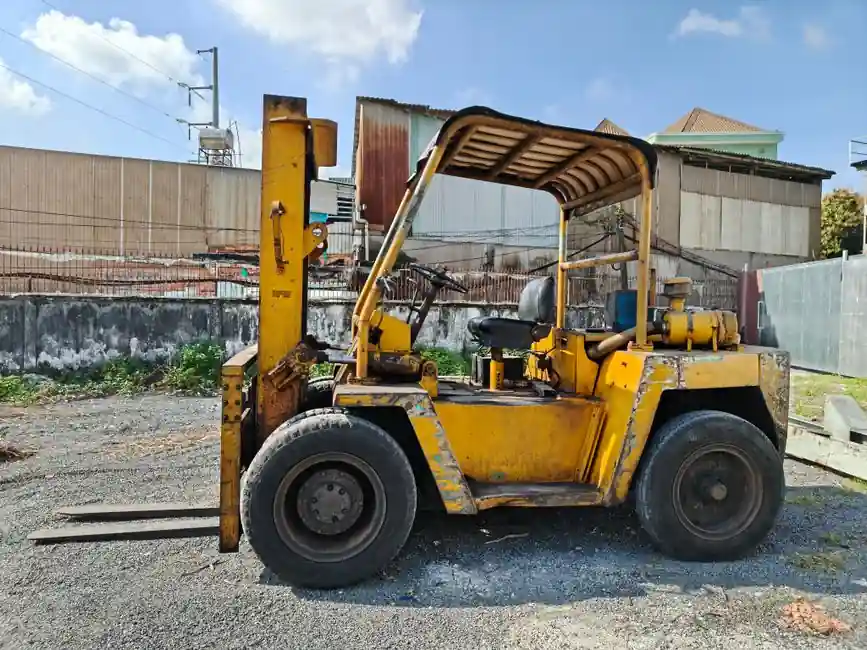
Hydrostatic transmissions deliver faster on-demand response than geared systems, while torque-converter trucks generally provide the higher pulling force needed for sustained low-speed work [S1][S5].
For warehouse forklifts, the transmission choice depends on travel speed, load cycles, operator precision, ambient temperature, hydraulic-fluid viscosity, and total ownership cost rather than engine power alone [S1][S2].
How the two transmission architectures differ
A hydrostatic forklift converts engine power into fluid pressure with a pump, then converts pressure back into mechanical output through a hydraulic motor. It has no clutch and no stepped gearbox, and the accelerator controls oil flow; releasing the accelerator slows the vehicle, while the brake pedal supports controlled inching [S1].
A torque-converter forklift retains a mechanical power path through the converter, clutch, and gears. The converter supports continuous output as engine speed rises, while the clutch and gearing interrupt power during ratio changes [S1]. Komatsu describes hydrostatic losses across the engine-speed range as minimal, whereas conventional systems incur transmission loss at the converter and clutch [S1].
This architectural difference makes the forklift selection task straightforward: hydrostatic is a continuously variable hydraulic control system, while torque converter is a geared mechanical drive assisted by fluid coupling.
Decision comparison: control, pulling force, and purchase cost
Hydrostatic wins on fine speed control because engine speed and oil flow can be varied continuously, without clutch engagement or gear interruption. It also produces smoother forward and reverse changes, and its low inertia supports rapid directional response [S1][S2]. Torque-converter systems are better suited to continuous, constant-speed duties and are often the lower-cost option [S1][S2].
Torque converter wins where maximum tractive effort matters. Equipment discussion records that a torque-converter machine could put substantially more power to the ground, particularly on concrete or dry loose soil, although a correctly sized hydrostatic machine could still spin its tires in snow or manure [S5]. That distinction matters more than the transmission label alone: hydrostatic power capacity, motor sizing, tire construction, axle arrangement, and ground condition decide whether traction is sufficient.
Westerra Equipment states that Linde offers hydrostatic forklifts as a premium option, with benefits including finer control, smoother braking, and direction changes. Treat that as a market observation, not a universal price multiplier. Quote the complete configured machine, including pump, motors, control valves, cooling package, hoses, service tooling, and warranty, because component comparisons can distort the capital estimate.
Operating cases and the right transmission per duty
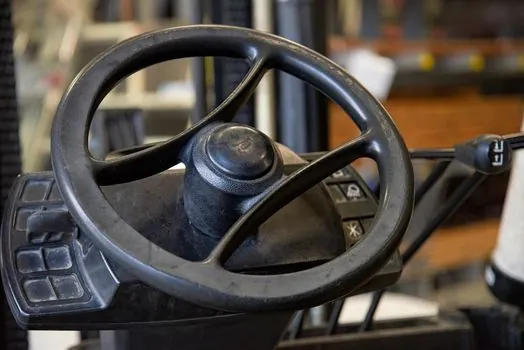
Specify hydrostatic for warehouse picking, narrow-aisle maneuvering, pallet handling, frequent direction changes, precise load placement, and operations requiring immediate response from a standing start [S1][S2]. The accelerator-to-oil-flow relationship supports rapid modulation, and the absence of clutch, gearbox, and differential maintenance items can reduce service exposure [S1][S2].
Specify torque converter for higher constant-speed travel, repetitive heavy pushing or pulling, ramps, tow operations, and rough surfaces where sustained ground power is more valuable than inching precision [S1][S5]. Operator familiarity also matters: many training courses and prior jobs use torque-based machinery, which can reduce adaptation time for an experienced crew [S2].
For mixed fleets, match transmission to the dominant task rather than operator preference. One unit can be hydrostatic for a high-precision warehouse and another torque-converter for yard traction, provided both comply with the rated capacity and attachment restrictions. Before adding forks, carriage, or other equipment, review the capacity data plate guidance, since transmission selection does not change the rated load or stability limits.
Thermal, hydraulic, and maintenance constraints
Hydrostatic performance depends on maintaining ambient temperature and hydraulic-fluid viscosity within the manufacturer’s limits [S2]. Outside the intended temperature band, pump efficiency, motor torque response, leakage, and component wear can deteriorate. Specify the fluid grade and viscosity class, operating temperature, filtration requirement, and cold-start procedure from the model-specific technical documentation rather than accepting a generic hydraulic-oil label.
Hydrostatic systems also exchange speed and torque through hydraulic circulation, so heat management and parasitic losses must be evaluated as part of the duty cycle [S6]. Torque-converter systems create heat in the converter during slip, particularly during low-speed, high-load work. The selected cooling package must match both the engine rating and the worst sustained duty, not just peak travel performance [S1][S6].
Maintenance boundaries should be recorded separately. Hydrostatic service includes hydraulic oil condition, filters, hoses, pump and motor checks, and control-valve inspection. Torque-converter service includes fluid condition, clutch and converter checks, gearing, and driveline wear. Komatsu identifies fewer moving parts in a hydrostatic transmission than in a conventional system, but that does not remove the need for hydraulic-fluid and contamination control [S1].
Operating conditions that can reverse the decision
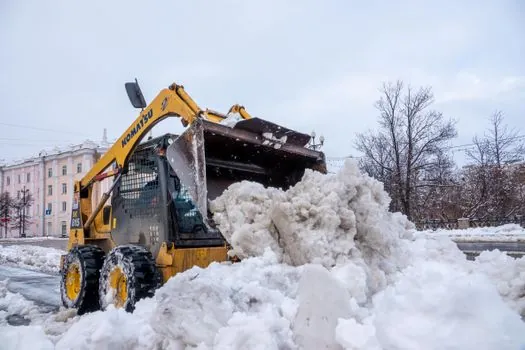
Cold environments are a critical exception to the usual hydrostatic advantage because fluid viscosity and ambient temperature directly affect system performance [S2]. For freezer, food-handling, or outdoor winter duties, request warm-up limits, cold-start capability, oil-heater provisions, and battery or engine cold-start data. A reference to cold-store forklift hydraulic-oil requirements is relevant where the approved fluid specification depends on low-temperature conditions.
Traction is another exception. On slippery ground, hydrostatic may provide enough wheel torque to rotate tires, but excess wheelspin does not equal useful tractive effort. On firm concrete, dry soil, or a loaded ramp, the higher continuous output available from a torque-converter installation can be preferable [S5]. Validate this with pull force, travel speed, grade, payload, tire pressure, and surface condition, not a general belief that one transmission always pulls harder.
Hydrostatic also depends on having qualified service personnel and access to specialist parts, while torque-converter systems are generally easier for an established forklift service organization to support [S2]. Include technician training, diagnostic equipment, hose and seal stock, and contractual parts availability in the acquisition comparison. A low purchase price can be offset by longer downtime if local repair capability is weak.
Procurement and acceptance criteria
Build the decision around 4 measurable criteria. First, control: confirm inching accuracy, acceleration response, and direction-change behavior with the intended load. Second, traction: compare sustainable ground force on the worst grade and surface. Third, thermal duty: evaluate sustained low-speed work and the specified cooling arrangement. Fourth, ownership: compare purchase price, fuel or energy consumption, fluid service interval, expected downtime, and operator training [S1][S2][S6].
For acceptance testing, record engine speed, travel speed, drawbar or pull force, hydraulic pressure, fluid temperature, and line leakage under repeated load cycles. Include low-speed pushing, maximum rated payload, forward and reverse transition, emergency stopping, and a sustained grade test. The comparison should use the same truck configuration and payload rather than catalog performance from differently equipped models.
Before purchase, obtain model-specific limits for rated capacity, travel speed, gradeability, fluid type, permitted ambient temperature, filtration, cooling, and service intervals. The selection rule is straightforward: choose hydrostatic for precision and rapid modulation, choose torque converter for sustained tractive effort and lower initial cost, and reject either option if its documented thermal, hydraulic, or service limits do not match the duty cycle [S1][S2][S5][S6].