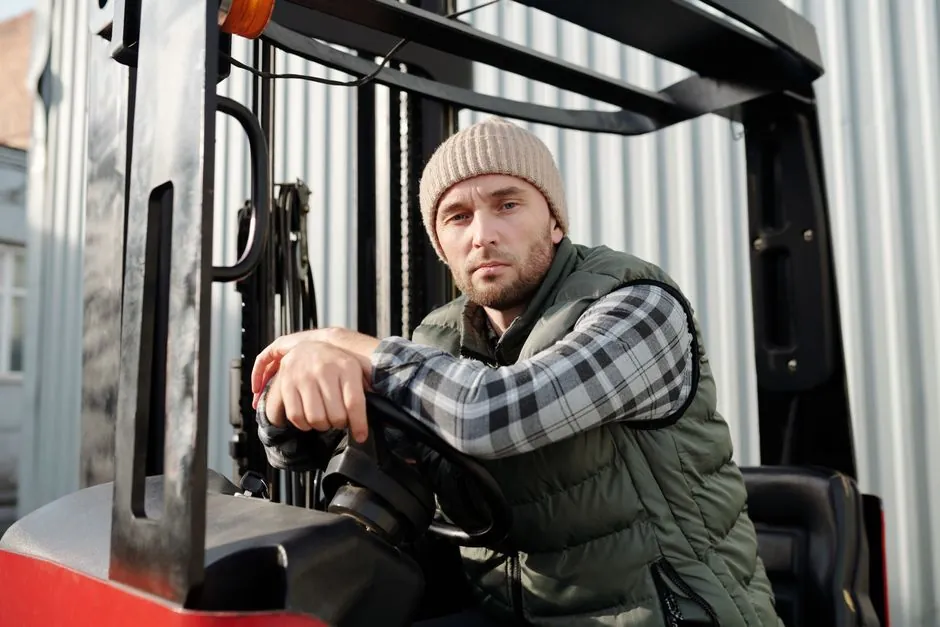
Road-building sites in 2026 run on three surfaces in a single shift: compacted subgrade, graded gravel, and finished asphalt, and each one demands a different forklift configuration. The baseline is OSHA's Class VII "rough terrain forklift," defined as a pneumatic-tire, four-wheel-drive unit intended for unimproved natural terrain and disturbed construction surfaces [S1]. Anything that strays off the finished pavement into base-course work should be specified from that class first.
The decision normally comes down to four parameters: drive configuration (4WD vs 2WD), tire type (pneumatic vs cushion), fuel (diesel, LPG, or electric), and lift envelope (vertical mast vs telescopic boom). Each trades stability for reach, weight for maneuverability, and indoor emissions for outdoor torque.
Four truck classes that show up on a road job
Road crews consistently reach for the same short list, and the list maps to terrain, not to brand. Rough-terrain forklifts carry four-wheel drive, high ground clearance, and a wide stance engineered so the chassis stays level when one wheel drops into a rut or climbs over debris [S6]. Telehandlers add a telescopic boom so the same truck can place pallets of rebar on a bridge deck, set formwork at second-story height, or run a personnel basket, with attachment points accepting buckets, winches, and clamps [S2]. All-terrain forklifts sit between the two: they move between job sites and public roads on mixed tires, handle medium loads, but offer less reach than a telehandler and less chassis robustness than a dedicated rough-terrain unit [S2]. Industrial counterbalance forklifts, the warehouse staple, only fit on the finished staging yard where the surface is concrete or asphalt, and they are the cheapest option per hour of indoor-style work [S3].
Selection criteria ranked for a road project
Terrain is the first filter, not capacity. Construction-grade sites are unpredictable, covered with mud, debris, and shifting layouts, and pneumatic-tire forklifts are specified for those conditions because the air-filled casing absorbs shock and delivers traction on loose fill [S4]. Capacity is the second filter: the truck must be matched to the heaviest single lift the cycle will see, typically pallets of pavers, bundles of rebar, or crates of geotextile, because overload is the single most common cause of frame and mast failures on rental fleets [S5]. Lift height is the third filter; multi-story bridge or overpass work normally forces a telehandler because no vertical-mast rough-terrain unit can place loads at boom-out distances above roughly 7 m. The fourth filter is space: tight trench-side lanes and shored excavations cannot accept a full-size rough-terrain chassis, so a compact counterbalance on pneumatic tires is often the only legal fit. The fifth filter is power source. Diesel dominates outdoor heavy-duty work, LPG is a quieter option for sites with emissions rules, and electric units are restricted to indoor or low-noise staging zones where battery runtime, typically a single shift, is acceptable [S2].
A practical four-line comparison the way a foreman would write it on the whiteboard:
Rough-terrain forklift: 4WD, pneumatic tires, high clearance, vertical mast, diesel or LPG. Best for base-course and subgrade work, slopes, and soft soil; not designed for high reach. Telehandler: 4WD, pneumatic tires, telescopic boom, diesel, attachment-capable. Best for placing loads at height on bridge decks and over formwork; slower in tight lanes. All-terrain forklift: hybrid tire package, road-legal, medium lift height. Best for crews that move between sites on public roads; lower capacity and reach than the two above. Industrial counterbalance: 2WD or 3WD, cushion or pneumatic tires, electric or LPG. Best for finished-yard pallet handling on concrete or asphalt; not for unimproved ground [S3][S4].
Where each class earns its keep on a road project
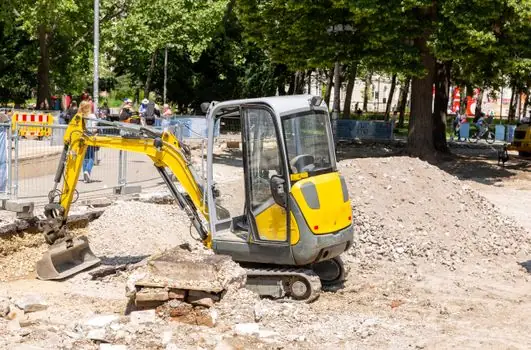
On a new-alignment earthworks phase, a rough-terrain forklift moves geogrid rolls, pipe sections, and rip-rap across the stripped subgrade where a wheeled loader would churn the surface. On a bridge or overpass substructure, a telehandler sets rebar cages, formwork panels, and concrete buckets at boom-out distances the mast of a rough-terrain truck cannot reach. On a finished-surface or streetscape phase, an industrial counterbalance on pneumatic tires feeds pavers, manhole frames, and bagged cement across the asphalt staging pad, where the cushion-tire warehouse variant would mark the surface and lose traction on dust. The all-terrain forklift earns its slot when the same crew has to load a delivery truck on the public road and then drive straight onto a stabilized base without switching machines [S2][S4].
What a road-site forklift must handle that a warehouse unit cannot
Three failure modes are specific to road work and worth naming. First, loss of stability when one wheel drops into a soft spot: the rough-terrain class is designed so the wide stance and tire profile keep the chassis level under that single-wheel event, a geometry the narrower warehouse chassis cannot replicate [S6]. Second, dust and debris ingestion into the radiator and air filter: outdoor trucks run diesel engines with elevated air-intake paths, and the maintenance interval for filters is roughly halved compared with a clean-warehouse duty cycle [S3]. Third, irregular load shapes: pallets of brick, steel beams, and pipe bundles do not present a centered center of gravity the way a uniform warehouse pallet does, so the truck must be specified with a derated capacity chart for off-center loads, and the operator must read it for every cycle [S4][S5].
Standards, training, and operator requirements
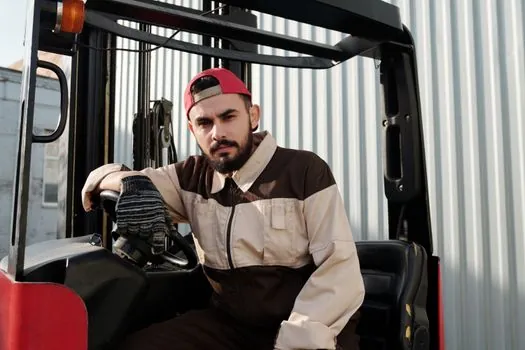
Powered industrial trucks on US construction sites fall under OSHA 29 CFR 1910.178, which classifies trucks by type and ties the operator-training requirement to the truck class. Class VII, the rough-terrain class relevant to most road work, is part of that OSHA classification scheme and requires operator certification before solo use [S1]. The class designation is generic: any pneumatic-tire, four-wheel-drive vertical-mast truck built for unimproved ground qualifies, regardless of manufacturer. Operator training, daily pre-shift inspection, and a documented capacity plate are the three non-negotiables on a US road job; European equivalents follow EN 1459 for rough-terrain variable-reach trucks and EN 1726-1 for industrial counterbalance units.
Matching power source to site rules and shift length
Diesel remains the default for outdoor heavy lifting on road projects because of torque, range, and refuel speed. LPG is used where diesel particulate is restricted inside covered structures such as tunnel staging sheds, and where lower noise matters in urban work zones. Electric forklifts are confined to indoor staging, indoor laydown yards, or night-shift urban sites with strict emissions rules, and battery life of a single shift is the practical ceiling until fast-charge infrastructure is added [S2][S5]. For a road project that runs a 10-12 hour shift, diesel or LPG is the only viable main fleet; electric is a support unit.
How a road job should plan the fleet, and what to track next
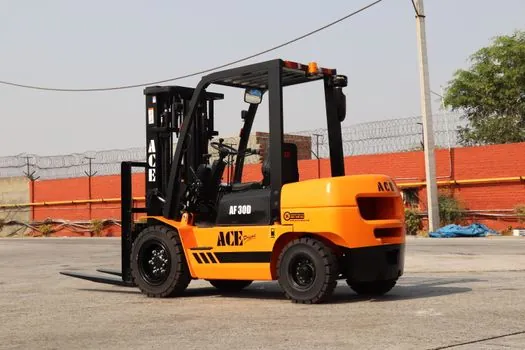
Road construction fleets in 2026 are typically built around one telehandler, two rough-terrain forklifts, and one industrial counterbalance for the staging yard, with the all-terrain unit swapped in only when the crew moves between distant sites. For spec-heavy earthworks and base-course phases, the rough-terrain forklift and telehandler are documented as the two core units on similar disturbed-ground projects, while finished-surface milling and paving support usually pulls in the industrial counterbalance rather than a rough-terrain unit. Watch for two signals: OEMs are publishing more 4WD electric rough-terrain prototypes for urban road work, and rental fleets in 2025-2026 are stocking more telehandler variants with factory-integrated quick couplers so a single truck can swap from forks to a bucket to a personnel platform without leaving the cab. [S3]
Spec-level background on the components involved: road roller, forklift, and construction tools.