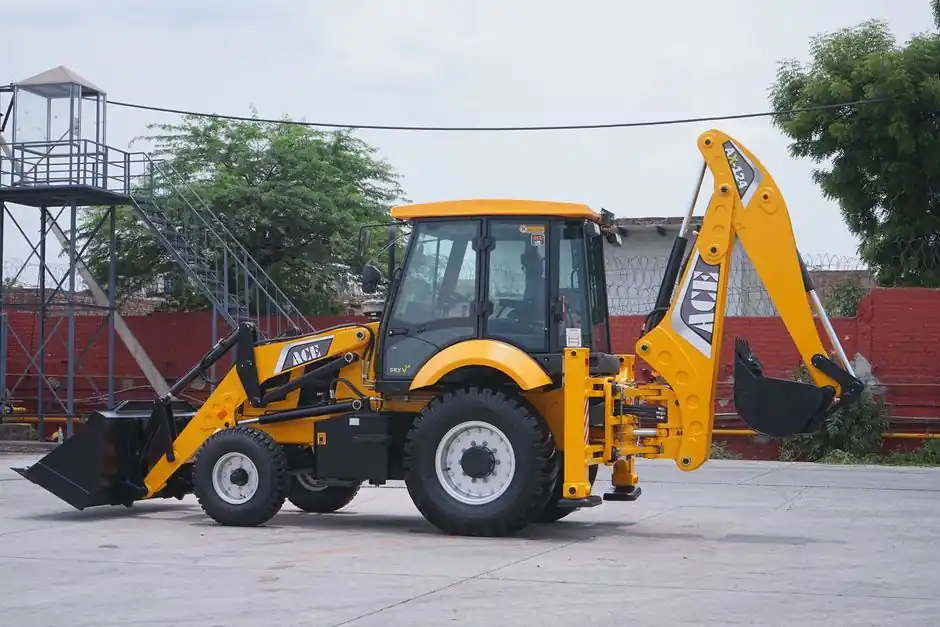
Port and terminal buyers shortlist backhoe loaders by digging-depth class and front-loader lift geometry first, then refine by engine output and hydraulic extendable dipper options; full-size units cluster at 14 ft, 15 ft, and 17 ft maximum dig depth, while compact models reach roughly 10 ft [S2][S6].
Selection logic on the apron differs from a building site: cycle times, ground pressure on paved quay slabs, and the ability to clear high-sided ISO containers or reach into reefer wells drive most spec decisions, alongside roading speed between berths [S1][S2].
Why digging-depth class is the first filter
Maximum dig depth remains the starting point for backhoe-loader sizing across manufacturers, with full-size machines today typically split into 14 ft, 15 ft, and 17 ft classes and compact machines digging to about 10 ft [S2]. For port drainage, culvert repair under stacked containers, and trench work for fire-suppression or fuel lines, a 14-15 ft backhoe covers the majority of tasks, while 17 ft units justify themselves only where operators regularly trench below utility-crossing depth or work inside deep berth pockets.
Compact 10 ft backhoes suit narrow quay-edge work, intermodal yard pothole repair, and any site where a full-size TLB would force lane closures; an operator who rarely digs past 10 ft can avoid the fuel, transport, and capital penalty of an oversized rig [S2]. The practical selection question is the most common depth the machine will face, not the deepest one seen in a year.
Hydraulic extendable dipper: where ports win or lose reach
Hydraulic extendable dipper (HED) options add reach without lengthening the machine footprint, a meaningful gain in port yards where the backhoe often works between stacked boxes or against a seawall; JCB extra-dig adds 2 ft on the compact 3CX and 4 ft on full-size models, while the New Holland B95C HED adds 3 ft of extension on a compact chassis [S2].
Take-up of HED is reported as very high on machines that offer it, because extra reach cuts the number of times the operator has to reposition the machine during trenching and reduces the time spent straddling fragile quay edges [S2]. For port buyers, the decision is operational: a 14 ft dig depth with HED can match a 17 ft fixed dipper in working reach while keeping a smaller transport envelope, which matters when the machine must be flat-racked between terminals on short notice [S5].
Engine output, hydraulic flow, and lift geometry on the apron
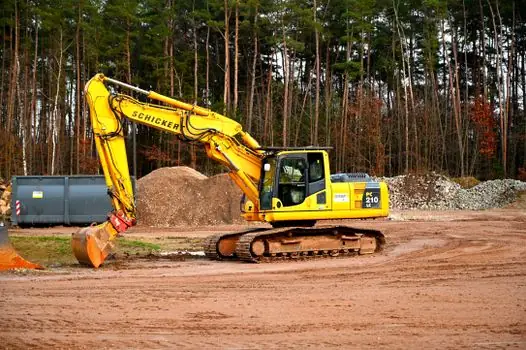
Rated horsepower sets the ceiling for digging force, lifting capacity, and travel speed, and must be read alongside hydraulic system output rather than as a stand-alone number, because hydraulic flow determines how the machine behaves under simultaneous loader-and-backhoe loads [S1]. Entry-level machines suit light-to-medium duty, while higher-rated engines deliver the breakout force and lift reserves needed to handle palletised pipe, manhole rings, or broken asphalt pulled from a container apron [S1].
Front-loader hinge-pin height, breakout force, and lift capacity decide whether the machine can clear a high-sided bin or drop a load into a reefer slot without ramping; matching loader specs to average load weight avoids overloads, cycle delays, and excess fuel burn [S1]. On the backhoe end, lift capacity at full reach determines whether the unit can lower concrete lids or pipe sections into a trench without an assist crane, so spec sheets should be read at the actual working radius the port will use, not the maximum radius on the brochure [S2].
Weight, roading speed, and quay-friendly footprint
Operating weight and machine footprint matter more in a port than on a green-field site: paving on quay slabs and service roads has load limits, and a backhoe that exceeds them risks cracking the deck during trenching or stationary lifting. Manufacturers advise matching machine class to terrain, and full-size 14-17 ft units are heavier and longer than compact 10 ft units, which affects both transport permits and ground pressure [S1][S6].
Backhoe loaders are also roading machines between berths, and travel speed on public or terminal roads influences how many units a port needs to cover a given quay length; machines that can run between jobsites at highway speeds reduce deadhead time and the need for low-loaders [S2]. For inter-port moves, backhoe shipping costs run roughly 3-7 USD per mile depending on route, trailer, and permits, a line item that grows quickly for machines that cannot self-road [S5].
Options matrix for port and terminal buyers
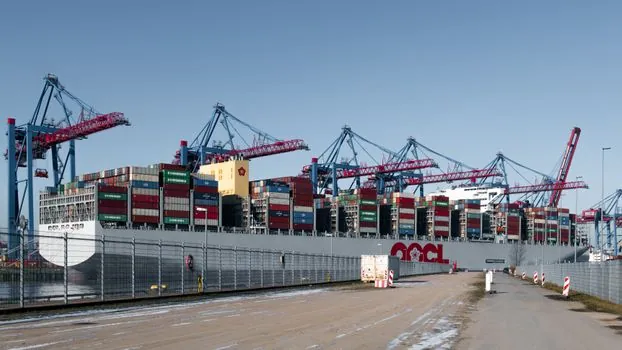
Compact 10 ft, full-size 14-15 ft, and full-size 17 ft (or 17 ft with HED) cover the realistic port shortlist, and the trade between them is straightforward. A compact 10 ft unit wins on transport weight, manoeuvrability in stacked-container lanes, and capital cost, but loses on reach and lift reserves; a 14-15 ft full-size is the default for mixed drainage, utility, and loading work; a 17 ft or HED-equipped 14-15 ft unit is justified only where deep trenching, seawall work, or sustained high-lift cycles are routine. [S1]
Selection criteria worth scoring each class against: maximum dig depth (with and without HED), operating weight versus quay slab limits, front-loader lift and hinge-pin height, backhoe lift at working radius, roading speed, and attachment commonality. Buyers who score these five criteria explicitly usually end up closer to a 14-15 ft full-size than to either extreme, because the same machine can trench, load, and roade without burning fuel on a class it never uses.
When a backhoe loader is the wrong tool
Backhoe loaders are not the right tool for high-volume container handling, long-haul bulk loading, or sustained demolition above their hydraulic class; for those cycles, a wheel loader or purpose-built material handler moves more tonnes per litre. They are also a poor fit for deep bulk excavation below 17 ft, where a compact excavator beats a backhoe on cycle time and truck-loading geometry. Buyers who know they need only a loader end, or only an excavator end, are usually better served by a single-purpose machine than by a TLB compromise [S1][S2].
For a broader backhoe loader reference covering the full selection logic across industries, the Backhoe Loader Advantages, Limits, and 2026 Selection Logic piece is a useful companion, and buyers considering tractor-mounted retrofits should review the Backhoe Loader Installation: Tractor-Mount vs OEM Frame Field Guide before committing to a chassis choice.
Trackable signals for the next procurement cycle
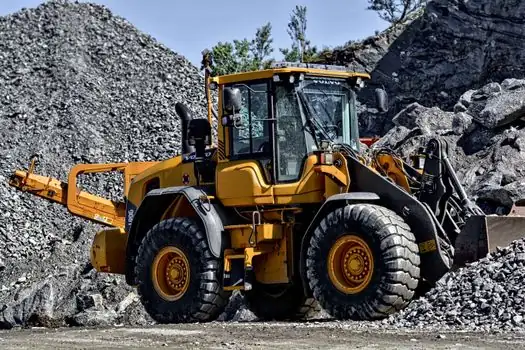
Two signals are worth monitoring into 2026: manufacturer announcements on HED retrofit kits for existing 14-15 ft fleets, and port-side emissions rules that could push buyers toward Tier 4 Final / Stage V engine packages on any new order, since those packages change both price and hydraulic-curve behaviour. For related work outside the TLB class, buyers handling bulk landfill or transfer-station volumes can compare a wheel loader spec map for landfill and transfer station work before finalising a mixed fleet. [S2]
Detailed specification references: terminal block.