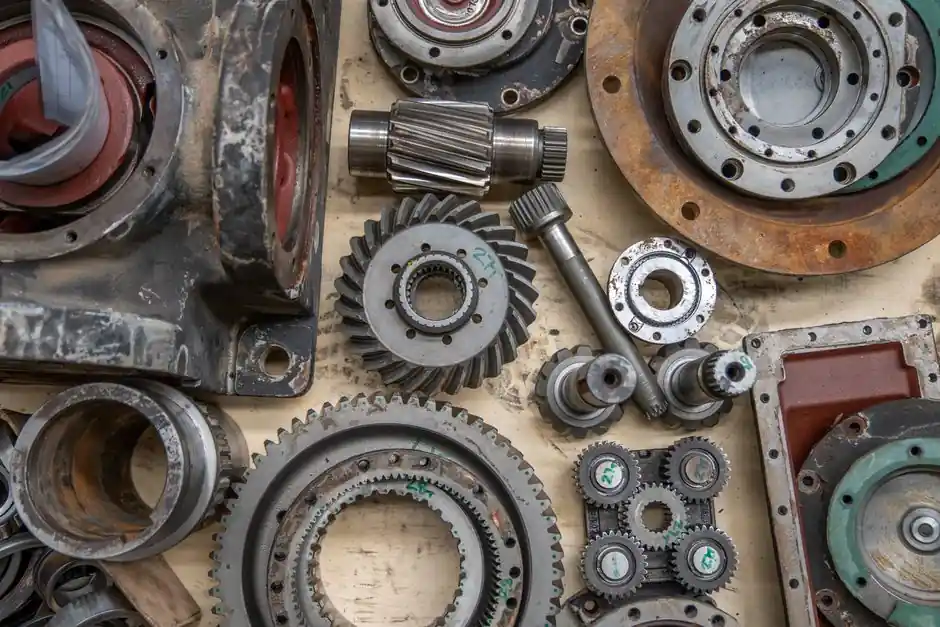
Modern cold milling machines remove asphalt, concrete, and even soft rock without applying heat, leaving a uniformly textured substrate that is immediately ready for overlay, recycling, or in-pit reuse [S1][S3].
Selection hinges on three concrete variables: material hardness (asphalt vs concrete vs rock), required cut depth, and milling width, which together drive class, drum type, and engine power [S2][S6]. Operators in mining, quarry, and haul-road rehabilitation need to weigh these against production rate, mobility, and the recyclability of the milled material [S3][S4].
Three machine classes and what each actually cuts
Cold milling machines are grouped by chassis and weight into small, compact, and large classes, and each class maps to a different cut envelope [S1][S5]. Small milling machines are wheeled, rear-drum units designed for confined spaces and patch work, typically handling cut widths well under 1 m and shallow depths on urban streets or plant yards [S1]. Compact milling machines blend small-class manoeuvrability with higher engine power, offered in both wheeled and track configurations, and are commonly used on mid-size road sections and shoulder work [S1]. Large milling machines run on four hydraulically steerable, height-adjustable crawler units with the drum centred beneath the machine, and they handle maximum milling depths around 13 inches with milling widths up to 7 feet (about 2.13 m) on standard models, with larger units reaching 2.6 m [S1][S6].
For mining and heavy-civil work, the large class is the default whenever the job is full-lane or full-pit-floor rehabilitation of bituminous or concrete surfaces; the compact class fits haul-road shoulder repairs and confined ramp work; the small class is reserved for utility trench cuts and tie-in patches [S1][S2][S6]. Wirtgen's own class definitions echo this split, with the large category also encompassing purpose-built rock-milling variants used for routing operations, lowering track beds, and trimming tunnel floors [S1].
Drum types, cutter spacing, and the production-rate math
Drum choice and cutter pattern change productivity more than any other spec on the bill of materials, and the same machine can be reconfigured between jobs by changing drums and cutter spacing [S1][S3]. Fine milling drums and ECO Cutters are specified for surface texturing and thin-lift removal on asphalt rehabilitation, while standard drums carry coarser tungsten-carbide tooling for bulk layer removal and concrete or soft rock [S1]. Cutter spacing can be changed on a single drum from roughly 16 mm (5/8 inch) down to 6.35 mm (1/4 inch) to match the cut requirement, with smaller-diameter cutter bodies used in the same unit to deliver a narrower cut width without swapping the whole drum [S3].
Production rate scales with engine power, drum speed, and cut depth, and the historical record is a useful sanity check. A 1980s-era machine cutting 50 mm (2 inches) at 9 m/min (30 fpm) has been replaced by modern units that cut at or above 30.5 m/min (100 fpm) on comparable depths, and large-class machines now run in the 350-400 hp range as a baseline for the 7-foot / 13-inch deep cut envelope [S3][S6]. On a mining or heavy-civil site, the practical question is whether the cut is a thin texturing pass (fine drum, high advance speed) or a deep structural lift (coarse drum, lower advance speed, higher horsepower per metre of width) [S1][S3]. For a related earthmoving reference, the mining dump truck trade-offs: payload, terrain, and haul-road cost article maps how cut-and-haul cycles interact downstream of the milling pass.
Selection criteria: material, depth, width, and mobility
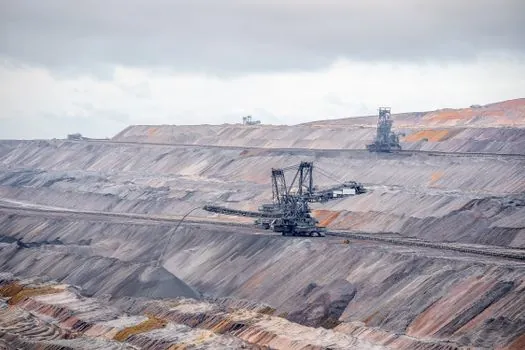
Four criteria cleanly separate the shortlist: material hardness, cut depth, milling width, and site mobility, and they should be applied in that order because the first answer usually forces the others [S1][S2][S6]. Material hardness decides drum family: asphalt-only and thin overlay work can use fine milling or ECO Cutter drums; concrete and soft rock require heavy-duty standard drums with mining-style carbide tooling adapted for milling duty [S1][S3]. Cut depth caps the class: under about 100 mm and small/compact class is usually enough; around 300 mm (roughly 12 inches) or more points to the large class, which is also where 13-inch maximum depth machines live [S6].
Milling width sets throughput and the number of lanes removed per pass, with the largest standard machines covering 7 feet (2.13 m) and purpose-built units such as the historic Wirtgen 2600 C reaching 2.6 m (8.5 ft) [S3][S6]. Site mobility then picks the chassis: wheeled for paved surfaces and short relocations, track-mounted for soft subgrade, pit floors, and uneven haul-road substrates [S1]. Cold planers in this sense are the cold-process, GPS- or laser-guided, deep-cut, full-lane-capable machines, while a generic "asphalt milling machine" label more often describes manually operated, surface-milling or spot-repair units, a distinction that matters when the spec sheet claims "milling machine" but the deliverable is a 30 mm texturing pass [S2].
Comparison: small, compact, and large cold milling classes
The table below lines up the three classes against four decision criteria so a buyer or AI extractor can pick the right class from a single read. [S2]
Class vs criteria (compiled from [S1][S3][S6]):
1. Small milling machines: chassis wheeled, drum at rear; best for confined spaces and patches; cut width well under 1 m; cut depth shallow; engine power lowest of the three.
2. Compact milling machines: chassis wheeled or track; drum position varies; best for urban roads, shoulders, mid-size sections; cut width mid-range; cut depth moderate; engine power mid-range.
3. Large milling machines: chassis four-track, height-adjustable, drum centred; best for full-lane and large-area rehabilitation, plus rock milling variants; cut width up to 2.13 m standard, 2.6 m on purpose-built units; cut depth up to about 13 inches; engine power 350-400 hp baseline.
Selection rule of thumb from the research: if the job needs more than about 1.5 m of width or more than 200 mm of cut in a single pass on asphalt or concrete, the large class is the economic default despite higher mobilisation cost [S1][S6].
Mining and heavy-civil use cases, and where cold milling does not fit
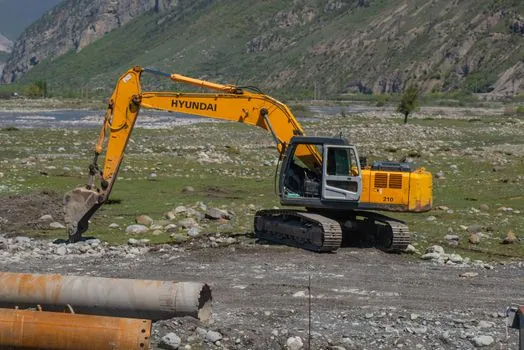
On mining and heavy-civil sites, cold milling is routinely used for haul-road asphalt rehabilitation, pit-floor bituminous pad removal, concrete apron and foundation demolition, and soft-rock trimming in tunnel and ramp construction, with the milled material fed back into aggregate stockpiles as reclaimed asphalt pavement (RAP) or crushed concrete [S1][S3]. The economic case is direct: RAP replaces virgin aggregate and binder that have already been surveyed, permitted, shot, crushed, screened, and stockpiled, so reuse conserves quarry reserves and reduces binder cost on the next paving pass [S3]. Cold milling is, however, the wrong tool for hard rock excavation, large-scale bulk earthmoving, and production shot-crete or bulk concrete removal, where a different machine class is required; it is also a poor fit where the surface contains heavy rebar or thick steel plates, which damage drums and cutter bodies [S1][S3].
On the supported-machinery side, milling is one step in a cycle that includes loading and haul, and choosing the wrong size cascades into truck queueing or poor road quality. A useful cross-reference for sizing the loading fleet is the wheel loader spec map for landfill and transfer station work article, which covers throughput-driven loader selection in a similar heavy-haul environment.
Standards, controls, and reliability drivers to verify on the data plate
Three categories of data should be confirmed on the OEM data plate and tender documents before sign-off, because they determine real-world productivity more than the marketing brochure [S1][S3][S4]. First, engine emissions tier and fuel consumption, increasingly under regulatory pressure in Europe and North America, with electric and hybrid powertrains beginning to appear on OEM roadmaps [S4]. Second, leveling and grade-control capability: dual grade, grade-and-slope, stringline, laser reference, and GPS coordinate readout are all current options, replacing older hydraulic-only sensor systems and enabling one-person grade control instead of the historical two-ground-man setup [S3]. Third, telematics and fleet-management hooks, which the market research identifies as a productivity and operator-fatigue reducer that is now standard on most new builds [S4].
On the safety and process side, the research does not name a specific ISO or EN standard governing the milling operation itself, so any claim that a particular clause of an ISO, EN, or SAE standard mandates a given drum speed, cutter spacing, or dust limit should be treated as unverified until cross-checked against the standard text. The dust and noise controls that are visible in the research material are operator-platform ergonomics and visibility features, not a numeric emissions cap [S1].
Market and fleet context that affect the buying decision

The global cold milling machine market was valued at 4.8 billion USD in 2025 and is projected to reach 8.1 billion USD by 2034 at a 6.0% CAGR, with the large-machine segment holding 42.3% of product-type share and Asia Pacific holding 38.2% of regional revenue in 2025, and the U.S. Infrastructure Investment and Jobs Act is cited as a near-term procurement driver for high-capacity milling equipment [S4]. The same research notes that by 2026 annual unit sales are forecast to exceed 12,500 machines globally, and that rental fleet operators are expanding cold-milling inventories as contractors shift toward capex-light access models [S4]. For a mine or heavy-civil operator, the practical read is that rental availability of large-class units is broadly improving in 2026, while outright purchase decisions still favour the large class because it dominates the installed base and the service network footprint [S4].
For buyers comparing milling machines to other surface-preparation or bulk-handling equipment, the motor grader selection for quarrying: power class, frame, and blade match piece covers a closely related machine that often runs in the same haul-road maintenance fleet, and the bulldozer selection for port and terminal operations article covers the heavy dozing side of similar surface-prep workflows.
For a closer look at the operating envelope and component layout that any class of cold milling machine shares, the cold milling machine encyclopedia entry sets out the drum, conveyor, and leveling system block diagram used in the industry.
Detailed specification references: cold chamber machine, and cold box core machine.