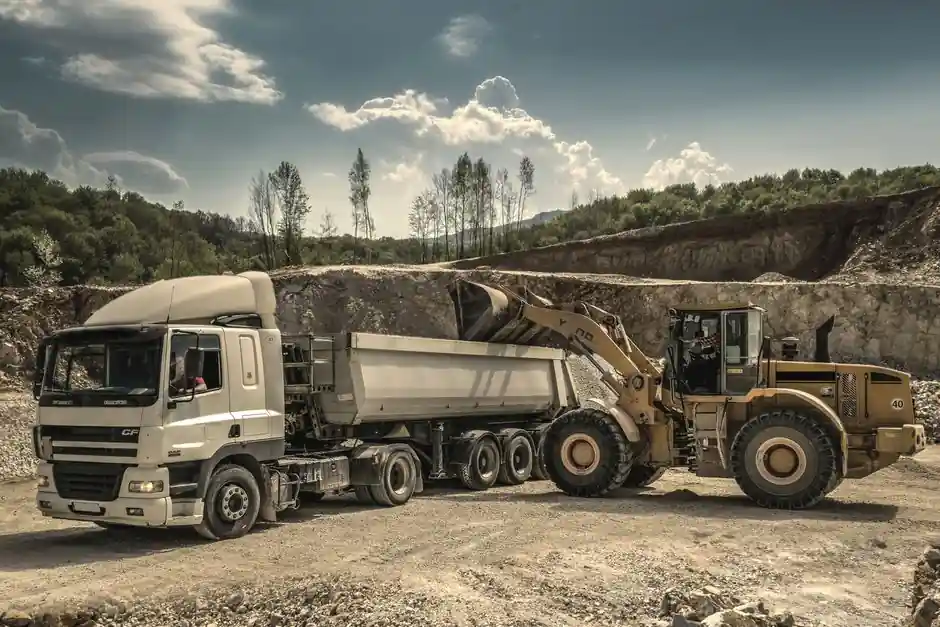
Landfill and transfer station duty is dominated by three tasks: pushing and spreading waste, stockpiling and truck loading, and feeding compactors or hoppers, all of which favor mid-size wheel loaders over 350 hp with waste-handler guarding packages [S1][S4].
Bucket shape, ground pressure, axle configuration, and tire wear drive total cost of ownership more than engine horsepower alone, with one OEM reference citing replacement tire sets above $40,000 in high-traction-cycle facilities [S4].
Duty profile and matching machine size
Wheel loaders in waste handling typically work in three distinct duty bands: transfer station stockpile and load-out, active face pushing and cell cover, and MRF or organics processing where precision matters more than breakout force [S2][S4]. For daily landfill face work, machines in the Cat 980M class weighing roughly 30 t with the C13 engine rated above 380 hp are cited as a common medium-size benchmark for mixed municipal solid waste [S6]. Right-sizing means matching the loader to the daily load, not the worst-case peak: an oversized unit burns fuel in light cycles and stresses the bucket, while an undersized unit spends its life at the edge of the stability envelope [S5].
Bucket selection and material density
Bucket volume is the wrong starting point; the right cut is density, penetration resistance, and the transport distance between the face and the truck or hopper [S4]. In loose household waste, a wider, higher-capacity bucket with a straight cutting edge maximizes payload per pass, while in demolition debris or dense cover material a bucket with a spade-nose or rock-edge profile penetrates better and reduces operator fatigue [S4][S5]. For organics and compost, a lighter bucket sized to the windrow width keeps loads within the safe operating load, not the tipping load, which is the figure the operator should respect during every cycle [S5].
Ground pressure, axle choice and tire TCO
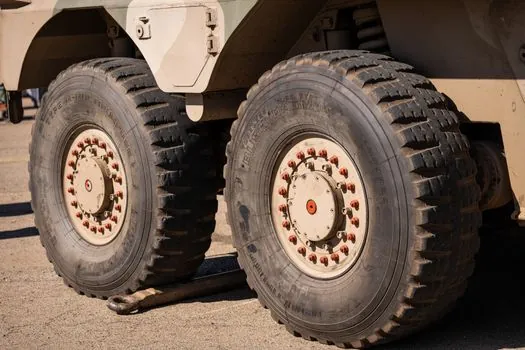
Landfill cells are unforgiving: sub-base varies from compacted clay to freshly placed waste, and standing water is routine, so tire spin is the single largest controllable cost on a waste-sector loader [S4]. Automatic traction control that senses wheel slip and engages the differential lock, plus operator-selectable rimpull curves, are cited as the core features for extending tire life on slick transfer station floors [S4]. Tire replacement sets above $40,000 mean a 10-15% tire-life gain pays back a feature premium in under a year on a single-shift fleet, which is why waste packages from major OEMs include axle seal guarding and special rim protection as standard rather than optional [S4].
Engine, drivetrain and uptime features
Waste-sector wheel loaders share a common engineering pattern: heavy-duty axles with external brake wear indicators, battery disconnect with lockout-tagout, service platforms with harness anchor points, and a tiltable cab for undercarriage access, all features that target the 15-minute daily greasing and weekly fluid check that separate high-uptime fleets from chronic downtime [S4]. Cab and engine precleaners, plus optional removal of fenders or modification of steps, are listed as standard component-protection measures in purpose-built waste packages because airborne debris at MRFs and transfer stations is the dominant cause of premature radiator and air-filter failures [S4]. For an in-depth baseline on the machine class itself, the wheel loader encyclopedia entry covers the drivetrain, linkage, and bucket-geometry fundamentals that govern every buying decision.
Comparison: medium landfill loader vs tracked loader vs skid steer
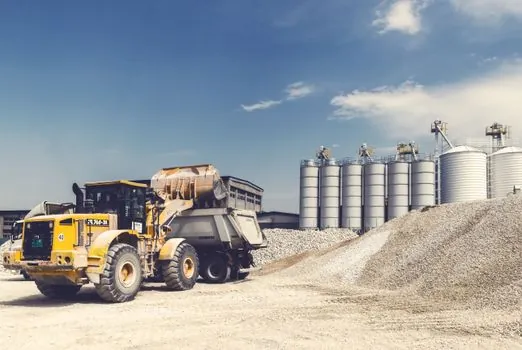
On a 500-1,000 t/day active face, a 30 t class waste-package wheel loader typically out-cycles a similarly priced dozer or landfill compactor for truck-loading and cover work because it can load, travel and dump in a continuous V-cycle without the track wear penalty [S1][S3]. A tracked loader trades ground pressure for speed, and only wins on very soft or steep cells where a wheeled machine cannot maintain traction, while a skid steer loader in the 60-80 hp range is restricted to small transfer stations, organics pad turning, and yard support where the daily volume does not justify a 380 hp class prime mover [S3][S5]. For mixed municipal solid waste with high contamination and abrasive content, the wheel loader is the default; for clean compost or wood chip, a smaller wheel loader with a light-material bucket often beats both tracks and skid steers on fuel per ton moved [S4].
When a wheel loader is the wrong tool
For deep cell excavation, slope work, or any task requiring sustained high tractive effort on saturated ground, a crawler dozer or a purpose-built landfill compactor is the correct machine, and forcing a wheel loader into that role burns fuel and shreds tires without finishing the cell [S1]. Confined indoor MRFs with overhead conveyors and fixed-height feed floors sometimes call for a skid steer loader or a compact wheel loader in the 4-5 t class, since a 30 t machine simply will not cycle inside the building envelope at production speed [S3]. Haul distances beyond roughly 150-200 m at high speed also push operators toward an articulated truck and excavator pairing rather than a loader-only fleet, because the loader's V-cycle time degrades faster than truck haul time on long routes.
Selection checklist for a 2026 specification
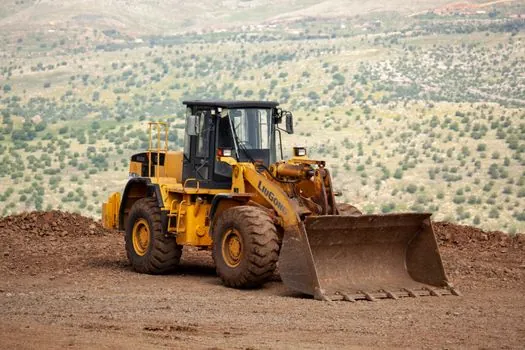
For a 2026 landfill specification, lock the requirement list down to: operating weight 28-32 t, engine power 350-400 hp, waste-handler guarding package, automatic traction control with rimpull adjustment, tiltable cab, external brake wear indicators, lockout-tagout battery disconnect, and a bucket sized to roughly 4.0-5.5 m3 for mixed MSW with optional spade-nose or rock-edge inserts for cover material [S4][S5][S6]. Required service literature should reference the OEM's waste-sector inspection intervals, typically 250-hour greasing and 500-hour hydraulic sampling, since the published 10,000-hour design life of a modern wheel loader is only achievable when those intervals are hit [S4]. Field engineers comparing machines in this class should also weigh the OEM's parts stocking footprint in-region, because mean time to repair in a remote landfill often dwarfs the productivity difference between two otherwise comparable 380 hp units.
Two trackable signals for the next quarter: major waste-sector OEMs are expected to publish updated 2026 waste-package price lists with tiered tire and guarding options, and several regional U.S. landfills are trialling electric and hybrid wheel loader prototypes in the 20-30 t class, with first field-data releases anticipated by early 2027.
Spec-level background on the components involved: backhoe loader.
For related coverage, see ISO Tank Container Installation: 7-Step Procedure and Foundation Gates.