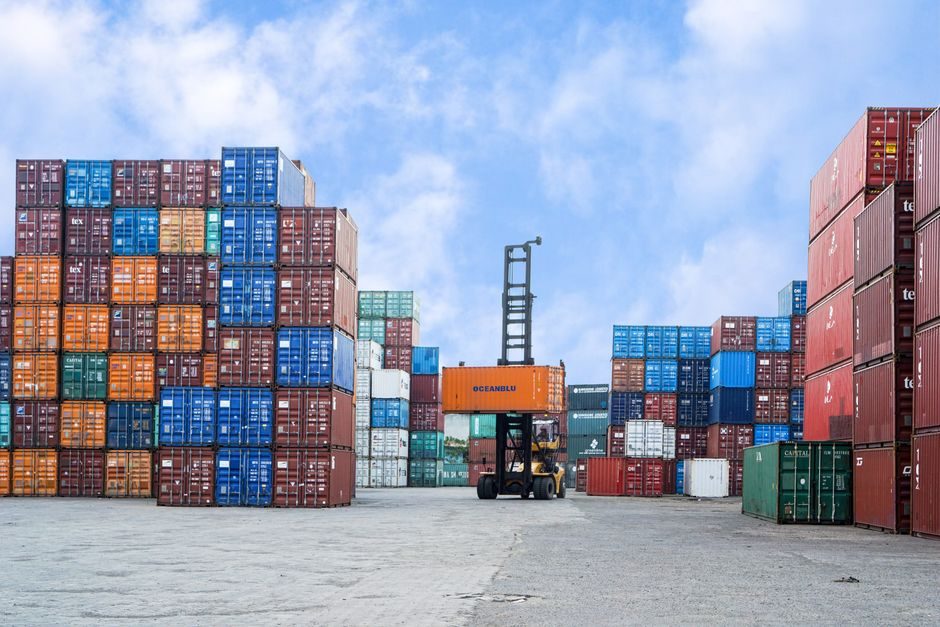
A counterbalanced forklift's true seven-to-ten-year cost runs roughly three to five times its invoice price, with energy, batteries or fuel, tyres, planned maintenance and trained operator wages typically absorbing 60-75% of lifetime spend [S2]. Treating the purchase order as the cost event is the single most common budgeting error in warehouse and yard projects; the operating phase dwarfs capital, and the ratio widens further once lithium-ion, telematics and OSHA 1910.178 operator training are added [S5].
Two platform families dominate the spec sheet for new buyers in 2026: electric Class I sit-down counterbalanced units (mostly 3,000-6,000 lb capacity, 24V/36V/48V/80V battery architecture) and internal-combustion (IC) pneumatic-tyre forklifts running on LPG, diesel or dual-fuel. Each family carries a distinct cost signature that a forklift advantages and disadvantages spec sheet only partially exposes; the TCO model must be built around hours/year, load weight, aisle width, indoor-versus-outdoor duty, and charging or refuelling infrastructure.
What the TCO line items actually contain
A defensible forklift TCO pulls together eight line items, not three: acquisition (base truck, mast, sideshifter, hydraulics, attachments), finance or lease carrying cost, energy (kWh for electric, gallons of LPG or diesel for IC), batteries and chargers, scheduled and unplanned maintenance, tyres and wear parts, operator wages and training including OSHA 1910.178 refresher cycles, and end-of-life residual or disposal [S2]. Skipping any of these understates real spend by 20-40% on the first model pass; the literature on TCO consistently warns that capital hardware and software typically represent only ~25% of full life cost, with the remaining 75% distributed across management and operations support [S3].
Per the 12-36 month cost models routinely used in equipment TCO work, year-one cash outflow is dominated by acquisition plus finance charges, while years two through seven are dominated by energy, labour and maintenance in roughly that order of magnitude [S4]. For a 5,000 lb electric sit-down running two shifts at ~3,000 hours/year, industry rule-of-thumb energy draw lands near 8-12 kWh per operating hour, placing annual electricity cost in the USD 2,500-4,800 band at typical North-American industrial tariffs; lead-acid battery replacement cycles of 1,200-1,500 cycles add another 15-25% on top of that across the asset life.
Electric vs IC: cost-driver comparison
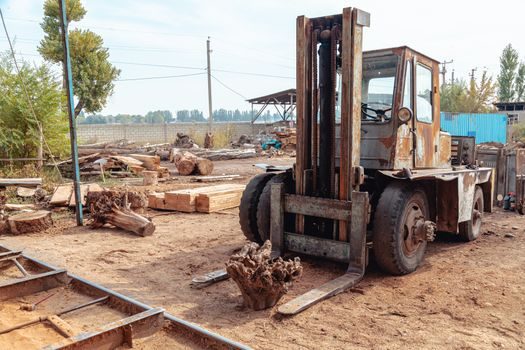
Electric Class I units carry a 20-40% higher acquisition price than an equivalent IC truck, but recover that delta in 2-4 years when the duty cycle is predominantly indoor single-shift, because IC engines spend meaningful fuel and heat on idle and on propane changeovers [S5]. The flip side is outdoor heavy-load work: IC pneumatic-tyre forklifts on rough terrain, lumber yards or port intermodal work cannot be matched by electric on duty cycle without oversized battery packs that erode the operating-cost case. The rough-terrain forklift class is essentially an IC-only domain because of gradient, ground pressure and weather exposure.
Three decision criteria separate the two platforms cleanly. First, hours/year and shift pattern: under 1,500 hours/year indoor strongly favours electric, above 2,500 hours/year mixed or outdoor favours IC. Second, ventilation and emissions: food, pharma and cold-storage indoor sites now specify electric by default to eliminate LPG exhaust and reduce HVAC load. Third, total energy infrastructure: a single electric Class I truck needs a 480V three-phase charger bay, ventilation for hydrogen off-gassing on lead-acid, and floor-load checks that may exceed 8,000 lb for the battery alone; IC only needs a propane cage or a diesel tank, but adds exhaust extraction, fire-suppression classification and underground-tank compliance if diesel.
Energy and battery: the line item that swings the model
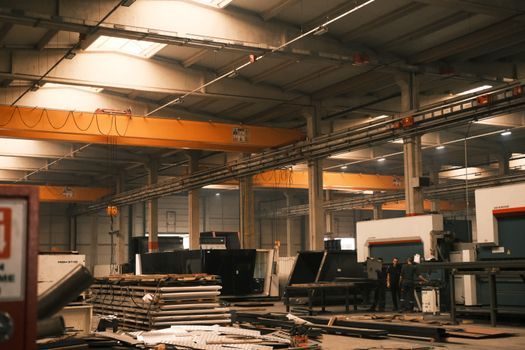
For electric units, the choice between flooded lead-acid, thin-plate pure lead (TPPL) and lithium-ion (typically LFP) moves 7-10 year TCO more than any other spec decision short of duty cycle [S5]. Lead-acid at 80V/600-900 Ah carries the lowest acquisition premium but the highest maintenance burden: equalisation charges, watering, acid handling, and a 1,200-1,500 cycle life that forces one to two battery replacements inside a typical asset life. Lithium-ion lifts acquisition by 60-100% on the battery side, but eliminates watering, allows opportunity charging during breaks, and extends cycle life past 3,000-5,000 cycles, often outlasting the truck itself.
IC energy economics depend on fuel type. LPG sits at roughly 8-12 lb per operating hour on a 5,000 lb truck, diesel at 1.5-2.5 gal/hr under similar loading. Per the cost-driver approach used in industrial TCO work, the lifetime fuel bill for an LPG truck running 2,000 hours/year will exceed the truck's acquisition price within 5-7 years, which is the headline number procurement teams usually miss when comparing sticker prices [S2]. Telematics on fuel use, idle time and battery state-of-health typically recover 5-12% of energy spend in the first year of deployment.
Maintenance, tyres and operator labour
Planned maintenance on an electric sit-down averages USD 0.08-0.15 per operating hour versus USD 0.18-0.30 on an IC unit, mainly because the electric drivetrain has fewer wearing parts and no engine oil, coolant or filter service [S5]. Unplanned maintenance tells a different story: IC engines see higher severity events (transmission rebuilds, mast hydraulic cylinder work) that can run USD 4,000-8,000 per event. Tyres are often the most overlooked line item: cushion solid tyres on electric warehouse units last 2,000-4,000 hours and cost USD 200-450 per replacement, while pneumatic outdoor tyres on IC trucks can consume USD 800-1,500 per set at 1,500-2,500 hour life.
Operator labour is the single largest line on a 5-year TCO for a multi-shift operation: a trained, certified operator (OSHA 1910.178 compliant, with documented refresher training every three years) at fully-loaded wage rates of USD 22-32/hour fully-burdened can outpace every other cost line combined. A practical benchmark from materials-handling audits is that labour accounts for 40-55% of 5-year TCO, energy 15-25%, maintenance 10-15%, and capital depreciation 15-25% — the exact mix shifts with shift count, energy tariff and battery chemistry [S3].
Residual, disposal and end-of-life
Residual value at year 7-10 typically lands at 15-25% of acquisition for well-maintained electric units and 10-20% for IC, but the disposal-side cost often offsets most of that gain. Lead-acid battery disposal is regulated as universal waste under RCRA in the US and equivalent rules in the EU, with chain-of-custody paperwork and per-battery fees. IC forklifts require fluid drain, tyre and battery removal, and documentation that the unit is not a recalled model; LPG tanks must be evacuated and valve-stuck before scrap. A TCO model that ignores these end-of-life steps typically understates total cost by 3-5%. [S3]
For fleet operators, telematics and fleet management systems (FMS) materially shift the residual case.
Selection rule of thumb and what to verify
Use this four-step filter before pulling a quote. (1) Map hours/year, shift count, average load and aisle width to a platform family; electric indoor single-shift under 4,000 hours/year almost always wins on TCO, IC outdoor multi-shift almost always wins on TCO. (2) Pick battery chemistry: lead-acid for low-hour opportunistic use, LFP for multi-shift opportunity charging, TPPL as a middle path. (3) Build a 7-10 year line-item TCO that includes acquisition, finance, energy, batteries, maintenance, tyres, operator wages and disposal — not just acquisition plus a fuel adder. (4) Cross-check mast type, tyre type, attachment count, and OSHA 1910.178 operator training cadence before signing. [S1]
Two signals worth tracking through 2026: lithium-ion battery cell price trends, which have continued downward and are now the largest single swing factor in the electric-vs-IC TCO crossover year, and tightening indoor air-quality rules (CARB, EU Stage V successor proposals, and state-level forklift electrification mandates) that are pushing indoor Class I buyers toward zero-emission platforms regardless of pure cost arithmetic. For a deeper dive on platform trade-offs outside of TCO, the forklift reference page lays out the engineering baseline, while the rough-terrain forklift entry covers the outdoor IC niche where electric still loses on duty cycle.
The underlying component specifications are covered under total station.