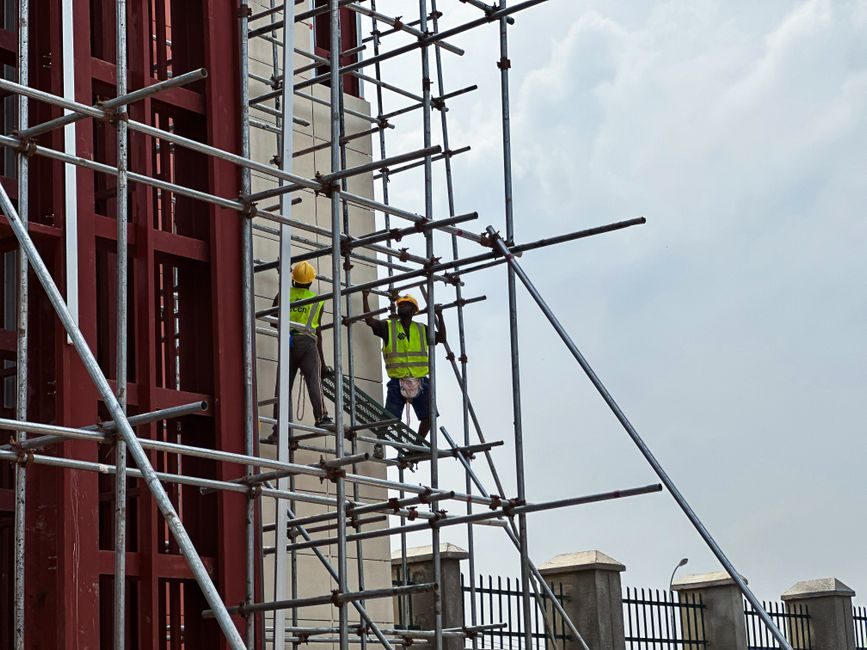
China-based frame scaffolding manufacturers are quoting US$ 5-750 per ton across H-frame, walk-through, door-frame and step-frame variants as of 2026-07-23, with EN 12811-1 compliance and hot-dip galvanizing now standard on most export-grade offers [S2][S7].
The category sits within the broader scaffolding equipment market, where frame systems remain the lowest-cost entry point for low-rise concrete and facade work, typically assembled from 2 H-frames, 2 cross braces and 4 joint pins per set [S1].
Frame System Architecture and Component Stack
A standard H-frame scaffold set comprises 2 H-frames, 2 pairs of cross braces and 4 joint pins, with each frame built from welded horizontal and vertical pipes linked by scissor-type cross bracings retained with pins and spring clips [S1].
Frame-connected (door-frame) systems extend the base set with horizontal frames, stage boards and adjustable base jacks, and pair with U-jacks for inside concrete slab shoring — the same component grammar that shows up across scaffolding category listings on Made-in-China [S9][S1].
For low-clearance inside work, complete sets typically run 1.5-2.0 m lift heights with frame widths of 0.9-1.2 m; raw steel pipe input is most commonly Φ48 mm × 3.5 mm wall to satisfy the JGJ130-2011 code referenced in supplier technical FAQs, with horizontal bars capped at 2200 mm and other members at 6500 mm to keep single-pipe mass under 25 kg [S1].
Price Bands and MOQ Structure Across Frame Variants
Frame scaffolding export prices on Made-in-China cluster in 4 bands in 2026-07: entry-level powder-coated H-frame at US$ 5-10/Ton, mid-tier galvanized H-frame at US$ 50-70/Set, Italian-type facade frame at US$ 500-750/Ton, and specialized walk-through/door frames at US$ 25.00 per piece in 42-inch American format [S3][S5][S7].
MOQ contrast is sharp: bulk-tonnage H-frame offers accept 1-100 Pieces, while step-frame and walk-through ladder frames show 50 Piece MOQs at US$ 15.00-25.00 per piece, and Okorder's Tianjin-loaded door-frame product requires 10000 kg minimum at 10000 kg/month supply capability [S1][S6].
Bythai Scaffolding (Changsha, Hunan) lists scaffolding tubes at US$ 4.50-9.00 per Piece at 100-1000 Piece MOQs, and Hebei Qisheng quotes a flat US$ 32/Set at 100 Set MOQ — useful baselines when negotiating tier-2 Chinese mills outside the Shandong/Beijing cluster [S3].
Compliance, Coatings and Supplier Vetting Signals
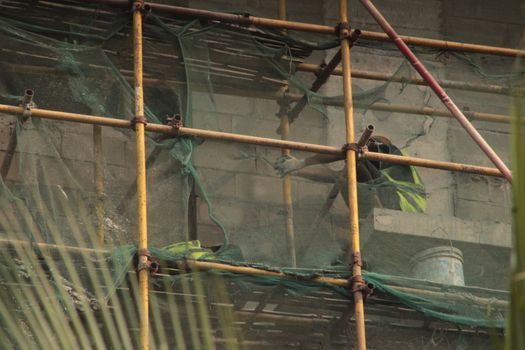
EN 12811-1 certification is the dominant export-grade marker on frame-scaffold listings as of 2026-07, appearing on Hongde Ruilin's ringlock and frame lines and on the Sichuan Taishenglann galvanized mobile scaffold line priced at US$ 15.00-25.00 per piece [S2][S6].
Surface finish separates the price tiers: powder-coated painted frames anchor the low-cost band, hot-dip galvanized frames carry the US$ 50-70/Set walk-through and H-frame platform offers, and pre-galvanized tube inputs flow through the integrated pipe-and-clamp makers like Tianjin Goldensun [S3][S7].
On Made-in-China's audited-supplier tier, plant area, employee count and response time are public vetting handles — Hongde Ruilin (115 staff, ≤7.33h response, established 2018-11-29) and Hebei Derfon (2000+ plant area, 17 staff, ≤3h response) are representative profile shapes buyers can filter against [S2][S3].
Where Frame Scaffolding Wins and Where It Loses
Frame scaffolding is the right pick for low-rise facade, plastering, painting and inside concrete-slab support up to roughly 12 m lift, where walk-through H-frames speed repetitive bay erection and U-jack integration handles slab shoring without tube-and-clamp layout work [S1][S9].
It is the wrong pick for heavy shoring above ~5 kN/m² UDL, irregular geometry, or curved structures — those jobs route to ringlock or cuplock systems because the rosette-and-ledger node on ringlock variants handles higher leg loads and 8-direction ledger connections in a way welded H-frames cannot match [S2].
For buyers cross-shopping ringlock against frame systems, the decision hinges on 4 criteria laid out in the spec-first map: leg load capacity, erection speed per bay, total cost per m² of facade covered, and reuse cycles before refurbishment — frame systems typically win on cost-per-m² and erection speed, ringlock wins on leg load and reuse count [S2][S7].
Supplier Map by Region and Capability
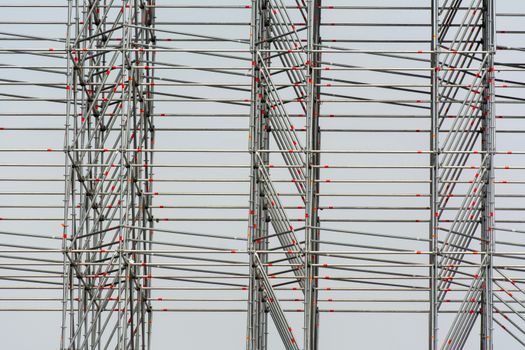
Three regional clusters dominate 2026-07 frame-scaffold supply: Shandong (Hongde Ruilin in Dezhou, multiple integrated pipe mills in Qingdao), Hebei (Derfon, Qisheng, Jizhutong — the densest cluster of OEM scaffold factories with 2000+ m² plants), and Tianjin (Goldensun for galvanized pipe inputs and Okorder's 10000 kg/month Tianjin loading point) [S2][S3][S1][S10].
Outside those clusters, Bythai Scaffolding in Hunan and Sichuan Taishenglann in Sichuan provide alternate sourcing for buyers wanting second-source qualification or specialized galvanized mobile systems [S3][S6].
For procurement teams that already use frame scaffolding as a baseline, the step-frame walk-through variant is the next spec node worth pinning down before issuing RFQs, because American 42-inch and European EN-format walk-through frames diverge on plank width, caster fit and tie-pattern spacing [S1][S5].
Sourcing Watchpoints Through End of 2026
Three signals worth tracking into late 2026: the spread between powder-coated and hot-dip galvanized frame pricing (currently roughly 5-10x per ton), the EN 12811 audit cadence of tier-2 Hebei mills, and Tianjin port loading lead-times, which Okorder lists at 10-15 days after deposit on its 10000 kg door-frame offer [S1][S3].
Buyers placing Q3 orders should lock galvanizing spec, frame OD/wall (Φ48 × 3.5 mm is the JGJ130-2011 baseline), joint-pin grade, and EN 12811 documentation in the PO; cross-referencing these against the audited-supplier response-time filter (≤3h for the top tier) is the fastest way to shortlist frame-scaffold vendors without a site visit [S1][S2][S3].
Spec-level background on the components involved: pressure transmitter, and flow meter.