
New 30 MHz handheld DDS function generators on Made-in-China list from US$204 per piece at 1-piece MOQ, while 30/60 MHz 14-bit 200 MSa/s dual-channel arbitrary units from the same vendor tier list US$225–US$441 per piece [S4].
Mainstream 25–100 MHz single-channel analog/DDS bench function generators from suppliers such as Tecpel (AFG-2000/AFG-100 series) and GAOTek's commercial catalog cluster in the US$300–US$900 band, with arbitrary-waveform memory, USB device ports and 3.5" LCD becoming standard on mid-tier SKUs [S1][S2].
What a function generator actually is, and the 2026 price spectrum
A function generator is a stimulus instrument that produces sine, square, triangle, ramp, pulse and arbitrary waveforms at programmable frequency, amplitude and DC offset, used to verify the response of amplifiers, filters, ADCs, sensors and communication circuits [S1]. Direct-digital-synthesis (DDS) architectures such as the AD9833/AD5452 reference design dominate sub-100 MHz builds, and the AD9833 chip itself shows up in open-source DDS projects with 75 commits, confirming how commodity the silicon has become [S3].
Across 2026 catalogs, four rough price bands have settled out: US$150–US$400 entry/budget (handheld 20–30 MHz DDS, 1-piece MOQ, basic sine/square/triangle, fixed 8–14-bit vertical resolution); US$400–US$1,500 mid-band (50–100 MHz, 14–16-bit, 200 MSa/s, dual channel, USB/LAN, sweep/burst/AM-FM-PM modulation); US$1,500–US$6,000 workhorse (150–350 MHz, 1–2 GSa/s, deep arbitrary memory ≥1 Mpts, low jitter <100 ps rms, optional touchscreen); and US$6,000–US$15,000+ RF/microwave arbitrary (1–2 GHz, 5 GSa/s, 16-bit, 2–4 channels, LXI/Ethernet, jitter <50 ps, harmonics below -60 dBc) [S1][S2][S4]. A baseline 30 MHz 200 MSa/s 14-bit dual-channel arbitrary unit currently lists at US$204 per piece, MOQ 1, on the Made-in-China marketplace [S4].
The four cost drivers that move the bill of materials
First, analog bandwidth: each doubling of -3 dB bandwidth typically raises the converter (DAC) cost 2–3x because faster SiGe/CMOS DACs with better SFDR are priced on speed grade, not bit count alone. The jump from a 60 MHz to a 200 MHz arbitrary unit usually lifts the SKU price from the US$200s to the US$1,200–US$2,000 range, with 1 GHz+ models requiring GHz-class DACs and clock-recovery ASICs [S2][S4].
Second, sample rate and vertical resolution: 200 MSa/s at 14-bit is now the entry point for arbitrary mode, while 1 GSa/s at 16-bit sits in the mid-band, and 5 GSa/s at 16-bit commands a 3–5x premium over the 1 GSa/s class [S2][S4]. Third, channel count: going from 1 to 2 fully independent, phase-coherent channels roughly doubles the analog and FPGA content; quad-channel arbitrary units are rare below US$8,000 [S2]. Fourth, arbitrary memory depth and modulation: deep memory (16 Mpts and up) plus AM/FM/PM/FSK/PSK/QAM modulation packages, sweep/burst, and a graphical touchscreen add 15–30% to the platform cost versus a no-frills DDS bench unit [S1][S2].
Comparison of the four 2026 tiers on the criteria that actually decide a PO
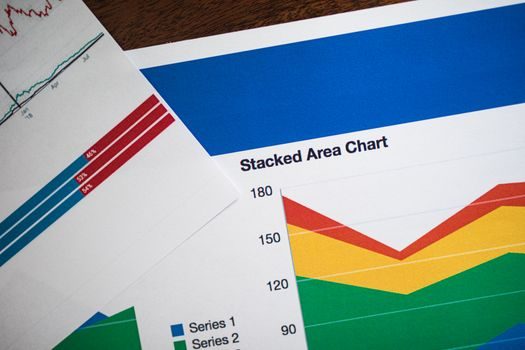
On bandwidth-per-dollar, entry DDS wins for ≤30 MHz work; on jitter, only the workhorse and RF tiers clear the <100 ps rms floor that telecom-clock and ADC-imaging tests require; on memory depth, mid-band and above expose 1–16 Mpts of arbitrary waveform memory that entry SKUs simply lack (typically 4–64 kpts); on connectivity, USB-device is universal, USB-host and LAN are mid-band, and LXI/Ethernet with SCPI command set is the workhorse+ feature [S1][S2][S4].
For an engineering buyer, the practical rule is: if the highest harmonic you need is the 5th of a 5 MHz sine (25 MHz), a US$200–US$400 30 MHz DDS unit is sufficient; if you are characterising a 100 MHz op-amp or a 50 MHz PLL loop, plan US$1,000–US$3,000; if you are driving a 1 GHz serial-bus compliance mask or synthesising modulated radar pulses, budget US$8,000+ for a 2–4 GHz arbitrary generator with <50 ps jitter [S1][S2].
Total cost of ownership beyond the sticker price
Sticker is roughly 55–70% of the 3-year TCO on a bench function generator; the rest is calibration, firmware updates, warranty uplift, and probe/accessory attrition.
Power draw is small (typically 30–90 W for a bench unit, 5–10 W for a handheld), so electricity is a noise term, but rack and bench space is not: a 2U or 3U half-rack instrument at US$3,000 ties up the same footprint as a US$500 handheld, and lab real estate at US$200–US$600 per square foot per year is a real line item in metrology rooms [S2].
Sourcing paths, MOQs, and what 2026 lead times actually look like
Three sourcing paths dominate: catalog distribution (Digi-Key, Mouser, RS) for US$300–US$6,000 units with same-week US/EU shipping; Chinese B2B marketplace (Made-in-China, Alibaba) for US$200–US$1,500 DDS and arbitrary units with 1-piece MOQ, 15–45 day lead times at FOB Shenzhen, and CE/FCC/RoHS documentation bundled on request [S4]; and direct-OEM purchase (Keysight/Agilent, Tektronix/Keithley, Rigol, Siglent, GW Instek) for workhorse and RF tiers, with 4–8 week lead time on configured SKUs and price-on-application quotes [S1][S2].
The Made-in-China listings show a US$225–US$441 per-piece band at 1-piece MOQ for 30/60 MHz 14-bit 200 MSa/s 2-channel arbitrary units [S4]. GAOTek's catalog positions its commercial function generators in the US$500–US$4,000 mid-band with overnight ship inside the US/Canada and 30-day return terms [S2].
Who should buy which tier — and who should not
Buy entry/budget (US$150–US$400) if you are a student lab, a hobbyist bench, or a field-service tech who needs a 20–30 MHz sine/square/triangle reference for amplifier and audio-circuit checks; do not buy it for ADC-imaging, PLL-loop bandwidth, or any test above 30 MHz where harmonics and jitter will lie to you [S1][S2][S4].
Buy mid-band (US$400–US$1,500) if you are a design-validation or QA bench characterising 50–100 MHz analog, embedded serial buses (I2C/SPI/UART/CAN), or sensor-signal chains; do not buy it if you need sub-100 ps rms jitter for clock-recovery or compliance masks above 150 MHz [S2]. Buy workhorse (US$1,500–US$6,000) for 150–350 MHz RF and high-speed digital; buy RF/microwave (US$6,000–US$15,000+) only when the test plan explicitly demands ≥1 GHz analog bandwidth, deep arbitrary memory, and low phase noise [S1][S2].
Trackable signals and what to verify before issuing the PO

Before issuing the PO, verify three numbers on the datasheet against the test plan: -3 dB analog bandwidth (not just sample rate), vertical resolution in bits (8/10/12/14/16 changes harmonic content materially), and arbitrary memory depth in points (not waveforms) [S1][S2][S4]. Ask the vendor for a SCPI command list, an IVI driver, and a published phase-noise/jitter plot at the carrier frequency you actually use, not at marketing maximums [S2].
For a deep dive on bands, specs and sourcing, the related function generator buying guide for 2026 covers the same tier map from the selection-criteria angle; for a parallel cost-driver framework on a different bench instrument class, see the loop power distributor 2026 price breakdown, which uses the same cost-driver / TCO structure. If you are deciding between a bench function generator and a wider bench-instrument refresh, the shuttle system TCO and air impact wrench total cost pieces show how the cost-driver method scales to other industrial purchases. Reference the function generator encyclopedia page for the underlying topology, DDS principles and waveform-architecture taxonomy.
Spec-level background on the components involved: linear guide, and crossed roller guide.