
Hot-dip galvanized sheet supply in 2026 is a coil-to-coil volume business where the line speed, coating mass, and substrate grade set the price band before any LME or SHFE zinc move is even discussed. The American Galvanizers Association documents continuous sheet galvanizing as a hot-dip process run on cold-rolled substrate from 0.25 mm to 4.30 mm thick and up to 1,830 mm (72 in) wide, passing through cleaning baths and molten zinc as a continuous ribbon at line speeds up to 600 ft/min [S6].
On the Chinese export side, Booming Steel (Shanghai) lists its Hot Dipped GI Steel Coil and DX51D+Z / SGCC Z275 hot-dip coil at FOB US$690-800/ton with a 25-ton minimum order, ISO 9001 certified, exporting since 2006-06 with main markets in South America, Southeast Asia/Mideast, and domestic China [S5]. Trading houses such as Pooia Steel (Iran, 10+ years sourcing) offer colored galvanized sheet alongside wire rod, pipe, and girder for Middle East and Far East buyers [S4].
Continuous Hot-Dip Process: The Dimensional and Throughput Envelope
Continuous sheet galvanizing is the dominant route for flat product, applied to steel sheets, strips, and wire in a coil-to-coil configuration, with substrate entering at 0.010-1.70 in (0.25-4.30 mm) thickness and up to 72 in (1,830 mm) width, processed at line speeds up to 600 ft/min [S6]. Surface preparation runs the strip through an alkaline cleaning bath plus brushing, rinsing, and drying before the molten-zinc dip — pre-cleaning is where most line-yield problems originate, not in the pot.
Two production routes matter for spec sheets: hot-dip galvanizing (HDG) and electrogalvanizing. ScienceDirect's overview of galvanized steel notes zinc-coated steel is produced either by hot dipping in melted zinc or by electrodeposition, with HDG dominant for structural and construction sheet because of thicker coating mass per pass [S3]. For procurement, the practical question is coating mass (Z60 / Z120 / Z180 / Z275), not the production route — Z275 is the common Chinese export benchmark referenced in Booming Steel's grade string [S5].
Coating Mass, Grade String, and What They Mean on the PO
The Chinese export grade string DX51D+Z SGCC Z275 is doing three jobs at once: DX51D+Z is the EN 10346 designation for mild forming-quality hot-dip coated steel; SGCC is the equivalent JIS G3302 grade (commercial-quality hot-dip galvanized sheet); Z275 specifies 275 g/m² total coating mass (both sides combined), which translates to roughly 0.04 mm of pure zinc per side at nominal density [S5]. Buyers comparing PO line items across mills should align on coating mass first, then substrate grade, then surface finish (regular spangle / minimized spangle / zero spangle).
For 0.5-1.0 mm cold-formed applications (drywall studs, cable tray, light framing), DX51D+Z Z275 is the workhorse spec. For structural sections exposed to marine atmospheres, specifiers typically step up coating mass and/or move to Z350 or Z450, often paired with thicker substrate rather than chasing a tighter zinc layer. The galvanizing thickness requirement on the print is driven by the ISO 1461 / EN 10346 / ASTM A653 family of standards; check which one your contract calls out before comparing offers [S6].
Price Bands and MOQ Reality in the Chinese Export Channel
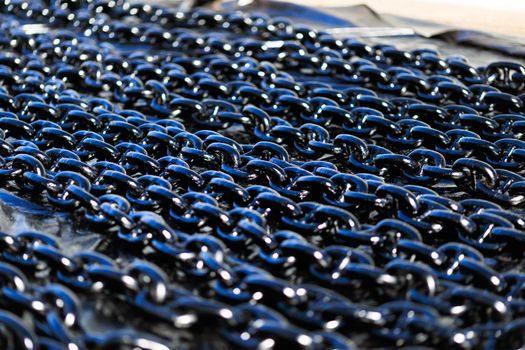
On Made-in-China, Booming Steel's DX51D+Z SGCC Z275 hot-dip coil sits in a US$690-800/ton FOB band on 25-ton MOQ as of the 2026-07 product listing [S5]. Adjacent product families show wide spread: galvanized steel quick-link double jack chain with threaded nut is listed at US$0.90-11.90 per box at 100-box MOQ from Shandong Yifa Casting & Forging [S2]. The chain price is irrelevant to flat-sheet sourcing, but the MOQ structure illustrates the same pattern: galvanized finished goods are typically quoted at higher unit price with lower MOQ than the mill coil itself.
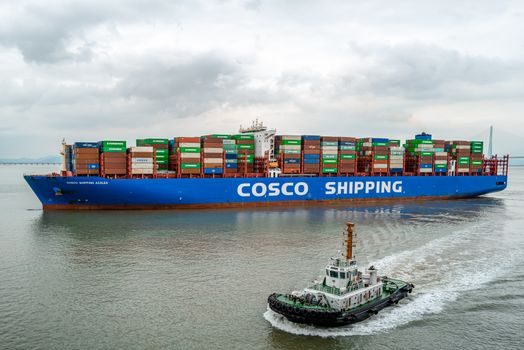
Three variables move that US$690-800/ton band most: (1) zinc price on the LME/SHFE, since zinc is roughly 5-10% of the finished coil weight at Z275; (2) order volume vs. the 25-ton MOQ floor, where spot orders below MOQ carry a premium; (3) container availability and freight to destination port. The coil itself is largely a commodity; the spread between FOB quotes from two mills in the same coastal province is usually smaller than the spread between any one mill's FOB and a CIF delivered price.
Mill vs. Trading House: Where the Sourcing Risk Sits
Direct mill sourcing (Booming Steel and similar Shanghai/Tianjin/Boxing mills) gives traceability to a specific coil line and a defined coating-mass certificate, but requires the buyer to clear the 25-ton MOQ and handle export documentation [S5]. Trading houses like Pooia Steel buy from multiple upstream mills, bundle mixed lots, and offer colored galvanized sheet in smaller quantities, with the trade-off that coating-mass traceability is mill-by-mill rather than heat-by-heat [S4].
For a project buyer needing 200-800 tons of a single grade, the mill-direct route typically wins on unit price. For a service center or distributor needing 20-50 tons of mixed grades and finishes, the trading-house route usually wins on logistics and MOQ flexibility. Material test certificates (MTCs) to EN 10204 3.1 are the minimum paperwork to demand from either route; anything less is a red flag on coating-mass compliance.
Adjacent Galvanized Products and Where They Fit the Same Supply Chain

The same hot-dip lines that feed DX51D+Z sheet also feed galvanized chain, galvanized angle, and pre-painted galvanized coil (PPGI). The chain products on Made-in-China — including the galvanized hollow-pin drive chain at US$10.89-12.51/unit — pull from the same upstream zinc-coated substrate or wire-rod pool that feeds sheet mills [S2]. For buyers specifying both flat sheet and chain accessories (e.g., conveyor builders who buy galvanized sheet for guards plus galvanized roller chain for drives), aligning the upstream supplier base simplifies MTC traceability.
Pre-painted galvanized (PPGI/PPGL) is the next value-add step after the galvanizing pot, and Pooia Steel's colored galvanized sheet line is positioned at this tier [S4]. The base Z60-Z275 galvanized substrate is the same; the difference is a 15-25 µm paint layer baked on top, which adds roughly US$50-100/ton over the bare-galvanized coil and shifts the lead-time out by 1-2 weeks.
Failure Modes and Inspection Points to Lock In
Three failure modes dominate galvanized sheet field failures: (1) white rust (zinc oxide/hydroxide bloom) from moisture trapped between coils in transit or storage — controlled by chromate passivation, oiling, or packaging desiccant; (2) bare spots and uncoated edges from line-side pre-clean problems, visible immediately on receipt; (3) coating-mass underrun, where a coil is sold as Z275 but tested at Z200, eroding service life in proportion to the missing zinc [S6].
Acceptance inspection should test coating mass with a calibrated magnetic or XRF gauge at multiple points across coil width, check spangle uniformity, and verify the MTC heat number matches the coil ID. For fabrication shops running the material through chain conveyor lines or roll-forming, incoming coating-mass underrun is the most expensive discovery because the part is already cut before the test fails.
Standards Landscape and What to Write on the Print
Four standards cover the bulk of galvanized sheet specs a buyer will encounter: ASTM A653 (US, hot-dip, with coating designations G30 / G60 / G90 / G115 / G140 in oz/ft²); EN 10346 (EU, hot-dip, with Z coating-mass designations in g/m²); JIS G3302 (Japan, SGCC / SGHC grades); and ISO 1461 (general hot-dip coatings on fabricated articles, distinct from the coil-coating standards above) [S6]. The Chinese export grade string SGCC on Booming Steel's listing is JIS G3302, but the same coil typically ships with dual certification to EN 10346 DX51D+Z [S5].
For spec writing in 2026, the cleanest callout is "Hot-dip galvanized steel sheet to EN 10346, grade DX51D+Z, coating Z275, surface finish regular spangle, oiled, MTC to EN 10204 3.1." Adding an ASTM A653 G90 equivalent callout gives US-side auditors a reference; A653 G90 is approximately equivalent to Z275 in coating mass. Drop the mill-specific grade string (SGCC) unless the buyer specifically needs JIS marking.
The cleanest next move for a sourcing team is to lock one Chinese mill on a 12-month frame agreement with quarterly call-offs against a zinc-indexed price formula, paired with one second-source mill for spot surge. For shorter-horizon buying, track the SHFE zinc spot and the Shanghai container freight index weekly — those two data points move the landed price of DX51D+Z Z275 coil more than any other public signal in the channel.
The underlying component specifications are covered under dc power supply.
For related coverage, see Power Semiconductor QA: FIT, Vision, and Failure-Analysis Spec Map.