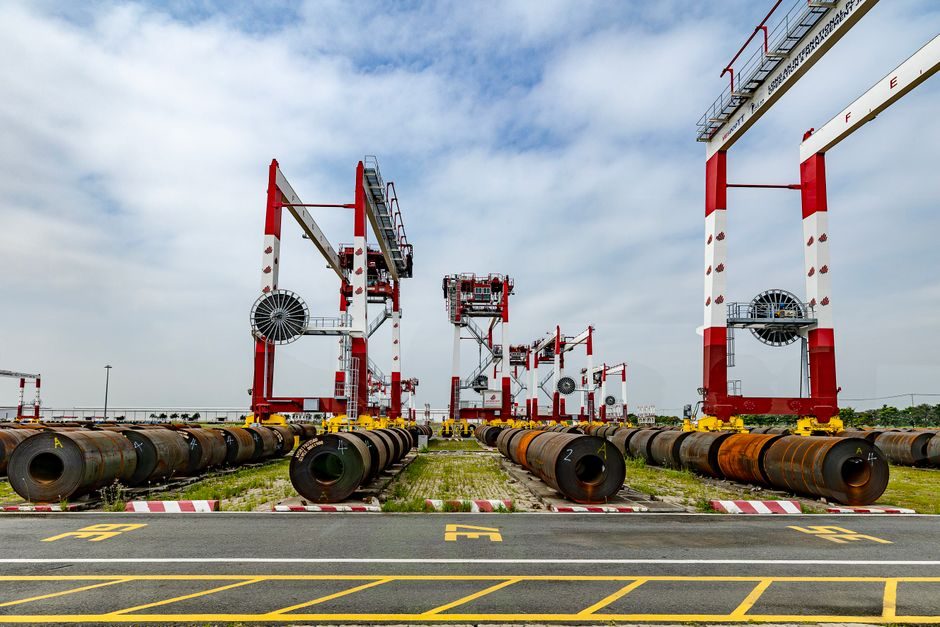
304L hot-rolled stainless steel coil from Jiangsu Golden Coral Technology Co., Ltd. lists on the 2026-04-29 catalogue at a listed US$10.00 unit price, alongside same-line 304, 309S, 316L, and 321 hot-rolled coils from the same Wuxi Xinwu district supply cluster [S1].
The 2026 stainless steel coil pipeline runs through three observable nodes: primary HR/CR coil stockists, downstream vessel fabricators, and fastener/secondary processors, with at least six subsidiaries spread across Shanghai, Zhejiang, Jiangsu, and Hong Kong feeding the same material pool [S4][S5].
Primary Coil Grades Traded on the 2026 China Spot Market
Five austenitic grades dominate the 2026 hot-rolled coil listings visible on kitairu.net: 304, 304L, 309S, 316L, and 321 — the same five grades that the stainless steel reference page recognises as the workhorse austenitic family for general chemical, food, and structural service. [S1]
304L is the low-carbon variant (C ≤ 0.03%) used where post-weld annealing is not practical; 316L adds 2–3% Mo for chloride/pitting resistance; 309S and 321 are stabilised grades for higher-temperature exposure (309S ~1000 °C, 321 Ti-stabilised) [S1]. 304 hot-rolled coil lists as the baseline non-L reference SKU in the same supplier cluster.
Jiangsu Golden Coral's 2013-founded operation runs cutting, surface grinding, and forming lines on a single Wuxi site near Shanghai, which keeps coil-to-cut-plate lead times short for Eastern-China OEMs [S1].
Downstream Pull: Vessels, Tanks, and Sanitary Surface Finishes
Shanghai Ritai Medicine Equipment Project Co., Ltd. lists a 30 L–30,000 L stainless steel mixing vessel built from SS316L or SS304, with internal mechanical-polish surface roughness controlled to Ra 0.28–0.6 μm followed by passivation — directly consuming the same austenitic coil feed the upstream stockists handle [S2].
That Ra band matters at procurement: 0.28 μm sits in sanitary/pharma territory, 0.6 μm is the upper bound for general food-grade service, and the passivation step (typically nitric or citric acid per ASTM A967) restores the chromium-oxide layer disturbed by polishing [S2]. Buyers specifying <stainless steel coil</stainless> for tank conversion need to lock the Ra window and the passivation chemistry at RFQ stage, not at FAT.
Mixing vessels in this cluster cover brewing, food, pharma, dairy, chemical, petroleum, building-materials, power, and metallurgical duty classes per the standard tank classification [S6]. Each class maps to a different weld-procedure and CIP demand, which cascades back to the coil certificate (EN 10204 3.1 vs 3.2) that the mill must supply.
Fastener and Secondary-Processing Branch
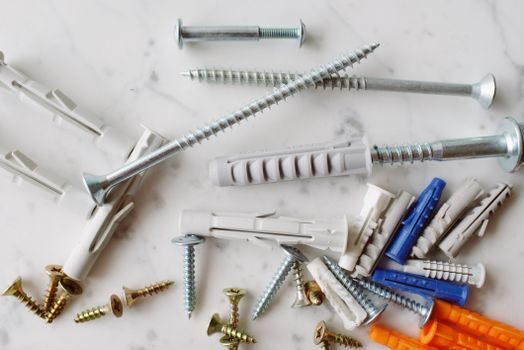
JiangYin JinGu Machinery Mould Co., Ltd. prices stainless coil nails at US$500–2,000 per metric ton MOQ, sitting on a parallel supply line that draws wire rod rather than strip — but the same austenitic melt pool from Jiangsu mills is the upstream source [S3].
The coil-nail format (wire collated vs strip) is a fastener-OD decision, not a steel-grade decision; specifiers should still demand 304/304L/316L call-out on the MTC because nail-grade carbon and stainless wire cross the same order book at the merchant bar level [S3].
The wider fastener ecosystem — including the matching lock-nut selection tree on the engineering side — is covered in the Lock Nut Types and Classifications field map, which is useful when the same PO covers both stainless coil feedstock and the hardware that goes with the finished tank or skid.
Decision Matrix: Matching Coil Grade to Service Condition
For a buyer who already has the vessel geometry locked, the grade-selection question reduces to four engineering criteria: chloride exposure, post-weld heat treatment access, operating temperature, and surface-sanitation class. The comparison below summarises how the five traded 2026 HR coil grades line up against those drivers [S1][S2].
304 (18Cr/8Ni, no Mo) suits indoor architectural and non-chloride process service up to ~870 °C intermittent. 304L is the correct call when field welds cannot be solution-annealed, because the 0.03% C cap prevents sensitisation-driven intergranular corrosion. 316L (16-18Cr/10-14Ni/2-3Mo) is mandatory above ~200 ppm Cl⁻ in aqueous service — pharmaceutical and coastal chemical plants default to it. 321 (Ti-stabilised) replaces 304 where sustained service runs 400–800 °C and weld HAZ sensitisation is a concern. 309S (23-25Cr/12-15Ni) is the higher-Cr buffer grade for thermal cycling up to ~1000 °C [S1].
For the sanitation band Ra 0.28–0.6 μm specified on the Ritai vessel data sheet, 316L is the safer default because polish-induced Fe-contamination is more easily removed from a Mo-bearing surface, and passivation chemistry is well-documented for the grade [S2].
Procurement Risk and Quality-Document Discipline

The 2026 supply cluster is geographically concentrated in the Yangtze River Delta — Wuxi, Shanghai, and Jiangyin sit within ~150 km of each other, which compresses mill-to-fabricator transit but also concentrates risk if a single mill has a melt-shop interruption [S1][S3][S5]. The six-subsidiary export network on sssteelplate.com routes both coil and plate through the same logistics spine, so a port disruption at Shanghai ripple-effects to both [S5].
Buyers should anchor every coil PO on three documents: mill test certificate per EN 10204 3.1 (chemistry + mechanicals), PMI (positive material identification) verification on receipt, and a surface-roughness measurement when the downstream tank fabricator specifies Ra. The internal reference page on stainless steel walks through the standard grade and finish taxonomy; for sanitary pipe/tube spools cut from the same coil, the stainless pipe entry is the matching engineering reference.
Price discipline also matters: the kitairu.net 2026-04 listing shows coil as low as US$10/unit, but that is a catalogue placeholder, not a transactable price — the Made-in-China coil-nail listing at US$500–2,000/ton is a more realistic merchant benchmark for downstream planning [S1][S3].
Where the 2026 Stainless Coil Market Is Trackable
Trackable signals for the next 90 days: (a) monthly LME nickel and Mo price moves, which set the 304 vs 316L spread, (b) Wuxi and Foshan stainless spot-coil index prints on the Stainless Steel Club daily feed, and (c) new MTC/EN 10204 requirements from EU pressure-equipment buyers that propagate back to Chinese mill order templates [S4]. Procurement teams that watch those three together can usually call a coil PO 30–45 days before a price move shows up on the trader board.
For the relevant spec sheets and selection criteria, see solenoid coil.