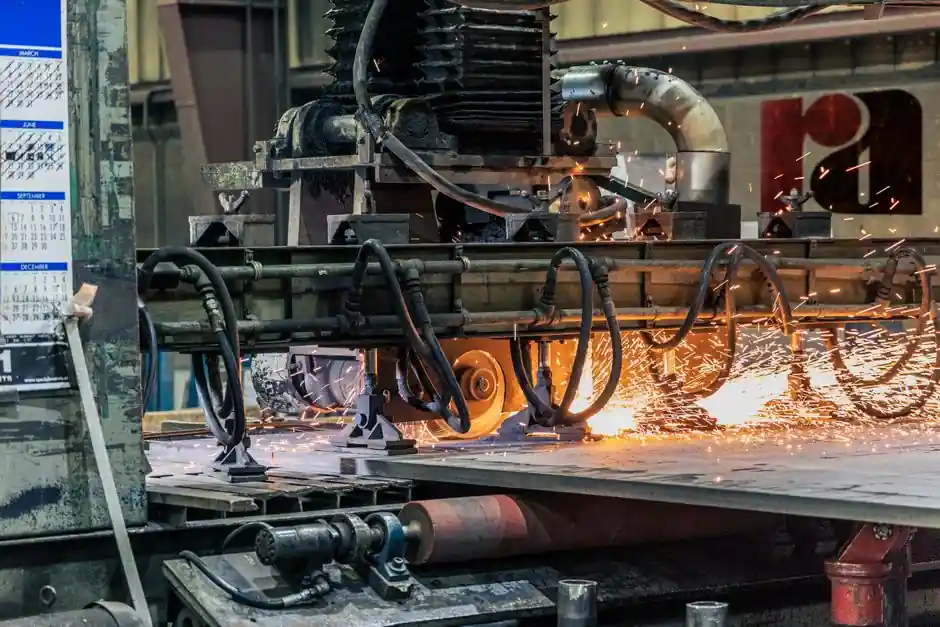
Galvanized and coated iron and steel sheets reached USD 170.3 billion in 2025, with seven producers (ArcelorMittal, Nippon Steel Corporation, POSCO, Tata Steel, China Baowu Group, JFE Steel, and ThyssenKrupp) named as key players in a market tracked at 4.6% CAGR to USD 267.0 billion by 2035 [S4]. Hot-dip galvanizing captured 40.0% of process share in 2025, the single largest coating route on a tonnage-weighted basis [S4].
Volume sits inside a much larger flat-rolled pool: the broader sheet metal market was USD 178.02 billion in 2025, forecast to USD 350.14 billion by 2035 at 7.52% CAGR, with steel commanding 68.4% of revenue and Asia-Pacific holding 52.1% regional share [S5]. Adjacent sub-segments confirm the supplier concentration pattern: electrical galvanized steel reached USD 26.3 billion in 2024, projected to USD 43.2 billion by 2034 at 5.1% CAGR, with Asia-Pacific at 51.4% share on USD 11.2 billion revenue [S2].
Top Seven Producers: Capacity Footprint and Reported Positioning
ArcelorMittal, Nippon Steel, POSCO, Tata Steel, China Baowu, JFE, and ThyssenKrupp are explicitly listed as key players in the galvanized and coated sheets market for 2025 [S4]. The same seven names anchor the wider sheet metal producer set, alongside Nucor Corporation, in the 2025 supplier roll-up [S5]. The supplier list is consistent across at least two independent trackers, which is the closest signal of share concentration the public research allows without inventing percentages.
China Baowu Steel Group, ArcelorMittal, Nippon Steel Corporation, POSCO Holdings, Nucor Corporation, and Tata Steel are the named key players in the sheet metal market 2025 framing, with ArcelorMittal having committed EUR 1.7 billion to Belgian and French decarbonization assets that will retune its flat-product mix [S5]. POSCO and JFE are surfaced specifically in the galvanized-sheet cohort, while ThyssenKrupp rounds out the European slot [S4]. For context on material-grade selection, stainless steel sheet sits in an adjacent specification family and is the usual reference point when buyers move up the corrosion-resistance ladder.
Process Mix: Hot-Dip Dominance, Electrical as the Quality Niche
Hot-dip galvanized steel holds the largest process share due to its superior corrosion resistance, cost-effectiveness, and durability, per the 2025 galvanized steel tracker [S3]. The numeric anchor: hot-dip is reported at 40.0% of process share in the galvanized and coated sheets market for 2025 [S4]. Electrical galvanizing (electrolytic zinc deposition) sits in a separate sub-market valued at USD 26.3 billion in 2024, growing at 5.1% CAGR to USD 43.2 billion by 2034 [S2].
Within the electrical route, sheets specifically held 44.9% of product-form share in 2024, ahead of coils, wires, and other forms, because sheets ship ready for fabrication without the flattening step coils require [S2]. Sheet thickness uniformity and a smoother, paintable surface are the two cited reasons, which is why automotive panels, appliance housings, and electrical enclosures gravitate to the sheet form factor [S2]. For applications where the carbon steel substrate and zinc coating weight matter more than surface paintability, hot-dip is the default.
Regional Concentration: Asia-Pacific Sets the Volume, Europe Sets the Carbon Premium
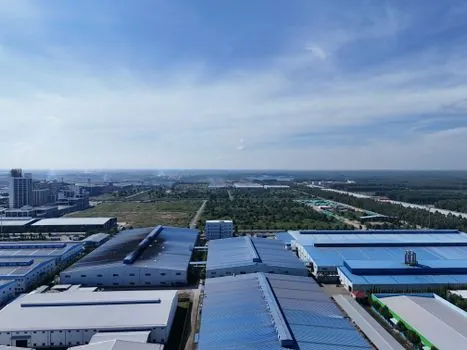
Asia-Pacific is the dominant regional block in both adjacent trackers: 52.1% of 2025 sheet metal revenue and the fastest growth at 8.34% CAGR, powered by Chinese EV platforms and Indian integrated-plant expansions [S5]. In the electrical galvanized sub-market, Asia-Pacific held 51.4% of 2024 revenue at USD 11.2 billion, confirming that regional concentration is structural rather than cyclical [S2]. Europe sits in the second position at 19.4% of sheet metal revenue, where the EU Carbon Border Adjustment Mechanism entered its definitive charging phase in January 2026 and now reprices imported flat products by embedded carbon [S5].
Construction and infrastructure is the largest end-use, contributing roughly 41.2% of electrical galvanized steel revenue and about 18-20% of demand in the broader galvanized and coated sheets tracker, with automotive at 12-15% and industrial machinery at 8-10% [S2][S4]. The 2025 galvanized and coated sheets tracker also pegs the parent steel and metal sheets market at 25-30% contribution from the galvanized and coated sub-segment, which is the cleanest cross-validation of the sub-segment weight available in the public research [S4]. When the steel mesh and steel fiber categories are pulled into the same construction bill of materials, the regional pattern repeats: Asia-Pacific volume, European specification premium.
Manufacturer Selection: Criteria Buyers Can Use Without Proprietary Data
Public trackers do not publish a single normalized share table for galvanized sheet producers, so a spec-first buy shortlist has to be built from disclosed signals: process route (hot-dip or electrical), regional plant footprint, coating weight grades, and decarbonization roadmap. ArcelorMittal's EUR 1.7 billion Belgian and French decarbonization spend is a public anchor for European low-carbon flat product [S5]. China Baowu, POSCO, and Nippon Steel carry the Asian volume base; Tata Steel and JFE are mid-tier regional anchors; Nucor is the North American EAF-flat-products flag; ThyssenKrupp covers the European automotive-exposed premium book [S4][S5].
For a decision matrix, four criteria are the cleanest: (1) process availability, hot-dip at 40.0% of 2025 process share versus electrical at the sheet-form 44.9% product share inside a USD 26.3 billion 2024 sub-market [S2][S4]; (2) regional mill proximity, Asia-Pacific at 51.4-52.1% regional share and Europe at 19.4% [S2][S5]; (3) coating-weight grade range, where hot-dip covers heavy structural and roofing, and electrical covers thin-gauge paintable panels [S2][S3]; (4) carbon intensity disclosure, which now affects landed cost in Europe after the CBAM definitive phase began in January 2026 [S5]. If your application is appliance housings or electrical enclosures, the sheet form of silicon steel grades and electrical galvanized sheet are the two form factors to compare side by side.
Limitations of the Public Data and What Buyers Should Track

The 2025 trackers do not publish a percentage split among the seven key producers, and a single normalized share table across hot-dip and electrical combined is not in the research. Any per-company percentage cited from the source material is either an explicit named-region number (e.g. Asia-Pacific 51.4% of 2024 electrical galvanized steel revenue) or a process-form number (sheets 44.9%, hot-dip 40.0%), never a named-producer market share [S2][S4]. Buyers should request producer-specific mill certificates, coating weight (g/m^2 per side, commonly Z60-Z600 for hot-dip and EG-grade for electrical), and substrate grade (commercial, drawing, or structural) directly from the mill, because the public trackers stop at the supplier-list level.
Trackable signals through 2026 and into 2027: CBAM-driven landed-cost repricing for European importers after the January 2026 definitive phase, the US Inflation Reduction Act USD 6 billion Industrial Demonstrations Program funding low-emissions flat-product lines, and ArcelorMittal's EUR 1.7 billion European decarbonization program delivery milestones [S5]. Adjacent construction-spec coverage in our library, including wheel loader daily inspection checklists and pneumatic cylinder TCO drivers, intersects the same project-execution timeline buyers use when they lock in a galvanized sheet supplier.