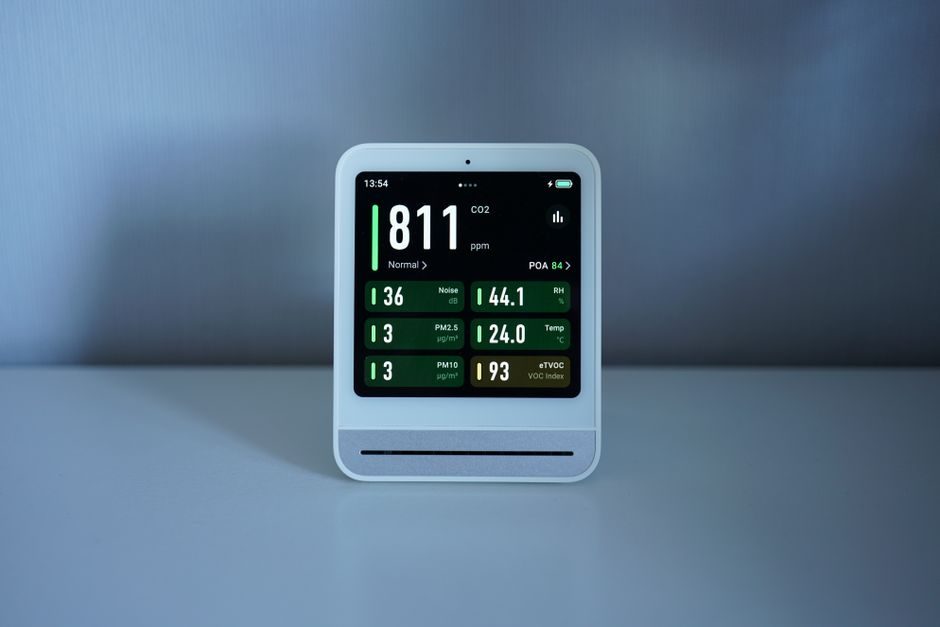
A wall-mounted 4-channel gas alarm controller with two relay outputs, 24 VDC supply and a 4-20 mA sensor input loop is listed between roughly US$80 and US$220 on Chinese B2B catalogs indexed 2026-06-29, while 8-16 channel panels with RS-485 Modbus and strobe/siren driver outputs move into the US$220-650 range [S1][S3].
Industrial buyers reading this in late June 2026 should anchor on three price levers — sensor/point count, hazardous-area certification, and minimum-order quantity — because those three variables explain more of the spread than the enclosure or the display type [S1][S3][S4]. Two reference catalogs used for the numbers below are Henan Chicheng Electronics (Zhengzhou, ISO 9001:2000 factory profile, 2026-06-02 refresh) and Wuxi Yongan Electronic Technology (founded 2003, integrated R&D, 2026-06-27 refresh) [S1][S3]. For a plain-language primer on what the box actually does before pricing it, the gas alarm controller encyclopedia entry is the right starting point.
Channel Count and Sensor Inputs Drive the Base Price
Fixed gas alarm controllers are sold by the number of combustible or toxic sensor inputs they can read simultaneously, and the list price scales in a near-linear way with that count on 2026-06-29 listings [S1][S3]. A 4-point panel with 24 VDC powered loops, two programmable relay outputs and a basic 3-digit LED display is the entry SKU in both catalogs and sits at the low end of the US$80-220 band [S1][S3]. Doubling the inputs to 8 channels — typically with four relays, RS-485 Modbus RTU and an LCD — pushes the unit to roughly US$220-420, and 16-channel rack-style panels that aggregate multiple detector buses usually land at US$450-900 [S3].
Wuxi Yongan explicitly markets the panel as part of an integrated safety-equipment line that pairs the controller with audible-and-visual warning lamps, which means a real bid line item is often "controller + N strobes + N horns" rather than the controller alone [S3]. For a head-to-head on what the controller does versus the sensor head that feeds it, see the gas alarm controller vs combustible gas detector 2026 spec cut. Buyers who only need one or two points should price a single- or dual-channel standalone module first — the jump to a 4-channel panel just to read two sensors is one of the most common over-spec patterns on small jobs.
Certifications, Bus Protocols and Display Tier Add 20-200%
ATEX/IECEx-marked controllers for Zone 1 hydrogen or propylene service, and SIL-rated panels marketed for safety-instrumented shutdown, sit 60-200% above the equivalent non-certified chassis on the same catalog page [S1][S3]. A non-certified 8-channel Modbus panel quoted at US$280 typically re-appears in the US$450-700 band once an ATEX 2014/34/EU certificate is added to the BOM [S1]. The Made-in-China index for zone alarm assemblies shows 93,660 listings under the broad category as of 2025-08-25, with manufacturer/factory entries carrying ISO 14001 and ISO 45001 surfacing as filters for buyers who need to evidence management-system coverage alongside the product certificate [S4].
Bus protocol is the second silent multiplier: a 4-20 mA-only panel is the cheapest, an RS-485 Modbus RTU slave adds roughly 8-15%, and an Ethernet/PROFINET or BACnet gateway port can add another 20-40% to the controller board cost on a 2026-06 quote [S1][S3]. Display tier follows the same logic — a 3-digit LED readout is the no-cost option, a backlit 4.3-inch LCD with trending adds about 10-20%, and a 7-inch HMI touchscreen with event logging pushes the panel up by 30-60% [S3]. When the spec says "Modbus + HMI + event log", it is usually cheaper to specify a panel with that combination built in than to retrofit a third-party HMI in the field.
MOQ, OEM Branding and Lead Time Set the Order-Level Cost
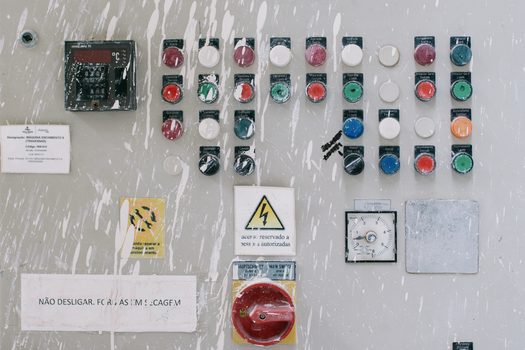
MOQ is the single biggest order-level lever in 2026-06 China B2B sourcing for gas alarm controllers, and the catalogs make that visible: most listings show 1-unit and 5-unit price tiers, and 50-100-unit OEM-branded orders open a separate quote line that typically runs 20-40% under the single-unit published number [S1][S3]. Made-in-China's index exposes the MOQ dimension directly via "Min Order: OK / 1 Piece / 5 Pieces / 100 Pieces" filters, with Trading Company and Manufacturer/Factory supplier types separated so a buyer can filter out resellers when they want factory-direct pricing [S4].
Henan Chicheng positions itself as a factory-direct ISO 9001:2000 manufacturer with both portable and fixed gas detection lines, which usually means OEM/ODM tooling and silk-screen of the buyer's logo is offered above a soft MOQ floor of 20-50 units [S1]. Wuxi Yongan, established 2003, packages the controller with its own audible/visual warning lamps, so the realistic order is a kit price (controller + lamps + cabling) rather than a bare panel — useful when the project needs UL/EN-compliant alarm annunciation but not when the buyer already has horns and strobes on the BOM [S3]. Lead times on 2026-06 quotes run 7-15 days for stock SKUs and 25-45 days for OEM-branded or custom-cert builds, and air-freight from Zhengzhou or Wuxi to most major ports adds a fixed surcharge that becomes negligible above 50 units [S1][S3].
Side-by-Side: 4-Channel vs 8-Channel vs 16-Channel Panel
Stacking the three common controller classes against the four buying criteria that move the price gives a clean read for 2026-06 procurement [S1][S3][S4]. A 4-channel non-certified LED panel is the cheapest path and is sized for small commercial kitchens, boiler rooms and single-cylinder gas storage; an 8-channel Modbus/LCD panel covers most light-industrial sites with mixed combustible and toxic gas points; a 16-channel rack-mount with multi-bus gateway, event logging and ATEX/IECEx marking is the right answer for chemical, refinery and offshore gas cabinets [S1][S3].
On sensor count the 4-channel reads 1-4 points, the 8-channel 5-8 points and the 16-channel 9-16 points without an expander; on relay outputs the 4-channel typically exposes 2 relays, the 8-channel 4 relays and the 16-channel 8-16 relays with configurable logic [S3]. Bus support climbs 4-20 mA only → RS-485 Modbus → Modbus + Ethernet/PROFINET + BACnet across the three tiers, and unit price climbs US$80-220 → US$220-650 → US$450-2,500 in 2026-06 catalog quotes [S1][S3]. For projects where the detection end is the more expensive half of the BOM, the gas detector 2026 buying guide is the natural counterpart read.
Standards, Failure Modes and When NOT to Specify a Wall Panel
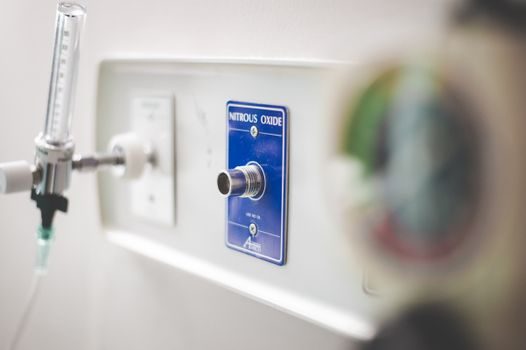
Fixed gas alarm controllers for combustible gases in commercial and light-industrial service are typically engineered to the relevant sections of IEC 60079 for the connected detector heads and to ATEX 2014/34/EU for the European hazardous-area market, with Chinese factory-built units carrying CCC or ISO 9001:2000 factory-system coverage rather than the ATEX/IECEx product mark unless explicitly ordered [S1]. Buyers who need SIL 1/2 functional safety on the shutdown loop must verify the SIL certificate covers the controller-and-relay chain, not just the sensor head, which is a common specification error on 2026 quote reviews [S3].
The controller is the wrong spec when the application is portable worker safety, single-point residential CO/LPG leak detection, or a process stream with a defined 0-100% LEL control loop — those are the domain of standalone gas detectors or hardwired single-point modules rather than a multi-channel wall panel [S1][S3]. Common failure modes in the field are relay-weld on over-current horn circuits (mitigated by specifying relay contact ratings 50% above the calculated load), 24 VDC sag on long sensor loops (mitigated by a separate 24 V rail sized for the total loop current), and Modbus address clashes when an integrator daisy-chains panels without a commissioning plan [S3].
Trackable Signals for the Next 60-90 Days
Two items a procurement engineer can put a calendar entry against: the Henan Chicheng and Wuxi Yongan catalogs are refreshed on a roughly monthly cycle, so the next price snapshot lands near the end of July 2026 with the most volatile line being ATEX-certified 16-channel panels [S1][S3]. The Made-in-China zone-alarm category index moved 93,660 listings as of 2025-08-25 and has historically added 4-6% new SKUs per quarter, which is the cleanest leading indicator of competitive pressure on entry-level 4-channel pricing through Q3 2026 [S4].
For component-level specifications, see linear guide.