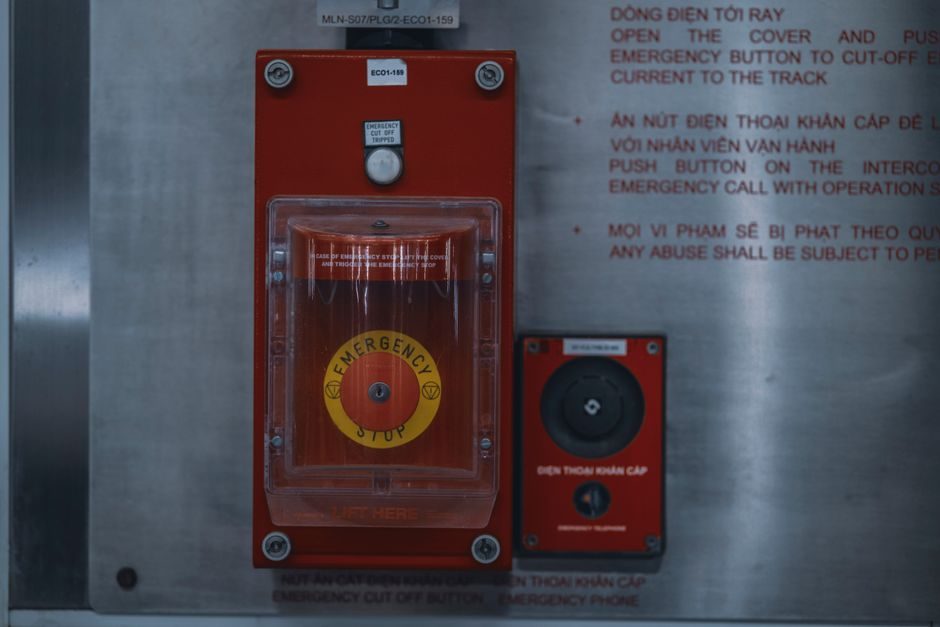
Gas alarm controllers sold through Chinese OEM/ODM channels typically accept 4-20 mA analog, RS-485 Modbus, and dry-contact detector inputs on panels ranging from 4 to 32 zones, with on-board relay outputs rated 5 A at 250 VAC for horn/strobe and shut-off valve actuation [S1]. SIL 1, SIL 2, or SIL 3 compliance under IEC 61508 (functional safety of electrical/electronic/programmable electronic safety-related systems) is the single most consequential compatibility gate, because a panel that meets basic GB 16808 or EN 50291 commercial specs generally does NOT carry IEC 61508 hardware fault-tolerance data.
The result is a two-tier market: residential and light-commercial panels from makers like Wuxi Yongan dominate volume shipments [S3], while fixed industrial-grade controllers from mPower and peers are specified for confined space, oil and gas, and hazmat duty [S2]. Buyers should match the panel's safety-integrity rating to the plant's required Safety Instrumented Function (SIF) before looking at detector count or protocol.
SIL rating tiers and what each level actually demands
IEC 61508 defines SIL 1 through SIL 4 by Probability of Failure on Demand (PFD) and Safe Failure Fraction (SFF): SIL 1 covers PFD between 10⁻² and 10⁻¹, SIL 2 covers 10⁻³ to 10⁻², SIL 3 covers 10⁻⁴ to 10⁻³, and SIL 4 covers 10⁻⁵ to 10⁻⁴, with hardware fault-tolerance requirements that demand dual-channel architectures at SIL 3 and above. Gas alarm controllers specified for hydrocarbon processing, LNG, and chlorine handling typically target SIL 2, with the toxic-gas detector loop treated as one SIF and the executive action (valve, fire damper) treated as a separate SIF that must also be SIL-rated [S1].
A practical compatibility pitfall: a controller may quote SIL 2 for its logic board but NOT for its relay output stage; the weakest sub-system governs the SIF. Buyers should request the certificate's scope clause and the FMEDA report, not just the marketing brochure. SFF targets of 60-90% for SIL 1 climb to 90-99% for SIL 3, which is why diagnostic coverage of sensor health (open-wire, short-circuit, drift) becomes a hard requirement rather than a nice-to-have at higher tiers.
Hazardous-area sensor approval: ATEX, IECEx, and Zone mapping
For Zone 1 and Zone 2 combustible-gas service, the detector head needs ATEX 2014/34/EU or IECEx certification, with Ex d (flameproof) or Ex i (intrinsic safety) marking tied to the controller's safety barrier interface. Intrinsically-safe barriers limit loop current to roughly 20 mA and voltage to about 28 V, so any non-IS controller wired into a Zone 0 head must be physically separated through a safety barrier or mounted outside the hazardous area. [S1]
Compatibility with a gas alarm controller is therefore not a single decision but a chain: certified detector (Ex d/Ex i) → matching barrier or isolator → panel input rated for the same loop type → relay output → executive device. mPower and comparable industrial suppliers publish ATEX/IECEx part numbers explicitly to keep this chain traceable [S2]. Mixing a non-certified detector with a SIL-rated panel does NOT upgrade the loop; the detector is the limiting element.
Detector-to-controller signal protocols and what each supports

Three signal families dominate the gas-detection interface: (1) 4-20 mA analog with HART, where HART overlays a 1200/2200 Hz FSK signal on the analog loop and carries diagnostic variables; (2) RS-485 Modbus RTU, often used in multi-drop installations of 16-32 detectors per bus; (3) dry-contact relay input for simple two-state detectors. A controller that supports only dry-contact inputs cannot be paired with a 4-20 mA catalytic-bead or NDIR sensor without a transmitter in between [S1][S3].
The critical compatibility caution: HART is FSK on a 4-20 mA analog loop and is NOT native to Foundation Fieldbus or PROFIBUS PA, which are fully digital protocols with different cabling and physical-layer rules. Buyers specifying multi-vendor interoperability should confirm whether the controller accepts HART passthrough (for asset management software) or whether the analog loop is terminated and HART data discarded. Wuxi Yongan's industrial line and similar ODM panels commonly expose RS-485 plus 4-20 mA plus relay in the same chassis, allowing mixed-detector installations inside one panel boundary [S3].
Comparison: panel tiers lined up against decision criteria
Three controller tiers face off on the criteria that govern compatibility with safety-integrity requirements: [S2]
1) Residential / commercial panel (e.g. EN 50291 / GB 16808 domestic-grade). Cost band low; detector count 1-4; SIL rating none or not declared; relay contacts typically 1-2 A at 250 VAC; protocols limited to 4-20 mA or bridge input; suitable for boiler rooms and small kitchens; NOT suitable for hydrocarbon process SIFs [S3].
2) Industrial light-duty panel (16-32 zones, RS-485, 4-20 mA, 5 A relays). Cost band mid; SIL 1 often achievable with documented FMEDA; relay contacts 5 A at 250 VAC; protocols include Modbus RTU and optional HART passthrough; suitable for indoor battery rooms, water-treatment chlorine, and light chemical; partial fit for Zone 1 only with external barriers [S1][S2].
3) SIL-rated safety panel (TÜV/IEC 61508 SIL 2 or SIL 3 certificate, dual-channel logic, high SFF). Cost band high; detector count 8-256; relay outputs rated for safety service with forced-guided contacts; protocols include 4-20 mA HART, Modbus, and PROFIsafe on PROFINET; required for upstream oil and gas, LNG, and chlorine SIFs. The trade-off: a fire alarm control panel may share the same cabinet footprint but typically lacks the gas-specific low-level alarm thresholds (10%, 20%, 40% LEL) and drift compensation, so cross-substitution is unsafe even when both panels carry SIL marks.
Detector compatibility: catalytic bead, NDIR, and electrochemical heads
Three sensing technologies dominate fixed gas detection, and each has controller-interface implications. Catalytic-bead (pellistor) sensors output a mV bridge signal that requires a stable excitation voltage and are poisoned by silicone, lead, and sulfur compounds; NDIR sensors output 4-20 mA or Modbus and are immune to catalytic poisons but require a defined optical path length; electrochemical cells for toxic gases (Cl₂, H₂S, NH₃, NO₂) output 4-20 mA and are temperature-sensitive, with the controller expected to apply temperature compensation stored in the cell's EEPROM [S2].
Compatibility of a gas mass flow controller with a gas alarm panel is an adjacent but distinct problem: flow controllers are not detectors, but the same plant often wants one SCADA node per gas-related device, which drives the controller's Modbus or HART mapping choices. Users running 16+ detectors should confirm the panel's polling latency per channel: a 32-detector Modbus loop polled at 9600 baud will see roughly 2-4 s latency per cycle, which may breach SIF response-time budgets at SIL 2/3 [S1].
Perimeter, fence-line, and open-path detection: when the controller is the wrong tool
Perimeter alarm and safety fence systems cover fugitive-emission fence-line monitoring and intrusion-leak correlation, typically using open-path NDIR or TDLAS links of 5-100 m range. These often feed back to the same SCADA as point detectors but use a different controller class (line-of-sight gas detectors with their own SIL-rated transmitter module) rather than a 4-20 mA input on a multi-zone panel. [S3]
Compatibility, again, is a chain: open-path detector → dedicated controller (often with weather station inputs for path attenuation compensation) → SCADA via Modbus/TCP or OPC UA. Trying to back-feed an open-path 4-20 mA output into a point-gas panel that does not store the path-length calibration curve will yield a reading without diagnostic context, defeating the SIF.
Use cases, limitations, and failure modes to plan for
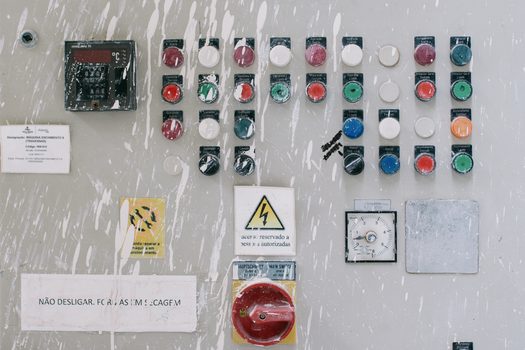
Real-world gas alarm controller deployment splits into three buckets: (a) confined-space entry monitoring, where 4-20 mA or wireless personal detectors feed a portable alarm station; (b) process-area fixed monitoring, where 8-32 catalytic-bead and NDIR heads terminate at a SIL-rated panel; (c) toxic-gas specialist duty, where electrochemical heads for Cl₂, HCl, or HF feed a low-noise, temperature-compensated input stage. mPower's product line spans all three, which is why industrial buyers often check the manufacturer portfolio before selecting the panel [S2].
Limitation and failure-mode audit: drift in electrochemical cells is typically 2-5% of signal per month, so the controller's auto-zero or scheduled-bump-test schedule must be enforced; endotoxin poisoning of catalytic beads is irreversible and the detector must be replaced rather than re-calibrated; relay contact welding is the dominant hardware failure in the panel itself, so forced-guided (mirrored) contacts per IEC 61810-1 are a SIL 2/3 de-facto requirement. Buyers should also confirm the controller's behavior on loss of both power and signal: a properly designed SIF fails to a safe state, which for gas alarms typically means alarm latching, not auto-reset.
Sourcing signals, standards anchor, and a related read
The sourcing picture in 2026 shows Chinese OEM/ODM channels handling the bulk of residential and light-industrial gas alarm controllers, with industrial-grade and SIL-rated units coming from a smaller set of dedicated safety-instrumentation vendors [S1][S3]. For buyers, the actionable signal is to demand the IEC 61508 / IEC 61511 certificate, the FMEDA report, and the ATEX/IECEx part-number matrix at RFQ stage, not at order stage.
Related reference: for the detector-side cleaning, bump-gas, and poisoning-resistance checklist, see the analysis of combustible gas detector compatibility with maintenance reagent requirements. For protocol-level pairing when a controller feeds back to a PLC over PROFINET or Modbus/TCP, the programmable logic controller buying guide 2026 lays out the form-factor and safety protocol gates. Watch for two trackable signals through 2026: vendors expanding SIL 2 portfolios beyond hydrocarbon duty into hydrogen and ammonia service, and TÜV/FM approval cycles for Chinese-manufactured SIL 2 panels lengthening as demand outpaces notified-body capacity.