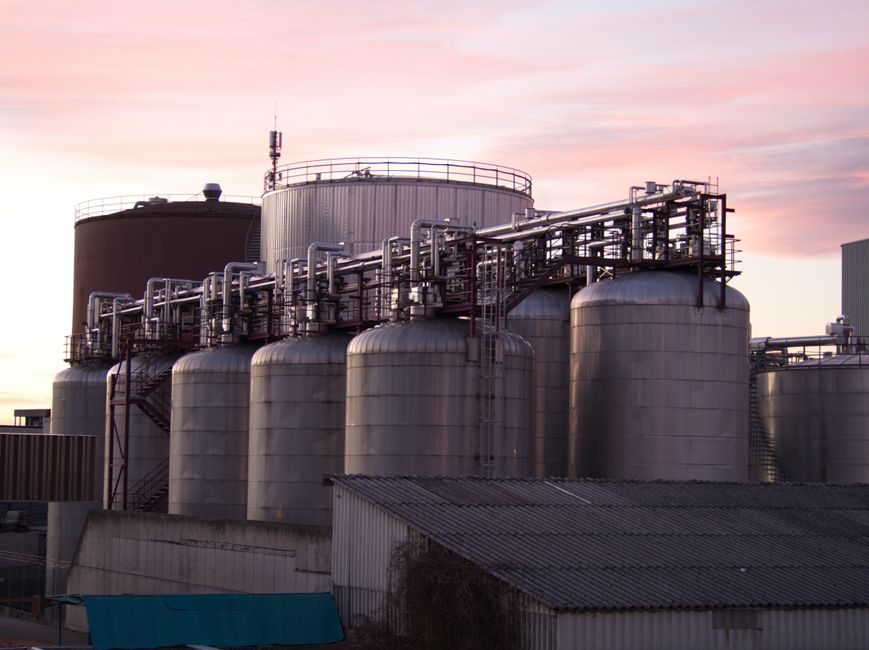
Chemical-plant gas alarm controllers are specified as a matched detector-plus-controller system, where the sensing head (electrochemical, catalytic-bead, or NDIR) and the controller channel count, relay rating, and enclosure protection must align with the target gas, the IEC 60079 zone, and the plant's SIL target [S2].
Wuxi Yongan Electronic Technology Co., Ltd., founded in 2003, lists fixed gas detectors, gas alarm controllers, and audible/visual warning lamps as its core safety product families, confirming the controller is sold as the system hub rather than a standalone box [S2]. Nippon Sanso Matheson (Taiyo Nippon Sanso group) lists "Gas Detection" alongside regulators and flow measurement in its bulk-gas product range for the chemical and petrochemical segment, with the website dated 2026 [S1].
Define the Hazard Before Choosing Hardware
Sensor selection is governed by the gas's vapour density relative to air: gases heavier than air (Cl2 ≈ 2.5× air, propane ≈ 1.56×, CO2 ≈ 1.52×) demand detector mounting 30-60 cm above grade, while lighter-than-air gases (H2, NH3, CH4) require sensor placement at the high point of the release envelope or in the breathing zone of the work area [S2]. Multi-gas chemical plants with mixed streams (e.g. chlor-alkali plus ammonia storage) therefore mix both mounting philosophies, and a single controller with zoned channels is preferred over a flat detector ring [S2].
Controller Architecture and Channel Count
A citable baseline: industrial gas alarm controllers in this segment accept 4 to 64 detector channels, drive 8 to 32 programmable relay outputs, and run on 24 VDC with a 100-240 VAC power module plus a sealed lead-acid battery backup sized for 4-8 hours of alarm hold, per manufacturer product families typical of Wuxi Yongan's controller line [S2].
Channel density drives architecture. For a small batch chemical skid with 6-12 sampling points, a wall-mounted 8 or 16-channel controller with non-isolated 4-20 mA inputs is sufficient; for a multi-product plant with 60+ points, networked controllers over RS-485 Modbus RTU or Ethernet are paired to a SCADA or gas alarm controller master panel, with each loop supporting 250-1000 m of shielded two-core cable depending on wire gauge [S2].
Certifications, Zones, and Power Budget
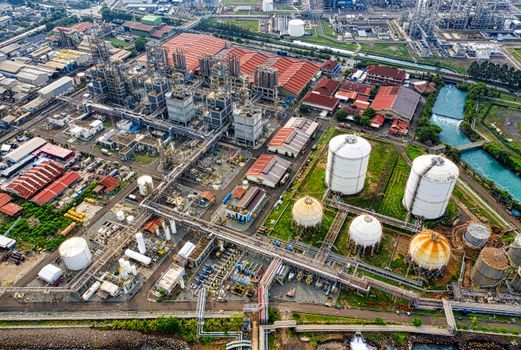
Controllers and detectors in European chemical plants must carry ATEX category 2 or 3 markings (2014/34/EU) for Zone 1/2 gas areas, with IECEx equivalents accepted in Asia-Pacific projects; the controller enclosure itself is usually installed in a safe area and is specified to IP54 minimum, with IP65 for outdoor or wash-down zones [S2].
Each powered channel draws 1-3 W at 24 VDC, so a 32-channel node with 8-hour backup requires a 100-150 Ah battery bank on a 24 V bus, dropping voltage at end-of-discharge below 21 V is a common false-alarm trigger during AC loss events [S2].
Comparison: Detector Family vs Target Gas and Output
For procurement clarity, here is a four-criterion comparison of the sensor families that a gas alarm controller typically accepts: [S2]
Catalytic-bead (pellistor) sensors cover 0-100% LEL for combustible gases, draw ~200 mA at 2-3 V bridge voltage, drift visibly in silicone or lead-poisoned atmospheres, and have a typical 3-5 year field life; electrochemical cells cover 0-1000 ppm for H2S/CO/Cl2/SO2, draw µA-level bias current, are gas-specific, and last 18-24 months before cell replacement; NDIR (infrared) sensors cover 0-100% LEL or 0-100% vol for hydrocarbons and CO2, are immune to poisoning, run 5+ years, and cost roughly 3-5× a pellistor; paramagnetic O2 cells cover 0-25% vol, are non-consumptive, last 5+ years, and are the right pick over galvanic cells when response time under 5 s is required for a hyperoxic hazard [S2].
The same controller must also be evaluated against the broader plant safety loop: a fire alarm control panel on the same site is a separate UL/FM-listed system with its own addressable loop and does not share relay logic with the gas controller, though both can be tied to a common plant DCS through protocol gateways; gas detection cannot legally substitute for fire detection in combustible-dust or process-fire zones, and vice versa [S2].
Selection Criteria: Channels, Relays, Output, and Integration
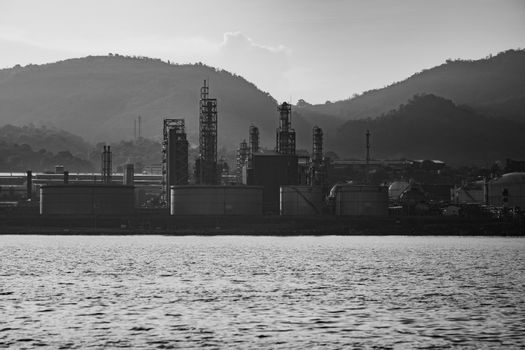
A controller spec sheet for a chemical-plant buyer should lock in: detector input count and type (4-20 mA with or without HART, bridge-voltage for pellistors, or digital Modbus); number of alarm levels per channel (typical: low, high, TWA, STEL for toxic; two LEL levels for combustible); relay output count, rating (commonly 5 A at 250 VAC / 30 VDC), and programmable logic (AND/OR across channels); communication ports (RS-485 Modbus RTU, Ethernet, optional BACnet); and on-board logging capacity (typical 1,000 to 10,000 event records) [S2].
Redundancy and diagnostics separate a plant-grade unit from a light-industrial one: dual redundant power supplies with automatic failover, hot-swappable channel cards, and per-channel fault relay (not just alarm relay) are the markers to require; analog input isolation of 500 V or higher between channels and bus prevents ground loops when detectors sit on different structures. A perimeter alarm on the same plant boundary is unrelated functionally, but the relay and power conventions are often the same 24 VDC / form-C architecture, which simplifies spares holding across both systems [S2].
Use Cases and Known Failure Modes
Three representative chemical-plant scenarios drive the controller spec. First, a chlor-alkali cell room with Cl2 and H2 release risk: use an electrochemical Cl2 sensor (0-10 ppm range, TWA 0.5 ppm) plus catalytic H2 (0-100% LEL) on a 16-channel wall-mount controller with two alarm levels and an exhaust-fan relay; documented failure mode is sensor dry-out on the Cl2 cell if exposure stays below 0.5 ppm for 6+ months, requiring periodic bump-gas verification [S2].
Second, an ammonia storage pad with refrigerated NH3 (-33°C): use an electrochemical NH3 sensor (0-100 ppm, TWA 25 ppm) at low elevation because NH3 is lighter than air, paired with a 32-channel controller feeding both the DCS and a chemical anchor mounted beacon for the evacuation drill; failure mode is the NH3 cell's cross-sensitivity to amines, which has to be derated in mixed-stream plants. Third, a multi-product batch plant with frequent recipe changes, similar to the multiproduct small-scale plants modelled in the published automated synthesis literature (Malygin et al., 2003), where the emissions profile shifts hourly and a high-channel-count controller with software-configurable trip levels avoids the re-wiring cost of dedicated trip amplifiers [S3].
Sourcing, Standards, and What to Track Next
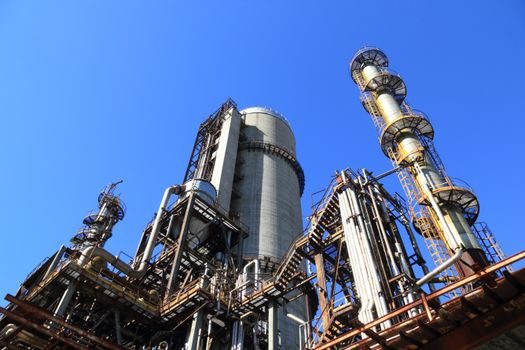
Trackable signals for buyers through the rest of 2026: ATEX 2014/34/EU notified-body capacity is still constrained for Category 1 (Zone 0) detectors, so a Zone 0 spec should be locked at the inquiry stage, not after award; and IEC 60079-29-2 remains the field-installation reference for combustible-gas detection, while IEC 60079-29-1 covers functional requirements of fixed detectors; buyers should ask the vendor which edition is on the certificate, not just the certificate number [S2].
One more trackable signal: the S3 reference paper is dated November 2003 and applies to multiproduct small-scale chemical plants; it is still cited as a baseline for the design logic of purification systems, so when sizing a gas-alarm controller for a multiproduct line, that synthesis-method framing is a defensible starting point even today (2003-11) [S3]. For ongoing spec work, reviewers should look for the chemical reagent and target-gas compatibility matrix from the controller vendor before issuing a purchase order, since the reagent inventory directly drives the sensor gas-list and the channel count.
This topic is covered further in Concrete Pump Truck vs Concrete Mixer Truck: Spec-Driven Selection.