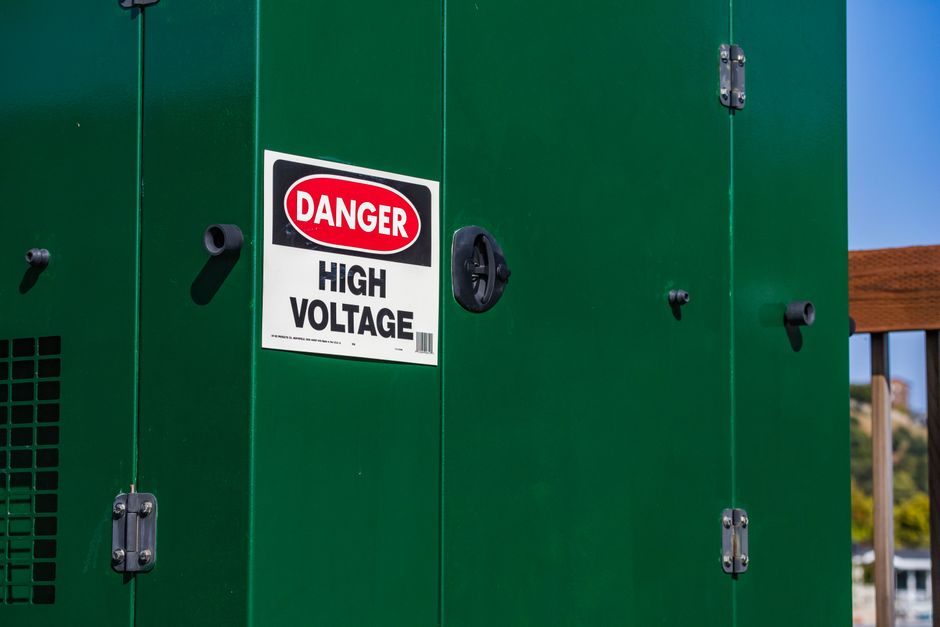
A gas alarm controller is the fixed wall-mounted panel that aggregates signals from one or more combustible-gas (LEL/%LEL) and toxic-gas (CO/H2S/O2/NO2) detectors, drives audible/visual indicators, and trips relay contacts to shut down HVAC, fuel valves, or non-essential power when a threshold is crossed. Wuxi Yongan Electronic Technology, a 2003-established safety-equipment manufacturer, lists gas detectors, gas alarm controllers, and audible/visual warning lamps as a single product family on its 2026-07-29 corporate page [S3], confirming controller/detector/annunciator is sold as an integrated system in China.
For electrical work — battery storage commissioning, substation SF6 handling, confined-space cable pulling, on-site genset rooms, charging-bay retrofits — a controller is mandatory when detectors are fixed rather than personal. Selection hinges on the number of detector channels, the bus protocol feeding it, the relay contact count, the enclosure rating, and the regional certification (ATEX/IECEx/GB 16808) that the panel itself carries. Buyers who spec the wrong combination end up with a panel that latches, false-triggers battery rooms, or refuses to talk to the BMS.
Channel Count and Sensor Mix: 1-, 4-, 8-, 16- and 32-Point Panels
Entry-level single-channel controllers handle one detector at one location — typical for a small genset enclosure or a single CH4/CO cylinder storage cabinet [S3]. Mid-range 4–8 channel panels are the workhorse for switchgear rooms, where a multi-point survey covers each cable trench entry and each battery rack row; Wuxi Yongan publishes 4-channel and 8-channel models in this class [S3]. 16- and 32-point units target centralised plant rooms, data-centre battery halls, and underground substation basements where zoning, addressable loops, and per-channel dual-stage setpoints are required.
Sensor-mix rules are driven by the gases present, not by the panel size. Combustible-gas detectors (catalytic-bead or NDIR) for CH4/C3H8 typically scale 0–100 %LEL with the first alarm at 20–25 %LEL and second at 40–50 %LEL. CO detectors for battery rooms usually span 0–500 ppm with low alarm 30–50 ppm and high 100–150 ppm. O2 deficiency/enrichment channels use 0–30 %vol with alarm at 18.5 % and 23.5 %. A controller that maps each input to its own engineering-unit scaling and independent dual thresholds is the minimum credible spec for any multi-gas room.
Output Protocols: 4-20 mA, RS485/Modbus, and Relay Fan-out
Detectors feed the controller over three common paths. Discrete 4-20 mA analog loops (3-wire or 2-wire) are still dominant for single-gas point detectors and remain the most failure-tolerant because a wire break reads as 0 mA — a fail-safe state the controller can flag. RS485 / Modbus RTU daisy-chains addressable detectors on a single twisted pair, cutting home-run cabling in 8- to 32-point systems. HART overlays digital diagnostics on the 4-20 mA loop; it does NOT replace analog and is not interchangeable with Foundation Fieldbus or PROFIBUS PA. For grid-tied battery storage, many EPCs insist on Modbus RTU output from the controller to the BMS/SCADA so alarm state, last calibration date, and sensor fault are visible remotely. [S3]
Relay outputs are the controller's muscle. A typical 8-channel panel exposes 8–16 programmable relays: per-channel low/high alarms, common fault, audible-silence, and global shutdown. Contact ratings of 5 A / 250 VAC or 5 A / 30 VDC are standard; for inductive loads (contactors, solenoid valves) RC snubbers or flyback diodes must be fitted or the relay lifetime collapses. If the controller is the integration boundary for explosion-proof electrical apparatus downstream, the relay contact rating and the panel's own enclosure certification both have to match the zone classification of the room — a point confirmed by Wuxi Yongan's own ATEX/IECEx-aligned product family [S3].
Compliance Map: ATEX, IECEx, GB 16808, and SIL
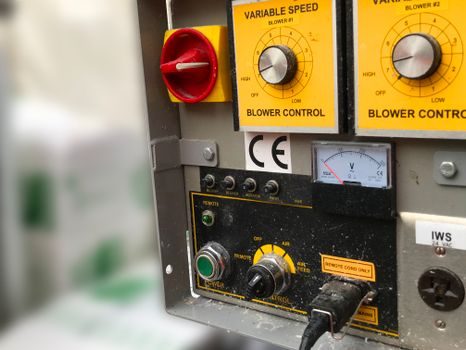
Regionally the controller is governed by the same hazardous-area regime as the detector it sits behind. Inside the EU, ATEX 2014/34/EU equipment and 1999/92/EC worker directives apply; outside the EU, IECEx is the parallel scheme for countries that have not adopted ATEX. In China the national code is GB 16808 (combustible-gas alarm controllers) and the related GB 12358 / GB 50493 series for detection-and-alarm system design; Wuxi Yongan publishes compliance statements for these on its 2026-07-29 product family page [S3]. For SIL-rated safety instrumented functions, IEC 61508 governs and panel vendors may quote SIL 2 or SIL 3 capability — useful in oil & gas but rarely required for routine electrical work.
For substation and battery-storage sites the controller is often installed outside the hazardous area, so the more limiting decisions are the detector's zone rating (Ex db ib IIC T4 Gb, etc.) and the panel's ingress protection — IP54 minimum for indoor plant rooms, IP65 for wash-down or outdoor cabinets. The North American equivalent of the CE-ATEX mark is the UL/UL-C listing plus Class I Div 1/2 groups for the detector, and NEC Article 500 wiring methods feeding the panel. Mixing a CE-marked controller with UL-listed detectors is possible but the installer carries the documentation burden.
Selection Criteria Comparison: Single-Channel vs Multi-Channel vs Addressable
For procurement decisions, three controller archetypes cover almost every electrical-work site. Single-channel standalone (1 detector, 1 relay, 12–24 VDC) is cheapest and simplest but cannot expand; it is right for a one-cabinet gas meter room and wrong for a multi-room battery hall. Multi-channel hard-wired (4/8/16/32 detectors on dedicated analog inputs) is the mainstream spec for new substation builds — easier to troubleshoot than a bus because each loop is independent, but home-run cabling scales linearly with detector count. Addressable bus (RS485 Modbus, 32–128 devices per trunk) cuts cable cost and adds per-detector diagnostics, at the price of a single trunk being a single point of failure unless it is looped and redundant. [S3]
On cost versus lead time, single-channel panels in China ship in stock and dominate small-project quotes; multi-channel 8/16-point units lead 2–4 weeks; addressable 32-point plus full SIL documentation leads 6–10 weeks. Wuxi Yongan explicitly markets the full span — single-point, multi-channel, and integrated audible/visual — in its 2026-07-29 catalogue, illustrating the market stratification [S3]. For buyers who want field mobility to complement the fixed panel, the related Gas Detector Selection for Work at Height: Sensor Stack, Form Factor, and Compliance article covers the portable-monitor side of the same system.
Failure Modes, Interlocks, and Integration with Electrical Systems
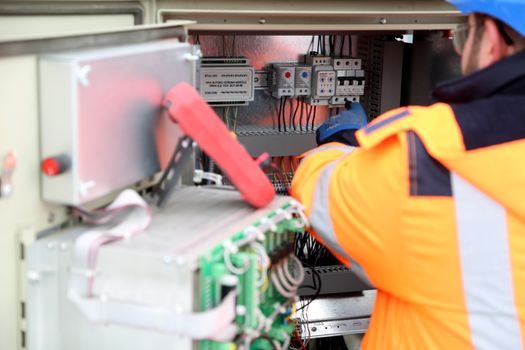
Most controller incidents in the field are wiring and grounding problems, not sensor failures. Common-mode noise on long 4-20 mA runs to a switchgear room will produce phantom alarms; shielded twisted pair with a single-point ground at the panel end is mandatory. RS485 busses that exceed 1200 m, lack 120 Ω termination at both ends, or share a conduit with VFD output cables will intermittently drop detectors — a recognised cause of nuisance trips in battery storage. Power supply is the second failure mode: a 24 VDC controller fed from an unprotected distribution board will reset on the same arc-flash event the system is supposed to alarm on, so a dedicated UPS-backed 24 VDC or an isolated 110–230 VAC supply is the right spec. [S3]
Integration with electrical systems is where controller selection pays off. Programmable relays can interlock HVAC dampers, fire-trip gas valves, and de-energise battery chargers on high-H2; or on a generator set room they can shed non-essential loads and start the fire pump on CO/CO+NO2 detection. For data centres and substations the Modbus map should expose, at minimum, per-channel concentration, alarm state, inhibit/silence status, calibration due date, sensor fault, and relay state. A panel that exposes only concentration and one common alarm forces the BMS into blind polling — a frequent gap on cheaper Chinese units [S3].
Use Cases in Electrical Work and the Who-It-Is-For Test
Three electrical-work scenarios drive the spec. Battery storage and UPS rooms: 4–16 channels covering H2 + CO + smoke, IP54 panel, Modbus to BMS, SIL 2 preferred. Charging bays and underground substation cable tunnels: 8–32 channels with CH4/CO/O2, addressable RS485, relay fan-out to fans and fire dampers. Generator rooms and small CHP plants: 1–4 channels of CH4 + CO with a single shut-down relay to the fuel solenoid. Site trailers and short-duration outage work rely on portable four-gas monitors rather than fixed controllers — a controller is the wrong answer for transient jobs.
The "who is it for" test is short. A fixed gas alarm controller is for any site with a permanently installed combustible or toxic gas hazard, where detection, alarming, and interlocked shutdown must operate unattended. It is NOT for a one-day inspection visit (use a portable four-gas monitor), and it is NOT a substitute for an electrical fire monitor on cable trays, which samples smoke/arc-fault signatures, not gas concentration. Spec the controller as part of an integrated safety system with detectors, annunciators, and interlocked actuators, not as a stand-alone gadget.