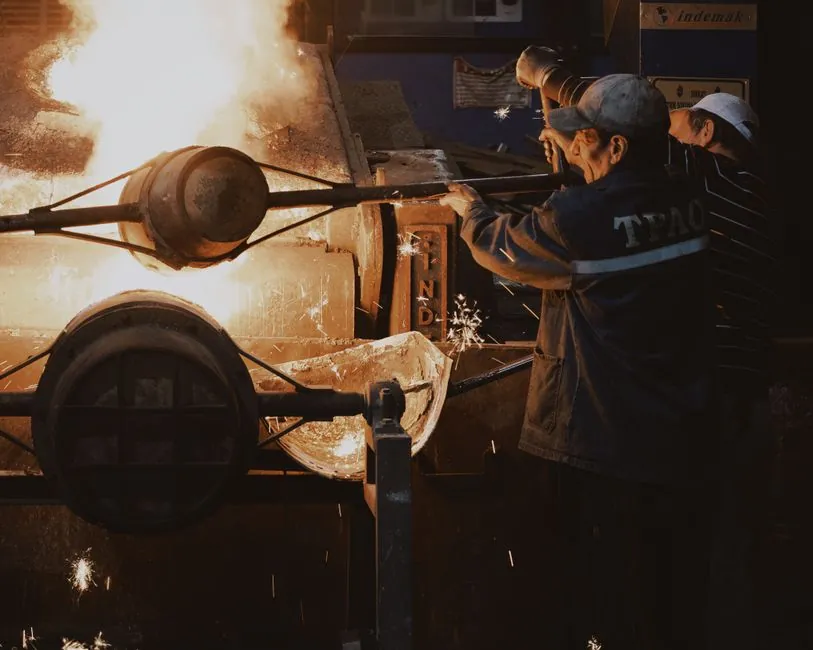
Rail-component foundries (bogie housings, gearbox covers, brake calipers, coupler bodies) most commonly specify gas-fired reverberatory or crucible-style melting furnaces in the 1-10 tonne class, with melt-point discipline at the aluminum alloy's 660°C liquidus and refractory selection tied to holding-soak duty cycles [S1][S3].
Selection is dominated by four engineering decisions: furnace type (reverberatory vs. stack-melter vs. crucible tilt), burner technology (low-NOx regenerative vs. conventional nozzle-mix), refractory grade (high-alumina or SiC-based), and melt-rate versus holding-ratio. Each one of these decisions maps directly to rail-component throughput, alloy cleanliness, and dross-loss budgets, as covered in our gas aluminum melting furnace reference page.
Furnace Type Comparison for Rail-Component Workloads
Reverberatory furnaces remain the default for rail-component batches above 2 tonnes per pour, with a 10-tonne gas-fired melting-and-holding unit commonly quoted at 4 sets/month manufacturing capacity from Guangdong-based suppliers [S1]. Stack-melters and tower furnaces are favored where melt rate per square metre of floor space is the constraint, while crucible-tilt furnaces dominate small-batch rail spare-part foundries producing couplings, end caps, and brake levers under 200 kg per pour [S3].
For rail bogie and gearbox housings, the reverberatory design wins on bath temperature uniformity; the burner geometry is selected to avoid direct flame impingement on the molten bath, which would otherwise raise dross rate and damage the fired brick refractory lining [S3]. A two-chamber (melting + holding) configuration is the standard layout when a foundry needs a constant taphole feed into a low-pressure die-cast or sand-cast cell.
Burner Selection and Combustion Air Control
Low-NOx regenerative burners and pulse-fired high-velocity burners are the two most common combustion systems specified for rail-component aluminum furnaces, both sized to deliver uniform heat without disturbing the melt surface [S3]. Aluminum's 660°C liquidus is roughly 840°C below steel's melt range, so the burner must transfer heat efficiently while avoiding localized superheating; flame momentum, not flame temperature, is the controlling parameter in burner selection [S3].
Conventional nozzle-mix burners remain common on smaller 1-3 tonne crucible-tilt furnaces where capex and burner-servicing simplicity dominate the decision; pulse-firing is preferred on holding furnaces where bath temperature must stay within tight ±5°C bands during the holding-soak phase.
Refractory Lining and Crucible Material Choices
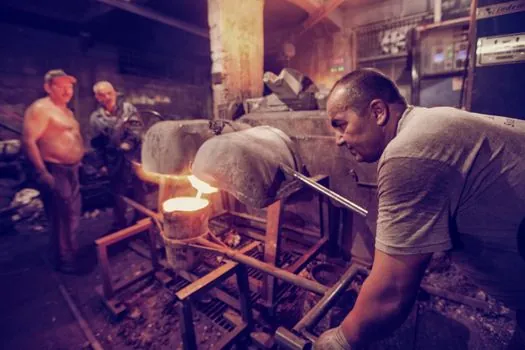
High-alumina (70-85% Al2O3) castables and SiC-based bricks are the two lining systems most commonly installed in rail-foundry gas-fired aluminum melters, with the SiC option favored in the upper sidewall and door arch where metal attack and dross adherence are highest [S2]. Furnace lining damage from localized overheating is one of the documented failure modes when burner selection is mismatched to furnace geometry, and SiC's higher thermal conductivity and oxidation resistance make it a frequent choice in the bath-sidewall transition zone [S2][S3].
For the crucible variant (typically used for rail spare-part batches under 400 kg per pour), cast iron crucibles are widely specified because their ~1150-120°C melting point sits far above the 650-700°C working temperature of aluminum, giving a typical service life of 50-150 melting cycles before the crucible is retired [S4]. Graphite crucibles are an alternative for higher-purity alloys or thermal-shock-sensitive melts, but at a 3-5x price premium over cast iron [S4].
Capacity Sizing and Melt-Rate Calculations
A 10-tonne gas-fired melting-and-holding furnace is a common upper-mid size for rail-component foundries, with the melt-rate metric usually expressed in tonnes per hour: for a typical charge, expect 1.5-2.5 t/h melt rate on a 10-tonne reverberatory unit fired by regenerative burners, dropping to 0.5-1.0 t/h on a conventional burner system of similar capacity [S1]. Holding-zone sizing is set by the downstream casting-cell tonnage draw, with a 1:1 to 1:1.5 melting-to-holding capacity ratio common for foundries feeding a single low-pressure die-cast cell.
Foundries running multiple alloys (e.g., A356 for housings, A356 + Sr modification for premium bogie castings) should size the holding chamber to 1.5x the per-shift draw to cover alloy-changeover and skimming losses. Crucible-tilt furnaces in the 0.5-2 tonne class are an alternative when batch sizes vary widely across the rail-component mix, allowing parallel operation of multiple alloy-specific crucibles on a shared burner station [S4].
Who This Furnace Class Is For, and Where It Is Not
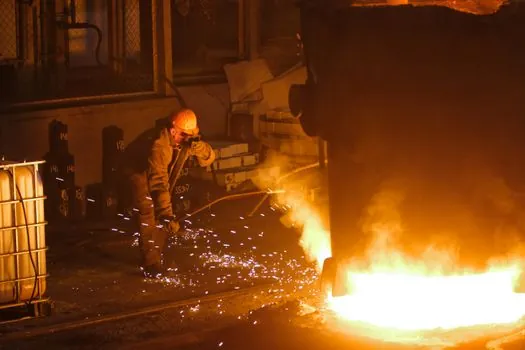
Gas-fired melting furnaces in the 1-10 tonne class are the right fit for rail-component foundries producing bogie, gearbox, brake, and coupler castings in batches of 200 kg to 10 tonnes per pour, where natural gas or LPG infrastructure is available and foundry emissions permits allow combustion-based equipment. They are not the right fit for: (a) very small prototyping shops below 100 kg per pour, where an electric resistance or induction furnace gives better melt-quality control; (b) foundries in regions with strict combustion-emission caps where electric melting is mandated; and (c) high-purity aerospace-grade rail products requiring vacuum or fluxless melt handling. [S4]
For high-purity aluminum alloy melts, induction furnaces are typically the preferred choice, but gas-fired units remain the dominant selection for cost-sensitive rail-component production where throughput and capex efficiency outweigh the marginal metal-yield loss to dross. The cast iron crucible is not recommended for zinc, magnesium, or mixed-alloy melts, where stainless steel or graphite alternatives are specified instead [S4].
Operating Economics and Energy Benchmarking
Specific energy consumption for a well-tuned gas-fired reverberatory aluminum melter runs in the 60-80 Nm³ natural gas per tonne range, or roughly 600-800 kWh/t thermal equivalent, depending on charge preheat, burner efficiency, and dross-loss control. Dross rate is the second-largest variable cost: properly designed burner geometry that avoids flame impingement can keep metal-oxidation losses under 1.5% of charge weight, while poor burner selection can push dross losses above 3% and shorten refractory campaigns [S3].
For foundries running two-shift operations, refractory relining typically falls on a 12-24 month interval, with the SiC sidewall zone lasting roughly half the campaign of the high-alumina roof due to metal attack and thermal cycling. Burner maintenance (nozzle cleaning, ignition electrode replacement, UV-scanner calibration) on regenerative systems is the most frequent scheduled-service item, with most OEMs recommending quarterly inspection cycles for units in continuous rail-component service [S1][S3].
Selection Criteria Summary and Specification Anchors
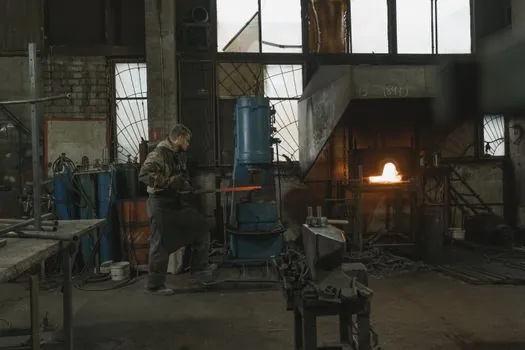
Specifying engineers for rail-component gas-fired aluminum melters should anchor the inquiry on six gates: furnace type (reverberatory vs. crucible-tilt), burner system (regenerative vs. conventional), refractory grade (high-alumina vs. SiC), crucible material (cast iron vs. graphite), melt-rate (t/h at rated capacity), and holding-zone capacity (tonnes with ±5°C control). Trackable signals for 2026 sourcing cycles include new burner OEM low-NOx product launches, regional natural-gas price movement, and tightening NOx emission caps in EU and Chinese rail-component manufacturing hubs. [S3]
Spec-level background on the components involved: melting furnace.
See also our earlier report, Shuttle System Selection for Warehouse Automation: 2026 Spec Gates.