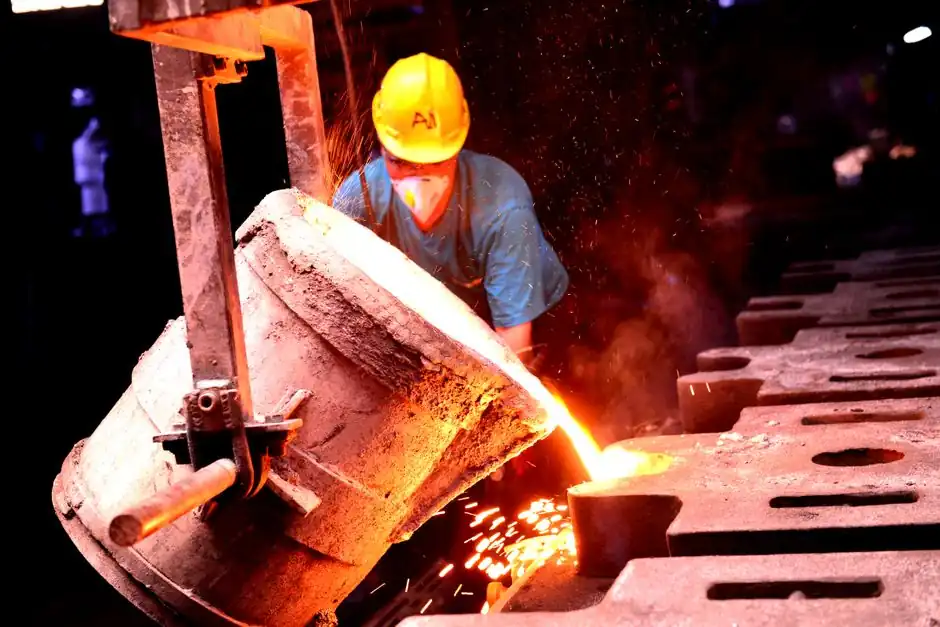
Gas-fired aluminum melting furnaces remain the dominant melting platform in the secondary aluminum sector, with reverberatory and stack-melter designs sized for 30-150 MT charges and melt rates of 1.5-15 MT/h depending on burner input and refractory class [S2].
Selection in 2026 hinges on five spec gates: charge capacity, specific energy consumption (kWh/t or Nm³ NG/t), burner technology (cold-air, recuperative, regenerative), refractory lining grade, and NOx/CO emissions envelope. Plants that already invested in energy management baselines can quantify the delta between a conventional reverberatory and a regenerative stack melter within one melt campaign [S4].
Furnace Architecture: Reverberatory, Stack Melter, and Multi-Chamber
Reverberatory furnaces hold 60-80% of installed gas-fired melting capacity in secondary smelters, with rectangular hearths rated 30-150 MT and bath depths of 500-900 mm to control dross formation [S4].
Multi-chamber designs add a holding bay that decouples melt rate from casting rate, but require a refractory campaign plan since each chamber sees different thermal cycling and uses a different fired brick grade at the burners, sidewalls, and roof. A side-by-side comparison for the three main architectures: reverberatory (low capex, 38-42% thermal efficiency), stack melter (higher capex, 55-65% efficiency on clean scrap), and multi-chamber (highest capex, 60-70% efficiency with separate holding bay).
Burner Selection: Cold-Air, Recuperative, and Regenerative
Regenerative burners use twin ceramic beds to capture waste-heat above 1000 °C and preheat combustion air to 800-950 °C, lifting furnace thermal efficiency from 38-42% to 55-65% on gas-fired holding units [S2].
On a 130 MT rectangular holding furnace with two regenerative burners plus one cold-air holding burner, onsite measurement combined with thermodynamics modeling showed that regenerative burners alone did not pay back the capex, and had a negative impact on furnace lining life when door-open time stayed above 12% of cycle time [S4]. Recuperative burners sit between the two: a metallic or ceramic recuperator preheats air to 400-550 °C, lifting efficiency 8-12 points at roughly one-third the regenerative capex, and they avoid the bed-swap valve maintenance that typically drives regenerative downtime. Plants with energy metering on the gas train can map the cold-air / recuperative / regenerative delta per shift before committing to a rebuild.
Refractory, Bath Depth, and Dross Control
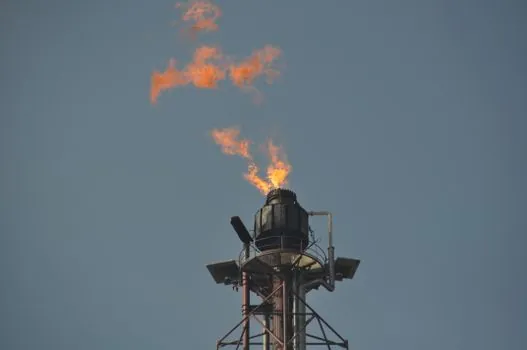
Aluminum bath depth must stay in the 500-900 mm band; below 500 mm the surface-to-volume ratio increases melt loss to dross by 2-4 percentage points, above 900 mm the sidewall freeze risk rises in cyclic operations [S2].
Conventional gas-fired reverberatories pair a high-alumina or fireclay working lining with a calcium silicate back-up; regenerative burners shorten lining life because the higher air-preheat lifts hot-face temperature spikes during bed swap, so a higher-grade fired brick at the burner quarl is the usual mitigation. The melting furnace reference page notes that dross generation of 1.5-3.0% of charge weight is typical for gas-fired reverberatory practice, which sets the floor for any mass-balance claim a vendor submits during a sourcing RFQ.
Specific Energy and Throughput Targets
Modern gas-fired aluminum melters target 320-380 Nm³ of natural gas per tonne of charged aluminum for clean scrap, and 480-560 Nm³/t for contaminated or painted scrap, with stack-melter designs hitting the lower end of each band [S2].
For comparison, an electric resistance holding furnace on the same charge runs 550-650 kWh/t, and a central electric melter built around high-power-density elements can drop that to 500-600 kWh/t when paired with closed-loop control of the demand charge [S6]. The gas-versus-electric decision is therefore not a one-line trade: gas-fired systems win on capex and on turn-down range for foundries that melt once or twice a week, while electric systems win on NOx avoidance and on the secondary-aluminum plants inside regions that price natural gas above roughly 12 USD/MMBtu. A practical comparison: gas-fired reverberatory (capex low, NOx high, turn-down 10:1), gas-fired stack melter (capex medium, NOx high, turn-down 6:1), electric resistance (capex medium, NOx near zero, turn-down 4:1, demand-charge sensitive).
Selection Gates for Buyers in 2026
Spec gate 1 is charge profile: clean extrusion billet scrap suits a stack melter, contaminated turnings suit a dual-chamber reverberatory with a preheat well, and high-alloy wheels suit a tilting gas-fired reverb with a siphon launder [S2].
Spec gate 3 is NDE coverage of the bath shell, the burner block, and the recuperator tubes, scheduled at the same 12-month interval as the refractory inspection. Spec gate 4 is control: a 2026 RFQ should require a gas aluminum melting furnace control panel with oxygen trim, bath thermocouple redundancy, and a Modbus/TCP or OPC UA link to the plant historian. For foundries sourcing complete turnkey lines, OEM/ODM suppliers in Henan province offer integrated melting, holding, and casting skids with registered capital above RMB 30 million and three production subsidiaries, which is the typical scale that can support an export RFQ for a 50-100 MT gas-fired melter [S1].
Standards, Emissions, and Sourcing References
Gas-fired equipment for drying farm crops falls under CSA 3.8-2014 (Sixth Edition) for safety listing in North American farm applications, while industrial gas-fired aluminum melting equipment is generally listed under CSA B149.3 and ASME CSD-1 for fuel piping and controls, with the specific edition keyed to the local Authority Having Jurisdiction [S5].
For combustion performance, buyers should reference the JOM feasibility study on regenerative burners in 130 MT holding furnaces and the 2018 holding-furnace modeling paper, both of which give measurable baselines for furnace performance improvement by changing the gas flow ratio between paired burners in high-fire mode and for the burner spacing effect on gas saving [S4][S2]. Related reading for adjacent spec work: Gas-Fired Aluminum Melting Furnace Specs for Agricultural Machinery covers the small-charge tail, while Gas-Fired Aluminum Melting Furnace Selection for Automotive Parts Foundries covers high-alloy wheel practice.
Trackable signals to watch in the next 90 days: published updates from RAYTEQ and other electric-furnace vendors on power-density elements versus gas-fired incumbents, and any 2026 release of revised CSA B149.3 or ASME CSD-1 clauses that affect fuel-train component listing on gas-fired aluminum melting skids.