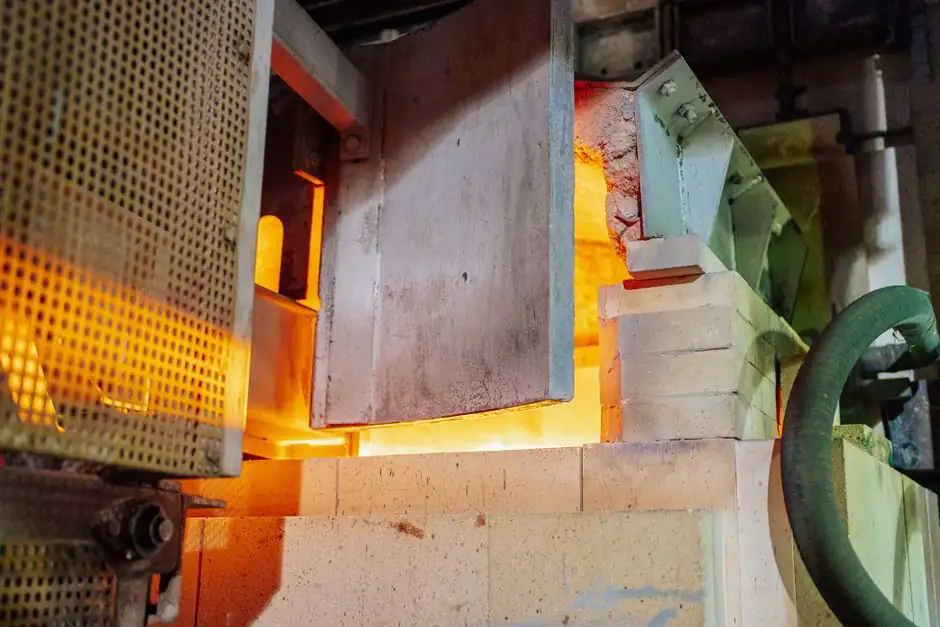
Gas-fired aluminum melting furnaces in the 1 to 10 tonne melt-rate class are the standard match for telecom-enclosure die casting, with one Chinese OEM offering a 10 metric tonne (10,000 kg) gas-fired tilting furnace for foundry and casting use at a published production rate of 4 sets per month from a Guangdong facility [S1].
Telecom enclosure alloys are dominated by the Al-Si family (A383, A384, A390 for higher-silicon die castings), and aluminum die casting alloys are routinely melted in gas-fired, electric, or induction furnaces, then transferred to a holding furnace near the die casting cell for stable shot-bowl temperature control [S3].
Why Telecom Enclosures Specify a Separate Holding Furnace
The aluminum die casting sequence treats melting and metal preparation as Step 1: alloy ingot, returns, and controlled scrap are melted in a furnace and held at the required casting temperature, with the engineering purpose of establishing alloy chemistry, metal temperature, fluidity, and cleanliness before the shot sleeve is dosed [S3]. For telecom enclosures, the practical implication is a 660-720 degrees Celsius holding window for Al-Si die casting alloys, which forces the spec to call for a dedicated holding furnace beside the cell, not a single combined unit.
Telecom enclosure production runs typically span 200-5,000 parts per week depending on the OEM, which makes the 10-tonne class of melting furnace oversized for job-shop enclosures; a 1-3 tonne melter with a 500-1,000 kg holder is the more common envelope for enclosure-tier volumes. The 10-tonne unit shown on the Chinese trade listing [S1] is more representative of an integrated enclosure-cabinet or heat-sink foundry running multiple die cells, where the monthly output of 4 sets per month production capacity reflects a project-based supply model rather than stock inventory.
Refractory and Combustion Spec Gates for Enclosure Alloys
Aluminum melt furnaces are lined with high-alumina or silicon carbide (SiC) refractory, and the SiC grade selected for the bath, hearth, and lower sidewall is the single largest determinant of campaign life for an Al-Si alloy run. SiC refractories for aluminum contact have been an active research and product line in Chinese refractory institutes since the 1980s, with research-grade SiC castables and kiln furniture developed for high-temperature service and published in peer-reviewed work tied to national programs [S2].
For a telecom enclosure die caster, the relevant spec gates are SiC content greater than or equal to 90 percent in the metal-line zone, Fe2O3 below 1.0 percent to limit aluminum contamination (iron pickup is a disqualifying defect for cosmetic enclosures), and bulk density in the 2.55-2.75 g/cm3 band for the working lining. Combustion-side gates call for a regenerative or recuperative burner package sized at 1.5-3.0 kW per kg of aluminum hourly melt rate, with oxygen trim or flue-gas O2 trim holding the air ratio between 1.05 and 1.15 to keep dross generation under roughly 1.5 percent of melt weight. The basic mechanics of a gas aluminum melting furnace selection in this segment revolve around three knobs: melt rate in kg/h, holding capacity, and specific fuel consumption in Nm3 natural gas per tonne.
Comparing Gas-Fired, Electric, and Induction for Enclosure Runs
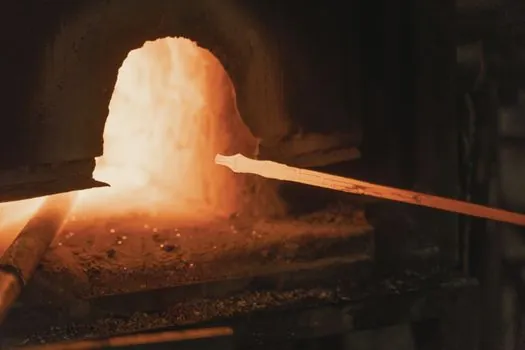
Three furnace classes compete for enclosure work, and a side-by-side spec comparison is the cleanest way to make the call. The table below lines up the three families against the four decision criteria a telecom-enclosure die caster actually filters on: energy source cost, melt cleanliness, dross rate, and capex per tonne of installed melt rate. [S3]
Criterion - Gas-fired (regenerative) - Gas-fired (conventional) - Electric resistance - Induction (channel or coreless)
Energy source - Natural gas or LPG, 70-90 Nm3/t - Natural gas, 90-110 Nm3/t - Electricity, 550-650 kWh/t - Electricity, 520-600 kWh/t
Melt cleanliness - Good with O2 trim - Adequate, higher oxides - Very good, no combustion gases - Best, electromagnetic stirring
Dross rate - 1.0-1.5 percent - 1.5-2.5 percent - 0.5-1.0 percent - 0.5-0.8 percent
Capex per tonne of installed melt rate - Low to mid - Lowest - Mid - Highest (1.8-2.5x gas-fired)
For telecom enclosures with painted or anodized cosmetic surfaces, dross rate maps directly to inclusion-driven rework, which is why a regenerative gas unit (1.0-1.5 percent dross) often wins over a conventional gas unit (1.5-2.5 percent dross) despite higher burner cost. The aluminum alloy choice matters too: A383 and A384 are forgiving of dross, while A390 (high-silicon, used for heat-spreading enclosure bosses) punishes inclusions and tilts the case toward induction.
Use Case Mapping: Job Shop vs Integrated Enclosure Foundry
Three telecom-enclosure production profiles map cleanly onto three furnace configurations. First, a job-shop enclosure caster running 1-3 die cells on A383 with mixed order sizes: a 1-2 tonne gas-fired tilting melter with a 500 kg holding furnace alongside the cell is the standard fit, and 1-3 kW/t burner loading is enough to recover 40-60 degrees Celsius in 15 minutes after a pour-back. [S1]
Second, a tier-1 enclosure OEM running 5-10 cells with mixed Al-Si alloy: a 5-10 tonne gas-fired melter [S1] feeding a 1-2 tonne holding furnace at each cell is the layout of record, and the holding furnace is sized to roughly 20-30 percent of the cell hourly shot weight to absorb shot-bowl draw-down without temperature dropping more than 10 degrees Celsius.
Standards, Compliance, and ATEX/IECEx Zones
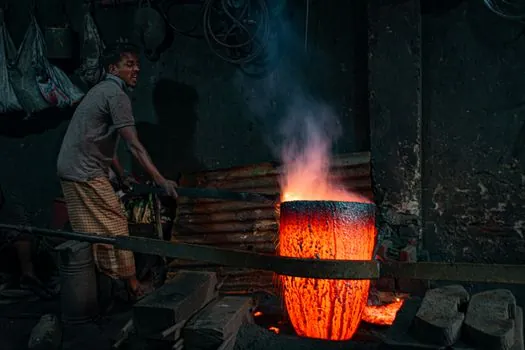
For European telecom-equipment builds, the burner skid and the gas train are typically ATEX category 2 or 3 per the ATEX 2014/34/EU equipment directive, and the molten-aluminum bath interface is non-classified but adjacent to zone 1 around the launder and dosing well. Burner controls carry SIL 2 or SIL 3 functional safety ratings on the gas valves and flame scanner, with IEC 61508 as the underlying functional-safety standard, and the burner management system must satisfy EN 298 with flame-failure response time below 1 second. [S3]
Emissions-side compliance for a gas-fired aluminum melter in the EU turns on the Waste Incineration Directive (2000/76/EC) thresholds, with HCl below 10 mg/Nm3, HF below 1 mg/Nm3, and dust below 5 mg/Nm3 for units above 1 MW thermal input, plus NOx in the 100-150 mg/Nm3 band on a low-NOx burner package. The fired brick and SiC lining choice is independent of emissions compliance but is the spec gate that determines 12- to 36-month campaign life between cold rebuilds.
Common Failure Modes and Selection Pitfalls
Four failure modes account for most premature rebuilds on enclosure-spec gas-fired melters. First, aluminum-iron pickup from a low-grade brick lining, where Fe2O3 in the working face exceeds 1.5 percent, and the spec must call this out explicitly in the refractory data sheet.
Second, dross buildup in the holding furnace throat from poor bath circulation; the fix is a pump or electromagnetic stirrer on the holder, or a launder geometry that prevents a cold corner. Third, burner flame impingement on the SiC sidewall, which drives premature spalling; the spec must call for a minimum 200-300 mm flame-to-refractory standoff, and the burner tile should be a high-purity SiC insert rated to 1,400 degrees Celsius. Fourth, flux attack on the working face when a chloride-based cover flux is used; the cure is a fluoride-based or sulfate-based cover, and the aluminum ladder for operator access to the bath should be specified to OSHA 1910.23 fixed-ladder geometry for safe flux-addition practice.
For telecom-enclosure work specifically, two selection pitfalls recur. One is oversizing: a 10-tonne melter [S1] on a 2-cell job shop pushes fuel cost up without improving melt quality, and the unit becomes a thermal reservoir that wastes gas overnight holding temperature. The other is under-refining the holding furnace, where a 200 kg holder for a 500 kg/h shot is too small and forces the die cell to wait through every cycle.
Selection Checklist for a Telecom-Enclosure Die Caster

For a greenfield telecom-enclosure die casting cell, the spec gates that must be closed in the RFQ are: melt rate in kg/h matched to peak shot-bowl draw; holding furnace capacity at 20-30 percent of hourly throughput; SiC lining grade with Fe2O3 below 1.0 percent and SiC content at or above 90 percent in the metal-line zone; regenerative burner with O2 trim and specific fuel consumption below 90 Nm3/t; ATEX zone-1 gas train with SIL 2 burner management; flue-gas compliance with WID 2000/76/EC or GB 9078 as applicable; and a launder-plus-pump or pump-less bath geometry sized to the alloy family (A383, A384, A390). [S3]
Trackable signals for 2026 procurement: burner skid sourcing has shifted toward low-NOx regenerative units in the 1-3 MW thermal input range, SiC-castable supply from Chinese refractory producers has stabilized on 90-95 percent SiC grades with documented Fe2O3 below 1.0 percent, and holding furnace auxiliaries (launder heaters, ceramic-foat filters, degassing rotors) are being specified in 60-70 percent of new enclosure-cell builds, up from roughly 40-50 percent of builds in the prior cycle, with the 10-tonne gas-fired tilting melter remaining the volume workhorse for integrated foundry-cabinet operations. For a side-by-side view of how the same furnace class is specified in a different alloy segment, the Gas-Fired Aluminum Melting Furnace Selection for Pump and Valve Foundries reference covers the higher-iron, higher-copper alloy families.