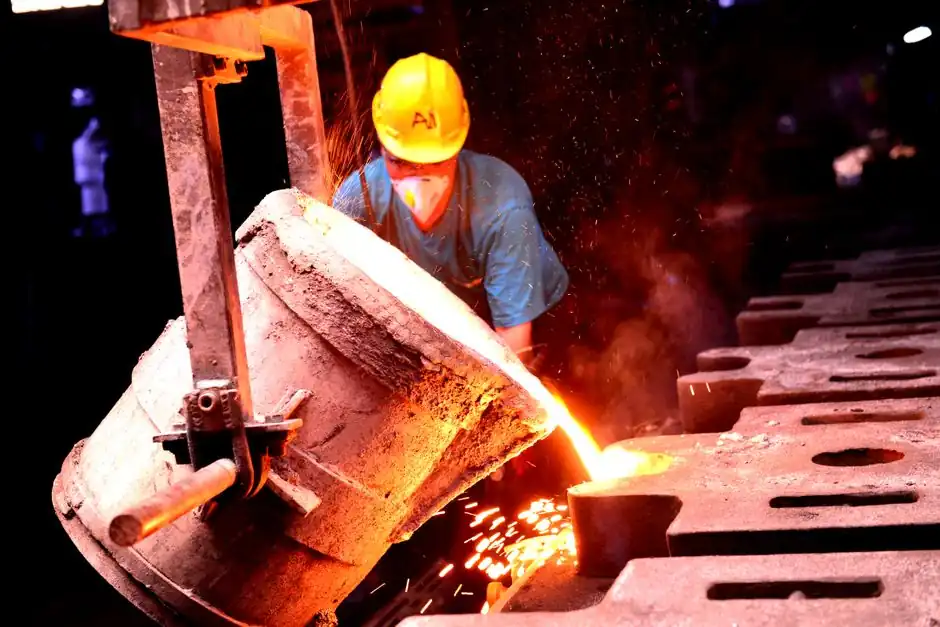
A cokeless cupola furnace melts iron using natural gas burners firing into a packed bed of refractory ceramic spheres instead of a coke column, with published operating data showing 50–55 m³ of natural gas per tonne of liquid iron and sphere consumption of 1–1.5% by charge weight at 1350–1400 °C tapping [S5].
Commercial installations of the gas-fired cokeless cupola are running in Germany, Spain, Austria, Japan, Korea, Iran and Egypt, most paired with an induction furnace in a duplex arrangement for ductile iron production [S4][S5]. Fuel flexibility extends to propane, LPG, coal-bed methane, and light oil provided the oil is sulphur-free, so the melt can feed ductile iron without a desulphurisation step [S4].
How the Ceramic-Sphere Bed Replaces the Coke Column
In a conventional cupola, coke performs three jobs simultaneously: combustion fuel, mechanical support for the charge, and a carbon source for the iron, which makes low-temperature, consistent operation hard to control [S1][S5]. The cokeless design separates those functions: natural-gas burners supply the heat, the ceramic spheres support the charge, and carbon is trimmed downstream in the induction furnace, so tapping temperature is set by bed depth rather than by coke rate [S5].
The spheres are heated by hot flue gas from the burners flowing up through the packed bed, superheating the spheres so they in turn transfer heat to the descending metal charge, mirroring the counter-flow heat transfer of a coke cupola but without a combustion bed [S1]. The charge column is then thoroughly preheated above the burner zone before the melt drops to the spout.
Ceramic Sphere Specification: Composition, Size, and Consumable Behaviour
The spheres are an alumina-silica refractory supplied as a consumable, not a one-time refractory lining. A 2009 Chinese patent (CN101475365A) describes a preparation route based on raw-material mixing with a resin binder, compression moulding and drying, using SiO₂ and Al₂O₃ as the principal oxides to give the thermal-shock resistance a packed-bed cupola needs [S2].
Sphere size and bed depth together control tapping temperature: the deeper the bed, the higher the superheat available, and the more steel that can be charged in without raising fuel use [S5]. Sphere consumption is reported at 1.0–1.5% of charge weight depending on tapping temperature and steel fraction, dropping below 1.0% on campaigns of 10 hours or more, which is why foundries treat the spheres as a stock item, not a refractory purchase [S4][S5].
Comparison: Coke Cupola vs Cokeless Cupola vs Induction Melting
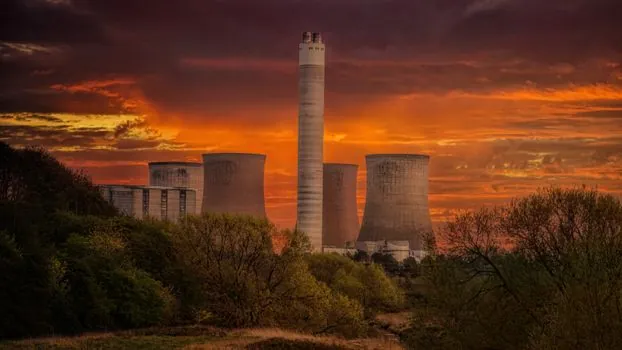
On energy, the cokeless cupola in duplex mode is reported at roughly 50–55 m³ natural gas per tonne of liquid iron plus the induction furnace's electrical trim, while a cold-blast coke cupola runs at about 60% furnace efficiency and carries most of its energy out in the CO-rich exhaust [S1][S5]. On emissions, the cokeless route is reported at about one-third of the CO₂ output of coke melting and zero sulphur when using sulphur-free gas or oil [S4][S5]. On charge flexibility, the cokeless cupola can melt cheap scrap without the wide chemistry tolerances a cold-blast coke cupola has to accept to keep the analysis on target [S1][S5].
Where induction melting wins, the cokeless cupola does not, and vice versa: the cokeless cupola carries out a degree of melt-side refining that a coreless induction furnace cannot, while the induction furnace is the right place to do final carbon trim and temperature control once the iron is liquid, which is exactly why the duplex pairing dominates the published operating list [S5].
Duplexing with Induction: Why the Two Furnaces Pair
Cupola efficiency is highest while the iron is being melted and falls as the operator pushes tapping temperature up, while electricity is the cheapest way to add superheat once the bath is liquid [S5]. Splitting the work lets the cupola run at a deliberately low 1350–1400 °C tap, which keeps sphere consumption low and fuel use stable, then hands the bath to the induction furnace for final superheat and carbon correction.
Reported installed-base practice reinforces that split: cokeless cupolas in Germany, Spain, Austria, Japan, Korea, Iran and Egypt are all operating in duplex with induction for ductile iron, and an existing UK cokeless cupola was reported in 2010 as next to convert to duplex, an architecture that also lets the foundry run both furnaces off a modestly rated standby generator where grid power is unreliable [S4][S5].
Standards, Emissions, and Ductile-Iron Suitability
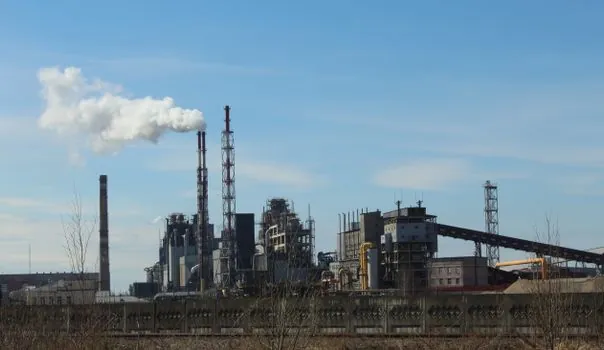
Emissions data from installed cokeless cupolas in India shows suspended particulate matter measured at less than one-third of the prevailing regulatory ceiling, which is why the technology is sold as able to meet local pollution norms without a baghouse or scrubber, with only a low-cost wet cap needed where the authority insists on extra control [S4].
For metallurgical output, using natural gas, propane, LPG, coal-bed methane, or sulphur-free light oil avoids picking up sulphur in the melt, so the iron can be magnesium-treated to ductile iron without a separate desulphurisation step, eliminating the endothermic temperature loss and reheat step that an induction-only ductile-iron route has to manage [S4]. Buyers comparing a new melting package should check that the local gas composition stays inside the supplier's allowed heating-value and sulphur window, and that refractory sphere supply is contractually guaranteed, since sphere supply is the consumable that gates a cokeless cupola campaign [S4].
Supply Chain and Process Trade-Offs
Refractory sphere manufacturing is now established outside the UK: Wesman set up a Dankuni, West Bengal plant with mixers, presses, ovens and laboratory test equipment, and the Indian-made spheres have been cross-checked in a UK lab against the original UK-spec product, with Indian and overseas foundry use reported continuously since 2007 [S4]. A separate Chinese patent direction (WO2019201183A1, filed 2019) uses high-carbon balls as a packed column that supports the charge in place of a water-cooled grate plus refractory bed, removing the water-leak safety risk and the heat loss to the grate cooling water that a conventional cokeless design still carries [S3].
Process engineers evaluating the route should weigh three constraints: coke price and supply volatility (the original UK and Indian drivers for adoption), grid power quality (the duplex with induction can run on a small standby set), and the contractual supply of specification-grade ceramic spheres, since the bed is a recurring consumable rather than a one-shot refractory lining, an issue covered in foundry consumables and refractory handling practice discussions of packed-bed media [S4][S5].
What the Operating Data Tells You to Specify
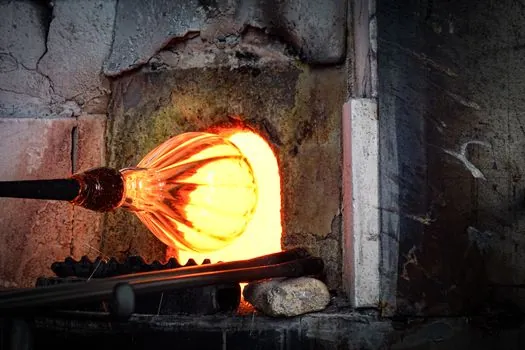
For a foundry currently running a coke cupola, the economic case turns on local coke price and emission-control capex, not on raw melting rate, since cokeless installations are already commercial in seven countries and have a documented second-source sphere supply in India, with the design context covered in the cupola furnace and gas-fired aluminum melting furnace reference entries [S4][S5].
For related coverage, see Cement-Equipment Procurement Signal Brief: North-American Equity, Saudi Replacement Lin....