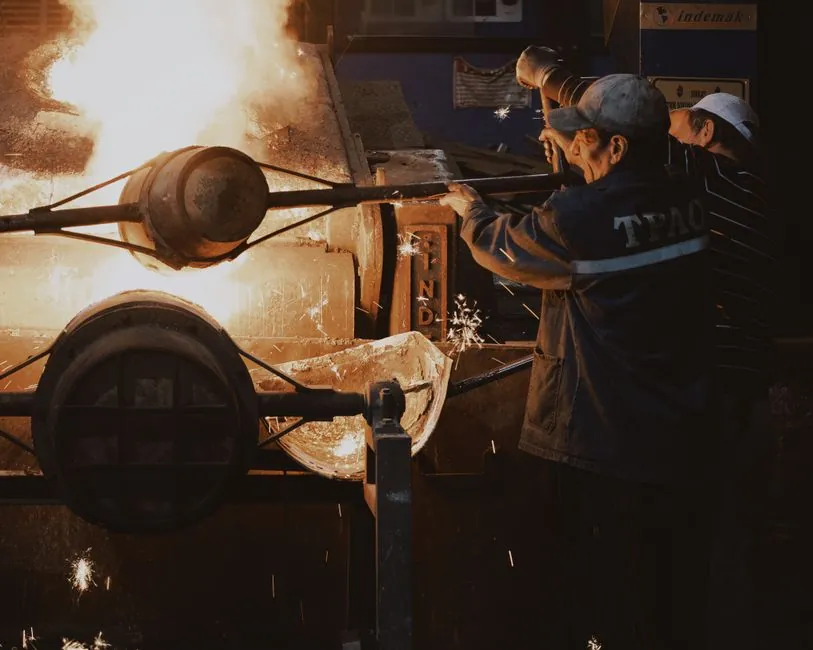
A channel induction furnace and a coreless induction furnace differ at the most fundamental level: the channel unit contains a laminated iron core that forms a transformer-style coupling with a molten metal loop, while the coreless unit has no iron core and induces eddy currents directly into the entire crucible charge [S2][S5]. This single structural choice drives every downstream difference in startup behaviour, energy profile, and alloy flexibility, so furnace selection should start from duty cycle, not from nameplate capacity.
For foundries running one alloy 24/7 above 50 tonnes of bath, the channel furnace is the higher-efficiency holding tool. For job shops melting varied scrap batches from a cold start, the coreless furnace remains the default. The rest of this article lays out the spec-by-spec decision map engineers actually need to make that call [S1][S3].
Core Mechanism: Transformer Loop vs Direct Field Induction
The channel furnace operates as an electrical transformer: an AC primary coil on a laminated iron core induces current into a single-turn secondary formed by the molten metal in a refractory channel, and the metal must be molten before the secondary circuit is complete [S2]. Because the magnetic coupling is concentrated in a narrow loop, the heat generation zone is small and the refractory channel itself becomes the highest-wear component, while the surrounding bath stays comparatively quiet.
The coreless furnace has no iron core to concentrate flux; a water-cooled copper coil wrapped around a refractory-lined crucible generates a reversing magnetic field that penetrates the entire charge and induces eddy currents throughout the metal mass [S2][S5]. The same field interaction produces an inherent electromagnetic stirring action that homogenises temperature and chemistry, which is one of the reasons coreless units dominate batch foundry work where alloy swaps and scrap variability are routine [S4].
Startup Behaviour, Heel, and Alloy Flexibility
A coreless furnace can be started from a cold, solid charge and can be emptied completely between melts, making it the right tool for frequent alloy changes and small batch sizes [S2]. Channel furnaces cannot start from solid metal: they require a starting pool or "heel" of molten metal to close the secondary circuit, which is why channel units are typically dedicated to a single alloy and kept hot for long campaigns [S2][S5].
That rigidity has consequences. Switching alloys in a channel furnace means changing the heel, a difficult process that consumes refractory life and generates off-spec transitional metal. Coreless units sidestep that entirely because the bath can be poured out clean. If a foundry runs more than two alloys on a regular schedule, the coreless design is almost always the lower-risk choice regardless of stated efficiency numbers [S5].
Application Mapping by Metal and Duty Cycle
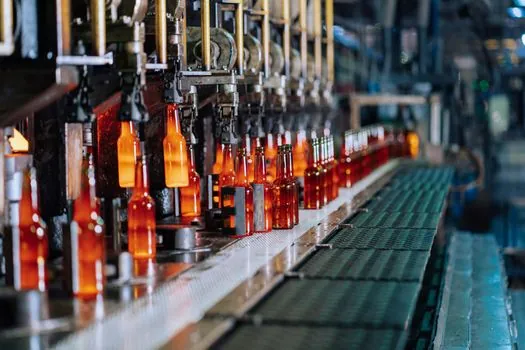
Channel furnaces are best matched to lower-melting-point non-ferrous metals such as aluminum, copper, zinc, and their alloys, and to large holding duties where the bath is kept at temperature for extended periods [S1][S5]. They are widely used in die-casting supply, continuous rod casting feeds, and as duplexing receivers that condition molten metal coming from a primary melter.
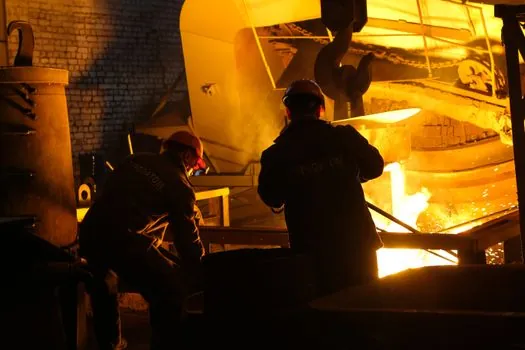
Coreless furnaces are the right answer for higher-melting-point and difficult metals, including cast iron, carbon steel, stainless steel, and tool steels, and for any operation that melts recycled scrap into casting-ready molten metal [S1][S4][S6]. The combination of high power density, scrap tolerance, and electromagnetic stirring makes them the workhorse of general foundry melting, while cupola furnace operations still pair well with coreless holding/duplexing for iron.
Energy Efficiency and Operating Cost
For holding duty, channel furnaces consume less energy per tonne than coreless units because the transformer-style coupling concentrates flux where it is needed and the surrounding refractory mass is well insulated; a 2025 industry comparison notes that channel designs waste less heat on steady-state aluminum holding [S7]. For melting from a cold charge, the coreless furnace's direct induction and high power density typically win on cycle time and kWh per tonne melted, especially at smaller bath sizes [S2][S7].
Capital cost tells a similar story. Channel furnaces generally have lower upfront cost per tonne of installed capacity for large holding vessels, but the coreless furnace's flexibility and faster melt cycles usually deliver better total cost of ownership in job-shop or multi-alloy service [S1]. A simple rule: holding 24/7 favours channel, melting from cold favours coreless, and a 50/50 duty mix usually favours two smaller coreless units over one large channel unit.
Spec Comparison Matrix
Across the four decision criteria that drive most spec sheets, the two designs line up clearly: on startup, the coreless unit accepts cold solid charge while the channel unit needs a molten heel; on energy, the channel unit wins holding duty (kWh/t lower) and the coreless unit wins cold-melt duty; on alloy count, the coreless handles unlimited alloy swaps while the channel is best kept to one; on refractory wear, the channel concentrates wear in the loop inductor (the planned maintenance item) while the coreless wears the crucible more uniformly [S2][S5][S7].
On footprint, coreless furnaces are notably more compact for a given melt rate, while channel furnaces need extra space for the inductor assemblies and the larger bath they typically serve [S3]. On stirring, only the coreless design gives inherent electromagnetic stirring for free, while channel furnaces usually need an added electromagnetic stirrer to match bath homogeneity [S2][S3].
Failure Modes and Maintenance Constraints
The channel furnace's weakest link is the channel/inductor assembly: a refractory breach in the loop forces a controlled cooldown and inductor replacement, which can take days. Operators typically keep a spare preheated inductor on standby for large iron-foundry channel furnaces, and this spare-inventory cost is part of the real lifecycle bill, not just the nameplate price. [S2]
The coreless furnace's weak points are coil water leaks, crucible refractory life (typically rated in number of heats or weeks at temperature), and electrical switching of high-power medium-frequency supplies. A water-cooled copper coil failure is usually repairable in 24-48 hours if spare coils are stocked, while crucible relining is a scheduled maintenance item rather than an emergency. Both designs share common auxiliary risks covered under holding furnace safety reviews: ladle handling, emergency power, and molten-metal splash protocols around tilt pours [S3].
Selection Criteria and Final Recommendation
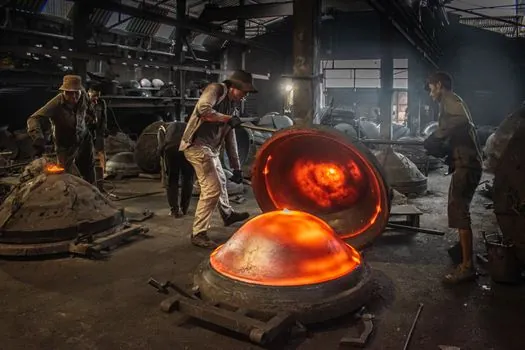
Choose a channel (core-type) induction furnace when the duty is 24/7 holding of a single non-ferrous alloy, the bath exceeds roughly 20-30 tonnes, and energy per tonne held is the dominant cost. Choose a coreless induction furnace when the duty involves cold starts, frequent alloy changes, melting of scrap, or processing of higher-melting-point metals such as cast iron and stainless steel. For mixed-duty foundries, the safer default is two coreless furnaces rather than one channel unit, unless a separate large holding vessel is already justified on the process flow [S1][S2][S5].
Trackable next signals to watch: refractory life data published by channel-furnace inductor OEMs (currently the limiting maintenance cost), and the spread of medium-frequency solid-state power supplies in the 1-3 MW range, which keeps closing the energy gap between channel holding and coreless melting at the high end. Foundries cross-shopping both designs should also revisit the induction furnace application pages for batch sizing examples and crucible furnace maintenance notes before locking the spec.
Related analysis: Centrifugal vs Continuous Bucket Elevator: Spec-by-Spec Decision Map.