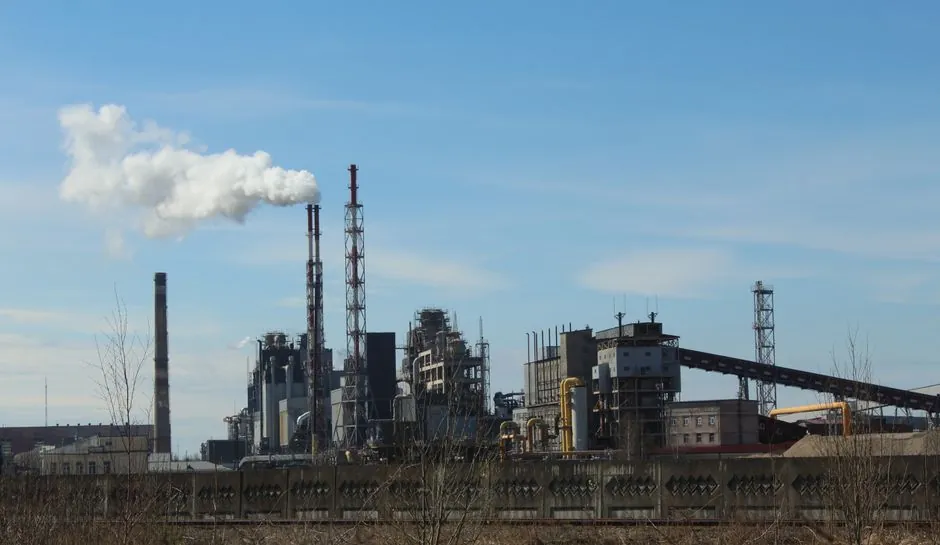
Chemical plant gas suppression is now an agent-by-agent decision driven by the EU F-Gas Regulation phase-down, the US AIM Act HFC allocation, and the 3M exit from Novec 1230 production by end of 2025, with most 2026 retrofits pivoting to IG-541 inert blend or FK-5-1-12 to keep GWP exposure off the project risk register [S4][S9].
The hazard map in a typical chemical site splits into three protection zones, each mapped to a different agent family: unoccupied cable and turbine rooms favour CO2 at NFPA 12 design densities, intermittently occupied control rooms favour inert blends under NFPA 2001 / ISO 14520, and battery or analyzer shelters with limited ventilation lean toward FK-5-1-12 for its 4.5% design concentration footprint [S2][S4][S7]. A gas fire suppression system in this environment is selected first on agent GWP, then on hazard class, and only then on cylinder footprint and cost.
Agent families and the 2026 environmental filter
Three engineering families are competing for the same spec line: halocarbon clean agents (HFC-227ea, HFC-125, FK-5-1-12), inert gas blends (IG-100, IG-55, IG-541), and carbon dioxide, each with its own NFPA or ISO design standard and storage profile [S4]. HFC-227ea carries a GWP of 3220 and HFC-125 sits in the same range, so both face a regulatory squeeze under the EU F-Gas phase-down and the US AIM Act HFC allocation rules, while FK-5-1-12 has a GWP below 1 and a 5-day atmospheric lifetime that keeps it off the worst exposure lists [S3][S9].
IG-541 is a 52% N2 / 40% Ar / 8% CO2 blend with GWP 0, ODP 0, and atmospheric lifetime 0, and the small CO2 fraction is what makes the reduced-oxygen atmosphere tolerable because CO2 stimulates the breathing reflex in occupants [S2]. Inert gases use a physical mechanism (oxygen dilution) rather than chemical chain-breaking, so there is no decomposition residue, no corrosion, and no damage to electronics, instrumentation, or archive media in a protected room [S2][S5].
Design concentration and storage parameters
IG-541 design concentration for a typical chemical plant control room sits between 37.5% and 43% by volume, which drops the room oxygen from 21% to roughly 12.5% to 14%, still breathable for short-term evacuation and below the 15% combustion-support floor for most hydrocarbons [S2][S5]. Agent discharge time is held at 60 seconds or less for total flooding, and a representative 20 MPa IG-541 cylinder bank has an agent charging density of 0.28106 kg/L, a 23.2 MPa maximum operating pressure at 50 °C, and a 6 MPa pilot nitrogen circuit for actuation [S2].
FK-5-1-12 (Novec 1230 / Sapphire) uses a much lower design concentration, around 4.5% to 6% by volume depending on fuel, which is why a single cylinder bank takes roughly one quarter the floor space of an equivalent IG-541 bank for the same room volume, a real advantage in tight analyzer shelters [S4][S9]. HFC-227ea (FM-200) design concentration runs 7% to 9%, and the agent discharge window is the industry-fastest at 7 to 10 seconds because the agent is stored as a liquid and nitrogen-pressurised to supercharge the release [S3]. Carbon dioxide design concentration starts at 34% for Class A surface fires and 50% for deep-seated Class B hazards, both above the 12% to 15% IDLH band for human exposure, which is the reason NFPA 12 caps CO2 total-flooding on occupied spaces [S4].
Occupancy and enclosure integrity
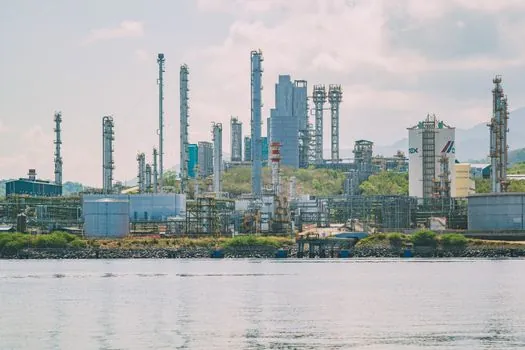
Occupancy classification is the first design input: a normally unoccupied compressor skid room, a periodically attended analyzer shelter, and a 24/7 staffed control room each demand a different agent and a different lockout chain [S1]. For occupied and intermittently occupied zones, inert gas at a held oxygen level of 12.5% to 14% is the default in 2026 plant builds, paired with a pre-discharge warning, a 30-second abort switch, and a door-closer interlock so personnel can clear the room before the agent releases [S1][S2][S5].
Enclosure integrity is the second gate: a room integrity test, also called a fan test, must hold the design concentration for 10 to 15 minutes with leakage rates inside the limits the agent standard sets, and on chemical plant projects that usually means raising door and damper sealing before the suppression system is commissioned [S8]. The detection side is normally cross-zoned smoke or flame detection feeding a listed releasing panel, with a separate general fire-alarm panel for the building, so the legal interface between detection and release stays compliant with NFPA 2001 and ISO 14520 listing rules [S4].
Comparison: agent vs decision criteria for chemical-plant rooms
Side-by-side on the four filters that drive a 2026 spec: IG-541 has GWP 0, 60-second discharge, 12.5% to 14% held oxygen, and zero residue, but needs 4 to 5 times the cylinder count of a halocarbon system of the same room volume. HFC-227ea has GWP 3220, 7% to 9% design concentration, 7 to 10-second discharge, and zero residue, but it now carries the F-Gas and AIM Act phase-down penalty and pushes long-term agent-recharge cost onto the operator.
Standards and listing that govern the spec line
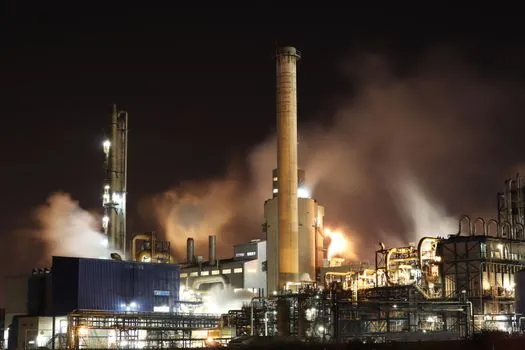
NFPA 2001 governs clean agent total-flooding systems, NFPA 12 governs carbon dioxide systems, and ISO 14520 plus EN 15004 are the parallel international standards used outside North America, while AS 4214-2002 covers Australian installations [S3][S4]. The control panel must be a listed releasing panel, the cylinders and valves must carry the same listing mark, and the agent itself is specified by ASHRAE-standard designation such as FK-5-1-12, HFC-227ea, or IG-541, with each ASHRAE designation tied to a fixed design concentration table in the relevant NFPA or ISO clause [S3][S4].
For occupied control rooms, the standard requirement is that the held oxygen concentration stays above the life-safety threshold of approximately 15%, and this is the exact reason the 8% CO2 fraction in IG-541 is preserved in the blend rather than optimised away [S2][S5]. Where an engineer needs cross-disciplinary context on plant-room hardware, a look at the spec gates used for adjacent safety equipment such as fire doors and the fire extinguisher selection for the perimeter of a chemical plant is useful, because those set the room rating the suppression system has to match.
Failure modes and constraints engineers should price in
Three failure modes dominate chemical-plant gas suppression incidents: room-integrity failure (unsealed cable penetrations drop the held concentration below the extinguishing threshold within minutes), detection under-count (single-detector, non-cross-zoned designs release on a single fault and either over-discharge or never release), and ventilation interaction (HVAC keeps running through the discharge and strips the agent below the design floor in under a minute) [S4][S8]. Each one is a commissioning gate, not a design option, and any one missed will fail a real-fire discharge test.
Agent supply is now a procurement risk of its own: the 3M exit from Novec 1230 manufacturing by end of 2025 has tightened FK-5-1-12 availability, while HFC-227ea and HFC-125 face rising recharge cost as the EU F-Gas phase-down and the US AIM Act reduce the HFC allocation pool, so the 10-year agent cost line is now part of the spec, not an after-sale detail [S4][S7][S9]. For projects that need to keep a single agent family across control rooms, analyzer shelters, and turbine enclosures, IG-541 is the most regulator-stable option, and the 60-second discharge and 0.28106 kg/L charging density at 20 MPa storage are the cylinder-bank numbers to carry into the hydraulic flow calculation [S2].
Sourcing, vendors, and verifiable next nodes
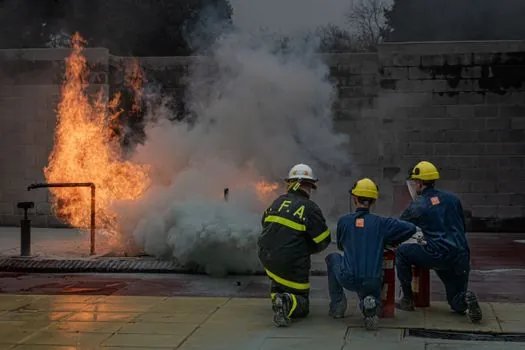
For an RFQ issued in 2026, the practical shortlist of agent families to ask pricing on is IG-541, FK-5-1-12, and CO2 for the unoccupied zones, with HFC-227ea kept as a last-option fall-back if the 10-year agent-cost line still favours it on the operator's accounts [S4][S7]. A representative IG-541 product envelope from a 30-year FM/UL/NFPA-compliant manufacturer (PAVLN) lists a 20 MPa storage pressure, 23.2 MPa maximum operating pressure at 50 °C, 60-second total-flooding discharge, ambient operating temperature 0 °C to 50 °C, and automatic plus manual plus mechanical emergency actuation, with the agent blend fixed at 52% N2 / 40% Ar / 8% CO2 [S2].
A related engineering reference that pairs with this scope is the fire door selection spec gate, which covers the room-barrier side of the same compartmentation strategy the gas system depends on for its 10 to 15-minute hold time.