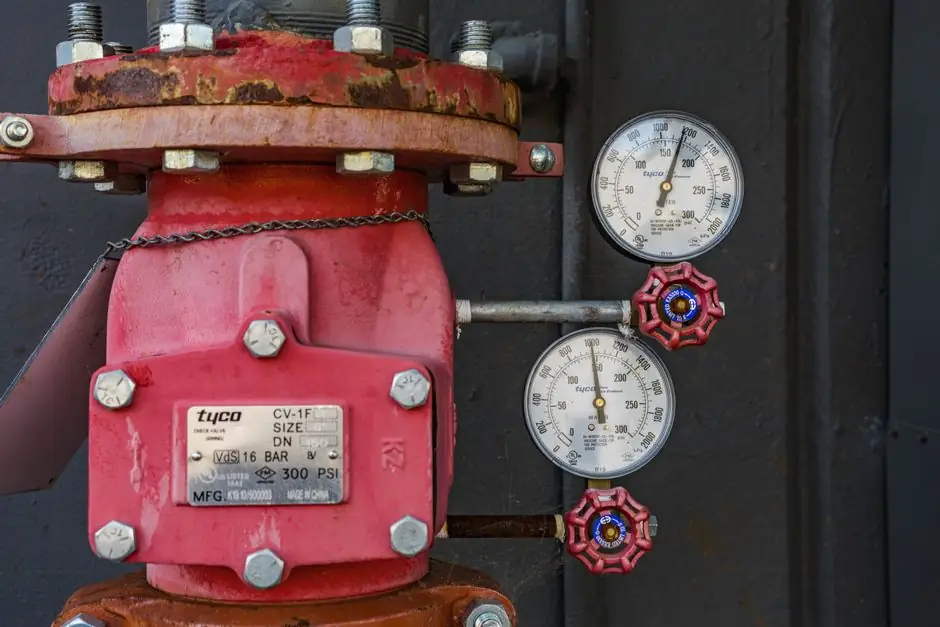
Steam service above 425°C (800°F) forces a hard transition in gate valve seat material, from soft polymer seats to hard-faced metal alloys on chrome-moly bodies, because PTFE-family seats cap at 260°C and elastomers fail near 150°C [S3][S5].
Carbon-filled TFE seats handle saturated steam cleanly up to 260°C, but once a gate valve sees superheat, saturated-to-superheated transitions, or pressures that drive wire-drawing at the seat, the seat surface must be a cobalt-chromium or tungsten-carbide hardfacing on a 410SS or alloy-steel substrate [S2][S3].
Why the Seat Material Changes With Steam Temperature
Steam is a demanding medium for any gate valve because it carries high kinetic energy that can erode internal parts, and pressure drops in steam lines cause wire-drawing where fast-moving steam erodes the valve seat, so engineers focus on tight shut-off to prevent damage [S4]. A small leak worsens quickly under those conditions, and the material at the seat has to resist both heat and erosive flow.
Soft seats like PTFE, RPTFE, PEEK, and elastomers (EPDM, NBR, FKM) all have published upper temperature limits: PTFE and RPTFE are typically rated to 200°C (some filled grades reach 260°C), PEEK to 250°C continuous, and EPDM to 150°C [S5]. Carbon-filled TFE, a standard filled-PTFE grade used in steam, is rated from -29°C to 260°C and offers better cycle life than virgin or glass-filled PTFE thanks to graphite filler [S3]. Beyond 260°C, the polymer matrix decomposes, hardens, or cold-flows, and the seat cannot hold Class VI shut-off on a gate valve.
Metal Seat Options and Their Temperature Ceilings
Metal seats (stainless steel, stellite, tungsten carbide) withstand high temperatures (up to 600–850°C), high pressures, and abrasive or slurry media, which is why they take over in steam and power-plant service [S2]. Common metal seat materials include 13% chrome stainless (410SS) for steam and high-temperature water, and Stellite 6 (a cobalt-chromium alloy) hard-facing for higher-temperature and erosive service [S5].
Stellite 6 hard-facing is typically used between 315°C and 600°C, where its cobalt matrix keeps hardness at temperature, while tungsten carbide and zirconia trims push the upper bound to 850°C for the most severe superheat and combined-cycle service [S2]. 410SS and similar 13Cr martensitic grades are usually specified on gate valve seats and wedges up to roughly 425–500°C, with the limit set by oxidation and loss of hardness rather than melting. A practical comparison:
410SS seat: 13% chrome martensitic stainless, common in steam and hot-water gate valves, good up to roughly 425–500°C, lower cost, but hardness drops as temperature rises [S5].
Stellite 6 hard-facing on 410SS or alloy body: cobalt-chromium alloy, working range 315–600°C, holds hardness under thermal cycling, resists wire-drawing at the seat orifice [S2][S5].
Tungsten carbide or zirconia trim: extreme-service option up to 850°C, used in superheat and severe erosive steam lines where stellite begins to wear [S2].
Body and Trim Pairing for High-Temperature Steam

For higher temperatures, alloy steels like chrome-moly (ASTM A217 WC6 or WC9) are recommended; their valve trim must be hardened, but they resist long-term deformation and oxidation better than standard carbon steel [S4]. Carbon steels such as ASTM A216 WCB are effective for steam at temperatures from -29°C to 425°C, offering good strength at a lower price, but as temperature rises carbon steel loses mechanical properties and may suffer from carbonization over long periods [S4].
The pattern is consistent: body and seat have to be specified as a system, not as separate parts. A WC6 or WC9 chrome-moly body is the standard carrier for the seat when steam exceeds 425°C, and the seat itself is then built up by weld overlay (Stellite 6, or tungsten carbide for the most severe trim) on a 13Cr or alloy substrate. Engineers comparing gate valve bodies for steam service should treat the seat-face material as a hardfacing on a qualified body alloy, not as a standalone polymer-vs-metal decision, and confirm that the seat, stem packing, and bonnet gaskets all meet the same temperature envelope.
Selection Criteria: Temperature, Pressure, and Steam State
The right seat material depends on the operating point, not on a generic preference. Saturated steam is dense and erosive, while superheated steam behaves more like a dry gas, and that difference changes the required seat hardness and the risk of wire-drawing at the seat orifice [S4]. Selecting the wrong seat material is the single most common cause of premature valve failure in industrial plants, and it shows up as fugitive emissions, unplanned shutdowns, and seat-face erosion.
For practical specification, the decision breaks down into three steps. First, pin the worst-case temperature and pressure, including superheat transients. Second, pick the seat-face material from the table: PTFE/RPTFE/carbon-filled TFE to 260°C [S3][S5], 13Cr stainless to roughly 425–500°C [S5], Stellite 6 hard-facing 315–600°C [S2][S5], tungsten carbide or zirconia up to 850°C [S2]. Third, match the body to the seat: WCB carbon steel to 425°C [S4], WC6 or WC9 chrome-moly for higher service, with the seat hardfacing bonded to the body or to a 410SS seat ring. The connection between body, seat, and trim is the same in a knife gate valve for slurry or a wedge gate for steam, although the seat geometry differs.
Failure Modes That Drive Material Choices
Seat failure in steam service usually traces back to four mechanisms, and each one points to a different material fix. Under continuous pressure, some polymers and elastomers cold-flow, change dimensions, lose preload, and risk erosion or tearing; this is the dominant failure mode for PTFE-based seats above their load or temperature limit [S1]. Thermal expansion mismatch between a metal housing and a polymer seat can pinch or shrink the seal away from the face, which is why polymer seats rarely survive on hot cycles even when the static temperature rating is in range [S1].
Permeation, swelling, and chemical degradation attack polymer seats when the medium is absorbed, especially as higher temperatures drive faster reaction rates, leading to hardening, embrittlement, or dissolution [S1]. Rapid gas decompression (RGD) and water hammer in steam lines can rupture polymer seats through internal blistering or shock loading, and on metal seats the same surge shows up as wire-drawing at the seat orifice [S1][S4]. The standard fire-safe answer in high-heat service is flexible graphite, which is rated across high-heat environments and is commonly used in fire-safe trim, but for the seat face itself, hard metal hardfacing is still the primary choice above 425°C.
Standards, Sourcing, and Engineering Documentation
Gate valve selection for steam is governed by API 600 for cast steel gate valves in petroleum and natural gas, with API 598, EN 12266, and ISO 5208 defining the leakage classes the seat must meet (FCI 70-2 Class VI being the tightest soft-seat target) [S4][S5]. Bodies are typically specified to ASTM A216 WCB for carbon steel service and ASTM A217 WC6 or WC9 for chrome-moly higher-temperature service [S4]. The seat itself is then qualified against the body alloy and the steam operating point, with the seat material, seat-face hardness, and overlay process documented in the material test report.
Engineers should also confirm that the bonnet gasket, stem packing, and seat hardfacing are matched to the same temperature ceiling; a stellite seat on a graphite-impregnated gasket stack is a common high-temperature combination. Suppliers lacking certifications, documented MTRs, or experience with API/ASME steam trim are a known source of premature seat wear, and a documented seat material, hardness (HRC), and overlay specification is the cleanest signal that the gate valve is built for the actual steam envelope rather than a generic rating.
For trackable next signals: watch for new filled-PTFE grades pushing the polymer steam ceiling past 260°C with documented RGD and cycle data, and for API 600 / ASME B16.34 updates that re-classify chrome-moly trim limits for superheat above 600°C, since those revisions typically reset seat material choices across the boiler, steam trap, and turbine bypass line.
Background reading: Equal vs Unequal Leg Angle Steel: Spec Boundaries, Sizing Tables, and Selection Logic.