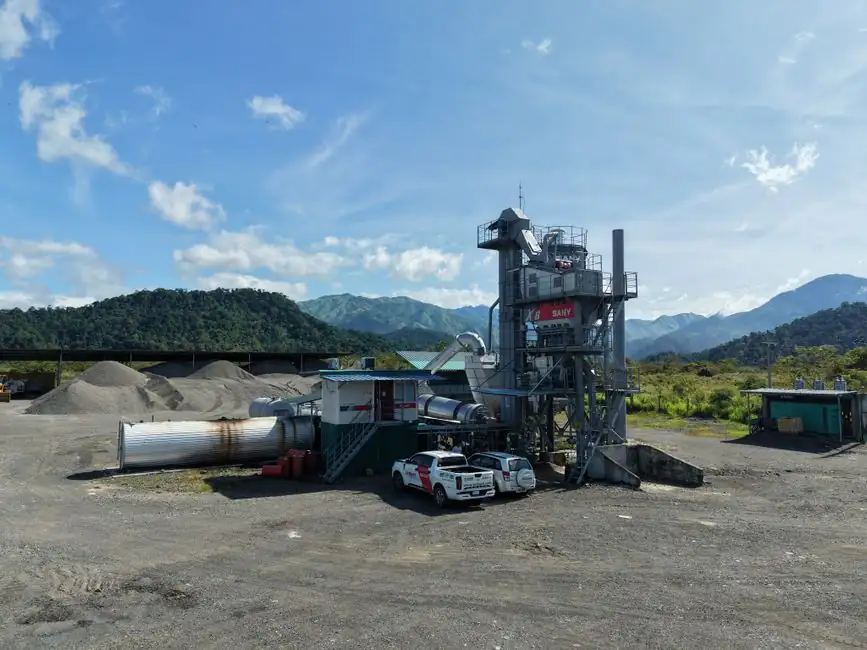
Cement-plant gearbox specification splits cleanly by duty: DBY (2-stage) and DCY (3-stage) bevel-helical units built to JB/T 9002-1999 dominate belt conveyors with ratios of 8-14 and 16-50, center distances of 160-560 mm and 160-800 mm respectively, and a 1,500 rpm max input speed [S1].
Selection is not a single decision. Conveyor drives, kiln main gears, and raw/cement mill drives each impose different torque, thermal, and contamination profiles, so the gear technology, lubrication cadence, and motor pairing must be picked to match the specific station, not the plant as a whole [S2][S3].
DBY vs DCY: Bevel-Helical Spec Range for Conveyors
DBY/DCY series are not general-purpose right-angle gearboxes; their power rating tables are aligned with belt-conveyor load profiles of continuous duty, moderate shock, and long operating hours [S1]. The 2-stage DBY delivers a ratio range of 8-14 with center distance from 160-560 mm, while the 3-stage DCY covers 16-50 ratios across 160-800 mm center distance, both at up to 1,500 rpm input and both using high-strength alloy steel, carburized, quenched, and precision-ground gears [S1]. The first stage is a Gleason spiral bevel set, with helical stages downstream, which gives smoother running and better tooth-surface fatigue resistance in 24/7 service than the older SS, ZQ, and ZL box types they replace [S1].
Thermal capacity is included in the published selection tables, and a thermal coefficient lookup against ambient lets the specifier confirm the box will not overheat in hot-climate plants; when natural cooling is insufficient, auxiliary cooling fans or coils are an option rather than a redesign [S1]. Right-angle output keeps the motor parallel to the conveyor axis, which is the difference between a fit inside a transfer-tower gallery and a structural rework.
Kiln Drive Torque, Motor Class, and Gear Selection
Rotary kilns in cement plants commonly exceed 100 m in length and rotate at 0.5-5 rpm, and the main drive motor must deliver 3-5x running torque to break the static friction of the cold kiln mass [S2]. Helical and double-helical gear stages are standard for kiln main gears because of their smooth tooth engagement and high load capacity under continuous rotation, and the gearbox must be sized against the dynamic torque profile across cold start, warm restart, and steady production, not just nameplate running torque [S2].
Modern plant retrofits are pairing these gearboxes with IE4 or IE5 motors and VFDs, because kiln drives often run at 60-80% of rated capacity and the partial-load efficiency delta between motor classes is wider than most specifiers assume: IE3 induction holds 91.2% efficiency at 50% load, IE4 induction 93.8%, IE5 synchronous reluctance 95.2%, and IE5 permanent-magnet 96.0% at the same point, with power factor climbing from 0.85 to 0.97 across the same ladder [S2]. A VFD on a high-efficiency motor lets the kiln speed slide to its best efficiency point; sizing a kiln drive on nameplate alone leaves energy and thermal margin on the table [S2].
Bearings and Shaft Stability Under Dust Load

Gearbox shafts, drive systems, and other heavily loaded rotating positions in a cement plant are routinely specified with rolling-element bearings chosen for load control and shaft stability rather than generic catalog fit [S3]. Spherical roller bearings and tapered roller bearings dominate these positions because of their combined radial and axial load capacity; self-aligning ball bearings are used where shaft deflection from foundation settlement is a concern. For a deeper look at how slewing and heavy-duty bearings are mapped to heavy-industry service, the bearing selection walkthrough for pulp and paper covers load, sealing, and sizing logic that crosses over directly into cement gearbox input and output shafts.
Sealing choice matters as much as bearing type in this duty: cement dust is abrasive and will defeat a contact lip seal in a few seasons if the lip material is not matched to the temperature and dust load; many operators move to labyrinth seals with grease purge on the output shaft of conveyor gearboxes and on the pillow-block bearing housings of mill gearboxes [S3]. Bearing arrangement should also be checked against the gear-shaft deflection under peak load, because gear tooth alignment is unforgiving of even small housing distortion at the high contact ratios of a 3-stage DCY [S1][S3].
Lubrication and Oil Analysis Cadence
For cement kiln gearboxes operating under heavy loads and high temperatures, oil analysis should be performed at least every 3 months under normal conditions, with online viscosity, acid number, water content, and particle-count sensors used to drive predictive oil changes rather than fixed-hour intervals [S2]. Cement-plant lubricants are formulated for crushers, kilns, mills, and conveyors as a coordinated set, because contamination paths between the gear oil and the bearing greases on adjacent equipment are common in a dusty plant [S4].
The real failure mode is water ingress from steam and wash-down, not oil exhaustion, so a quarterly trend of acid number and water content catches the gearbox before the oil film collapses; pairing the lube program with a vibration baseline on each gearbox input and output bearing completes the predictive loop, and lets the maintenance planner order parts against a forecast rather than a strip-down [S2][S4].
Selection Criteria Comparison: Conveyor, Kiln, Mill
The three main gearbox applications in a cement plant line up against different criteria. Belt conveyors favour DBY/DCY bevel-helical units for right-angle footprint, JB/T 9002-1999 rating tables, and 1,500 rpm input with 8-50 ratio coverage [S1]. Kiln main drives favour helical or double-helical stages sized for 3-5x starting torque at 0.5-5 rpm output, paired with IE4/IE5 motors and VFDs to capture 15-25% energy savings and roughly 40% life extension on rotating components when optimized as a system [S2]. Raw and cement mill gearboxes sit between these two, often parallel-shaft or planetary, sized for high shock load and tight particle-count control, with bearing and sealing choices driven by dust exposure rather than speed [S3].
Decision rule: specify DBY/DCY where right-angle output and conveyor-duty rating tables match the load; specify a helical kiln gear unit where the duty is rotary kiln with high breakaway torque; specify a heavy parallel-shaft or planetary mill gearbox where shock load dominates and the gear is downstream of a dual-pinion drive. For background on how heavy-equipment selection maps to other infrastructure sites, the pile driver spec walkthrough for quarry sites gives a useful parallel on duty-cycle sizing.
Standards, Sourcing, and What to Verify
DBY/DCY are designed and manufactured in accordance with JB/T 9002-1999, the Chinese national standard for bevel-helical gearboxes, and they substitute for the older SS, ZQ, and ZL types still found in plants that have not retrofitted [S1]. Motor efficiency classes follow the IE3/IE4/IE5 ladder in IEC 60034-30-1, with kiln-drive selection paying particular attention to the 50-75% load point because kilns rarely run at nameplate [S2]. For gearbox fundamentals, the gearbox reference entry covers terminology for ratio, service factor, and thermal rating; for the cement process itself, the cement and concrete overview lays out where in the plant each gearbox sits.
Two verification points before purchase: confirm the gearbox selection has been checked against the thermal capacity coefficient for the actual ambient, not a generic 40 deg C, and confirm the oil analysis program is in place, because a quarterly sample regime is the cheapest insurance on a high-temperature kiln or mill gearbox [S1][S2]. Next trackable signals: kiln-drive retrofit quotations specifying IE5 + VFD pairs, and DBY/DCY selections stamped to JB/T 9002-1999 with explicit thermal coefficient verification, both of which should appear on new equipment submittals through the rest of 2026.
For the relevant spec sheets and selection criteria, see special cement.