Realistic gland-packing selection lives or dies on four numbers: bulk media pH, surface shaft speed, continuous operating temperature, and stuffing-box pressure [S2][S4]. Each of the four dominant fibre families — PTFE, expanded graphite, aramid (Kevlar), and carbon/PTFE hybrids — occupies a distinct envelope, and crossings between envelopes are where the failures cluster [S2][S6].
Commercial wholesale pricing for braided aramid gland packing on Made-in-China.com runs from roughly US$ 2.63 to US$ 29.40 per kg depending on braid, lubrication, and supplier tier, with 1 kg to 100 kg minimum-order quantities [S6]. Standard flexible-graphite valve packing sits in a similar band, US$ 1.00 to US$ 15.00 per kg with 50 kg MOQ, while braided PTFE/graphite rope-style packing lands at US$ 1.00 to US$ 55.00 per kg with 1 kg MOQ [S7]. Those numbers matter because a 5 cm × 5 cm × 30 m spool weighs between 4 kg and 12 kg, and a refit of a single ANSI 150 valve is therefore a 4-figure kg order, not a one-off stick [S7].
Fibre family vs. duty envelope
PTFE braided packing is the default general-purpose choice, rated by Cierne for continuous service up to 260°C with full pH 0–14 chemical resistance, plus effective cryogenic operation at -200°C, which makes it the only single-fibre option spanning the full pH range [S2]. Expanded graphite packing, in contrast, is specified for high-temperature duties where PTFE would melt or creep: expandable graphite ribbon and braided forms hold line on superheated steam, hot oil, and hydrocarbon services, typically 200°C to 650°C, but the same graphite is attacked by strong oxidising acids above ~60% concentration at high temperature, so it is not a universal substitute [S2].
Aramid (Kevlar) packing is the abrasion-resistant pick for slurries, pulpers, and paper-mill stock, where fibre wear is the dominant failure mode; ANJIE and Ningbo Ruifeng list aramid-based products in the US$ 2.63 to US$ 29.40/kg band on Made-in-China.com with 2–100 kg MOQs [S6]. Carbon-fibre and carbon/PTFE hybrids sit at the top of the thermal and chemical envelope and overlap with high-end mechanical seal replacement duty in pumps where flush water cannot be guaranteed [S2][S4].
Speed, pressure, and the leakage budget
Most braided gland packings cap peripheral shaft speed at 20 to 25 m/s, with continuous pressure ratings in the 1.5 to 3.0 MPa range for standard constructions; above those numbers, lantern rings, flush plans, or a full conversion to a mechanical seal become the rational answer [S2][S4]. Sealrite, a Kent-based valve and pump repair workshop running hydrostatic tests to 350 bar and nitrogen tests to 40 bar, cites pumps, pulpers, agitators, and mixers as the canonical gland-packing duties, and explicitly flags "radial shaft movement plus abrasive product" as the combination that decides packing grade [S1].
A buyer comparing four realistic options against four criteria can read off the selection at a glance: (1) PTFE/graphite for chemical resistance and 260°C ceiling at the lowest cost; (2) flexible graphite for 200–650°C steam and hydrocarbons with the chemical weakness to strong oxidisers; (3) aramid/Kevlar for abrasion-dominant slurries at the expense of chemical breadth; (4) carbon-fibre for the top-corner duty of high temperature, high pressure, and borderline chemical attack [S2][S6][S7]. That four-row comparison lines the mainstream options up against temperature, pH, abrasive wear, and unit cost, so the decision reduces to which axis the duty is most punishing on.
Lubrication, braid, and the B2B supplier shape
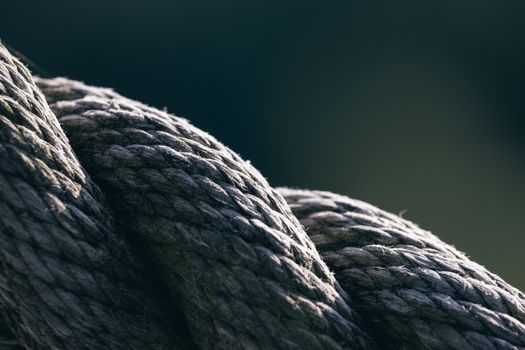
Gland-packing performance is as much about impregnation and braid geometry as base fibre. Pure PTFE is filled with graphite, glass microspheres, barium sulfate, or silica to suppress cold flow and creep, and expanded PTFE is "expanded" precisely to give equal tensile strength in all directions so the packing does not extrude into the shaft gap [S2]. Sunpass Sealing Technology and Tai Zhou Kingland Sealing Materials — both Chinese manufacturers with ISO 9001 certification, the latter registered in 2012 — supply the full braided spectrum (PTFE, graphite, aramid, carbon) plus compression packing rings for valves [S4][S5]. Cierne, a Hangzhou-based fluid-sealing specialist, launched dedicated gland-packing and bearing-isolator lines alongside its PTFE and graphite-sheet business, and the price points on its standard flexible-graphite rope reflect that scale [S2][S7].
Alibaba-class B2B directories (Made-in-China, TradeBoss) typically list 40-plus suppliers for "graphite gland packing" alone, with Diamond/Gold member status used as the de facto quality filter [S3][S7]. For a buyer, that means shortlisting is more about auditing braid uniformity, lubricant loading, and dimensional tolerance than picking the lowest headline price.
Who gland packing is for — and who it is not for
Gland packing remains the rational choice for general-purpose centrifugal pumps, valve stem sealing, agitators, mixers, and any equipment where the leak budget is non-zero (controlled drip is acceptable) and where shaft speed is below ~25 m/s [S1][S2]. It is also the right answer where solids in the media would destroy a mechanical seal face in days, where the line cannot be taken offline for a seal rebuild, or where the operator wants to use the leakage itself as a flush for slurry duty [S1].
Gland packing is the wrong choice for high-speed boiler-feed pumps above ~3,600 rpm, for services under API 682 fugitive-emission limits where a controlled-drip leak is unacceptable, and for toxic, carcinogenic, or premium-inventory media where any leakage is a regulatory event [S2][S4]. In those services, the marginal cost of converting to a mechanical seal is recovered in a single avoided shutdown. For the rest of the plant, the trade-off is simpler: pick the fibre that survives the worst single parameter, accept the controlled drip, and re-torque the gland on a defined schedule.
Installation, runtime discipline, and failure modes
Most gland-packing failures are not material failures but installation and adjustment failures. The standard sequence is to cut rings with a 45° scarf joint, stagger joints 90° between rings, seat each ring individually with even axial load, and then run the gland follower down to a target torque that allows 30 to 60 drops per minute for a typical centrifugal pump — zero leakage on start-up is a packed-too-tight gland, not a packed-correctly one, and the packing will score the shaft sleeve in minutes [S1][S2].
Side-load from misalignment is the next-largest cause: Sealrite flags "radial shaft movement" as the application condition that decides packing grade, and the same 50+ years of combined workshop experience that informs their valve-rebuild line is applied to diagnosing packing leaks caused by worn sleeves, bent shafts, or offset couplings [S1]. Once the sleeve is scored, no grade of packing will seal; the sleeve must be re-machined or replaced, which is why Sealrite runs a "complete plant shutdown" service that includes packing inspection alongside the valve work [S1]. For buyers sizing a maintenance contract, that linkage — packing, sleeve, alignment, valve — is the unit of work, not the packing ring alone. Engineers pairing gland-packing selection to valve trim can cross-reference the ball valve selection criteria for corrosive chemical service and the needle valve selection criteria maps when the same chemical envelope drives both decisions.
Two trackable signals to watch: (1) the 2026 shift of Chinese suppliers such as Sunpass, Kingland, and Cierne into higher-grade carbon-fibre and expanded-PTFE lines at price points previously held by European brands, and (2) tightening of fugitive-emission rules in EU refineries and US chemical plants that will push new pump purchases from packing to mechanical seals above a defined VOC threshold [S2][S4][S5].
Component reference pages worth checking: cable gland, and case packing machine.