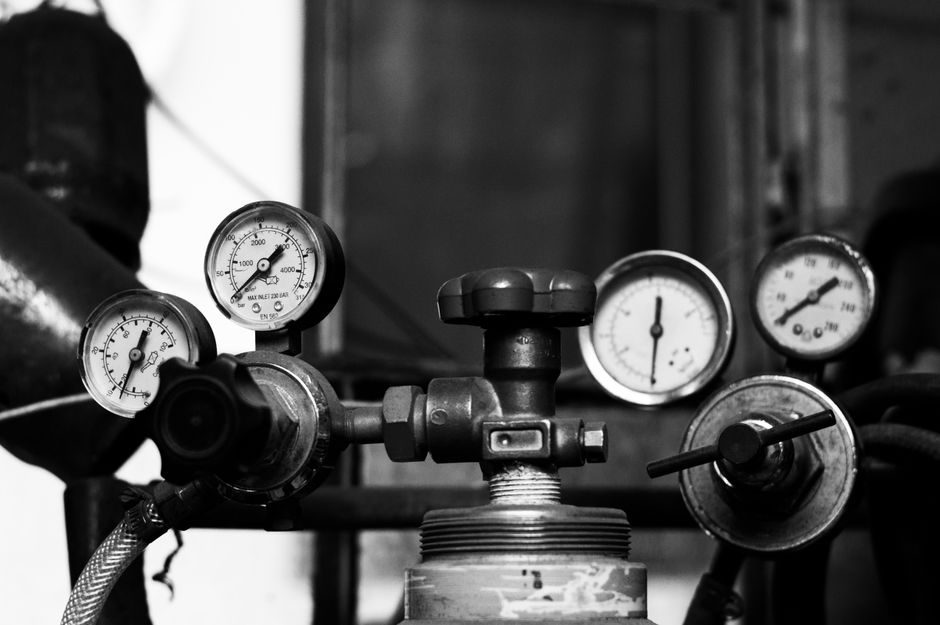
Needle valve duty is set by four numeric gates — DN, pressure class, temperature window, and media chemistry — and the shortest path to a wrong purchase is picking a body or seat material before those four numbers are fixed. Across cataloged industrial needle valves in 2026, the operating envelope stretches from 125 psi micro-metering brass units [S6] to 10,000 psi (≈690 bar) ASME/ANSI-class monoflange isolation blocks rated -54 °C to 538 °C [S3], so a single catalog line cannot cover both duties.
Selection also depends on the actuation mode (manual handwheel, toggle, pneumatic) and on whether the valve is doing throttling/metering or bubble-tight shutoff. Treating a metering needle as an isolation valve — or vice versa — is the most common spec error in instrument manifolds and analyzer sample lines, where needle valve variants are used interchangeably by technicians who should be reading the pressure/temperature curve first.
DN, Pressure Class, and Temperature: The Four Numeric Gates
The cataloged envelope in 2026 spans DN 0.125 in (3.175 mm) toggle-metering valves for low-pressure gas and liquid service [S2] up to DN 4 in monoflange blocks designed for piping-class isolation in hydrocarbon service [S3]. The narrow end of that range is dominated by instrumentation and analyzer duties: Aalborg's VCL-TT-OA is built for water, gas, and air at 0–5.2 bar (0–75.4 psi), 0–66 °C, with a PTFE/PEEK wetted path and 2 l/min nominal flow [S2]. That is fundamentally a different product than a 400 bar (5,801.5 psi) stainless 487-series block rated -20 °C to 180 °C for 2-group common fluids [S1].
Pressure class alone does not decide the duty. The Budenberg 6MNB monoflange pair runs to 10,000 psi and 538 °C — values that place it in upstream hydrocarbon isolation, not in lab gas regulation [S3]. A useful rule from the catalog data: when working pressure exceeds ~150 bar (≈2,175 psi) and temperature exceeds 200 °C, the seat and bonnet must be all-metal; soft seats (PTFE, PEEK) are typically limited to the lower half of that envelope. For shutoff-only duties where ball valve or butterfly valve alternatives are evaluated, remember that a needle valve's rising stem and tapered seat give finer throttling resolution but at the cost of higher pressure drop per unit Cv.
Body Material and Wetted-Path Selection
Body material tracks the media. Stainless steel (e.g., SFERACO 487-series monobloc) is the default for 2-group common fluids at PN400, with operating temperature -20 °C to 180 °C and DN 0.25 in through 1 in [S1]. Nickel-plated brass is the standard pick for low-pressure pneumatic and hydraulic instrument manifolds, as in the Valve Check MNV-1 series at 125 psi maximum with 10-32 UNF end connections [S6]. Forged brass (C37700 or lead-free equivalents) covers general-purpose water, oil, and gas duties per the Okorder commodity data, with sizes from 3/16 in up to 2 in [S8].
Corrosive and analytical-grade service pushes the wetted path toward thermoplastics. Aalborg's MVT™ toggle valves use PTFE and PEEK wetted parts inside an anodized aluminum shell, with PEEK delivering structural rigidity and PTFE supplying chemical resistance [S2]. M&C TechGroup's RV-11-P goes further for analyzer sample lines: PVDF and PTFE wetted parts, G 1/4 in internal connections, surface-mount form factor, and a gas-tight shutoff rated for corrosive gas conditioning [S4]. Beswick's miniature threaded needle valves add coverage for vacuum, fuel, and pharmaceutical applications in a smaller envelope [S5]. The practical rule: stainless for hydrocarbon and high-pressure steam; brass for cost-driven pneumatic and water; PTFE/PEEK/PVDF for corrosive and analytical media.
End Connections, Bonnet, and Seat Architecture
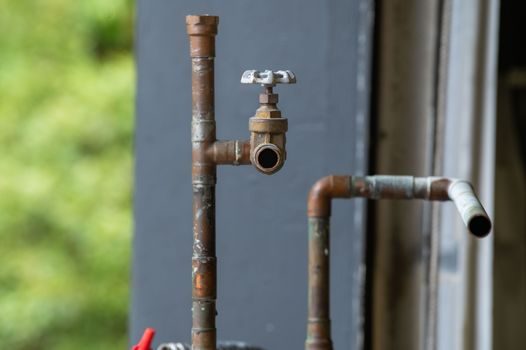
End connection style is a hard gate, not a preference. Female-female NPT, male-female, and male-male variants are all available in miniature brass (MNV-1 series) [S6], and the right pick is dictated by the tubing or pipe termination already on the skid. For high-pressure hydrocarbon isolation, the monoflange architecture pairs the needle with primary-isolation and vent functions in a single one-piece body, reducing leak paths versus a conventional multi-valve train [S3]. Hydraulic Hoses catalogs three common geometries — multi-port gauge, standard in-line, and 90° angle — all typically in stainless steel, with angle patterns favored where panel space is constrained [S7].
Seat architecture separates metering from isolation. PTFE and PEEK soft seats give bubble-tight shutoff and lower torque, which is why they dominate low-pressure analyzer and gas regulation (Aalborg VCL-TT-OA advertises "bubble tight shutoff" in pressure or non-critical vacuum [S2]). All-metal seating — used in the Budenberg 6N heavy-duty needle and the 6MNB monoflange — is mandatory above ~200 °C or where media contains particulates that would cut a soft seat [S3]. Stem packing follows the same pattern: PTFE packing for analyzer cleanliness, graphite or metallic packing for high-temperature hydrocarbon service.
Comparison Matrix: Four Real Needle-Valve Variants Against Four Decision Criteria
Lining the catalog entries up against cost, max pressure, max temperature, and media suitability produces a usable shortlist for engineers: [S2]
• SFERACO 487-series (stainless monobloc, female-female): max 400 bar / 180 °C / 2-group common fluids — best for high-pressure hydrocarbon and industrial gas isolation, not for analyzer cleanliness [S1].<br>• Budenberg 6MNB (monoflange, all-metal seat, ASME/ANSI): max 10,000 psi / 538 °C / piping-class hydrocarbon — best for upstream isolation manifolds, oversized for instrument racks [S3].<br>• Aalborg VCL-TT-OA (PTFE/PEEK wetted, anodized aluminum): max 5.2 bar / 66 °C / corrosive gas and liquid — best for analyzer sample conditioning and laboratory metering, will not survive high-pressure steam [S2].<br>• Valve Check MNV-1 (nickel-plated brass, micro, 10-32 UNF): max 125 psi / low temperature / air and water — best for pneumatic panels and miniature instrument panels, not for any hydrocarbon service [S6].
Cross-validate any shortlist against seat material, Cv, and end-connection standard before issuing a purchase order. The same gate that makes a monoflange correct for 538 °C hydrocarbon service makes it wrong for a cleanroom analyzer where dead volume and wetted-metal surface area matter [S3][S2]. When a throttling duty pushes resolution limits, control valve trim sizing is the more rigorous path; needle valves remain the right answer where fine manual adjustment, low cost, and small envelope dominate.
Actuation, Function, and Where a Needle Valve is the Wrong Pick
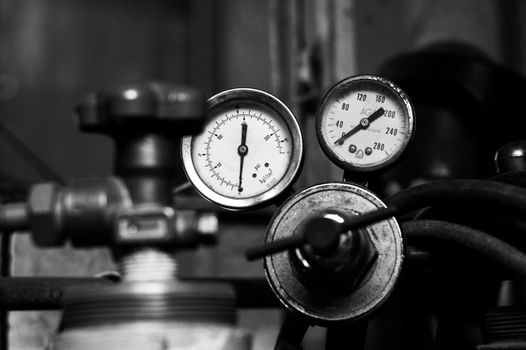
Most cataloged needle valves are manual (handwheel or screwdriver) [S1][S3][S5], but three functional variants dominate 2026 specs. Toggle-operated metering valves (Aalborg MVT™) deliver "eight turns to full open" with a safety handle that prevents over-torque, suited to lab benches and analyzer skids [S2]. Pneumatic needle valves (Dymax Model 400) are spring-closed, air-to-open, designed for dispensing light-curable adhesives and inks in low- to medium-viscosity dot or bead applications [S9]. Electric needle metering (Aalborg SMV/SMVI series) adds stepper-motor actuation for closed-loop flow control where manual repeatability is insufficient [S2].
A needle valve is the wrong pick when (a) full-bore flow capacity is needed — a ball valve will give ~5–10× higher Cv in the same envelope, (b) the duty is large-particle slurry or two-phase flow, which will score the tapered seat, or (c) the system needs to meet a check valve function rather than manual isolation. For dynamic balancing in HVAC or process-water systems, a balancing valve is purpose-built and certified; a needle valve is a field substitute at best. Choosing the wrong category is the dominant failure mode in retrofit projects, not a wrong size within the right category.
Application Anchors: Analyzer Skids, Hydraulic Panels, and Dispensing
Three application clusters dominate real 2026 spec sheets. Analyzer and emission-monitoring skids use PTFE/PEEK/PVDF needle valves (Aalborg VCL-TT-OA, M&C RV-11-P) where wetted cleanliness, bubble-tight shutoff, and fine metering of corrosive sample gas at 0–5 bar are non-negotiable [S2][S4]. Hydraulic and instrumentation panels use miniature brass or stainless needle valves (MNV-1 series, Beswick mini) at 125 psi class, typically with 10-32 UNF or 1/4 in NPT ports for gauge isolation and bleed [S5][S6]. Dispensing and adhesive systems use pneumatic needle valves (Dymax Model 400) where air pressure retracts the needle from the seat on a controlled cycle for fine-bead adhesive dots [S9].
Sanitary and pharmaceutical skids overlap with analyzer duty on cleanliness but add 3-A and ASME BPE requirements, which the standard catalog data does not directly address. Where sanitary compliance is required, validate the valve's surface finish, elastomer list, and CIP/SIP compatibility against the sanitary stainless selection logic rather than treating a generic stainless needle as automatically compliant. The same applies to high-temperature steam and chemical skids, where the steam separator selection criteria for chemical process skids flow into upstream isolation philosophy. Cross-checking against o-ring material limits is also worthwhile, since the soft seat of an analytical needle valve is functionally an o-ring problem at elevated temperature.
Specifications to Capture on the Data Sheet
A complete needle-valve data sheet should lock down: DN, end-connection standard and size (NPT, BSP, BSPP, UNF, flange class), body and bonnet material, seat and stem material, max working pressure and test pressure, min/max operating temperature, Cv at full lift, leakage class (bubble-tight vs Class IV/V/VI per the relevant FCI/ANSI standard, where the spec demands it), and flow direction (some designs such as the SFERACO 481/487 series are directional, marked by an arrow on the body [S1]). For monoflange duties, also capture flange rating and facing (RF, RTJ, etc.) since the Budenberg 6MNB ships in a "full range of materials, flange types and ratings" [S3].
Trackable signals for the next buying cycle: the 2026 Aalborg MVT™ and SMVI price points (€56 and up per public catalog [S2]) and the continued migration of pneumatic needle valves (Dymax Model 400, May 2026 update) into UV-cure adhesive dispensing [S9] both point to steady demand at the low-pressure, fine-metering end. For high-pressure isolation, the 6MNB's 10,000 psi / 538 °C envelope and ASME/ANSI compliance remain the benchmark cited in instrument-manifold catalogs [S3].