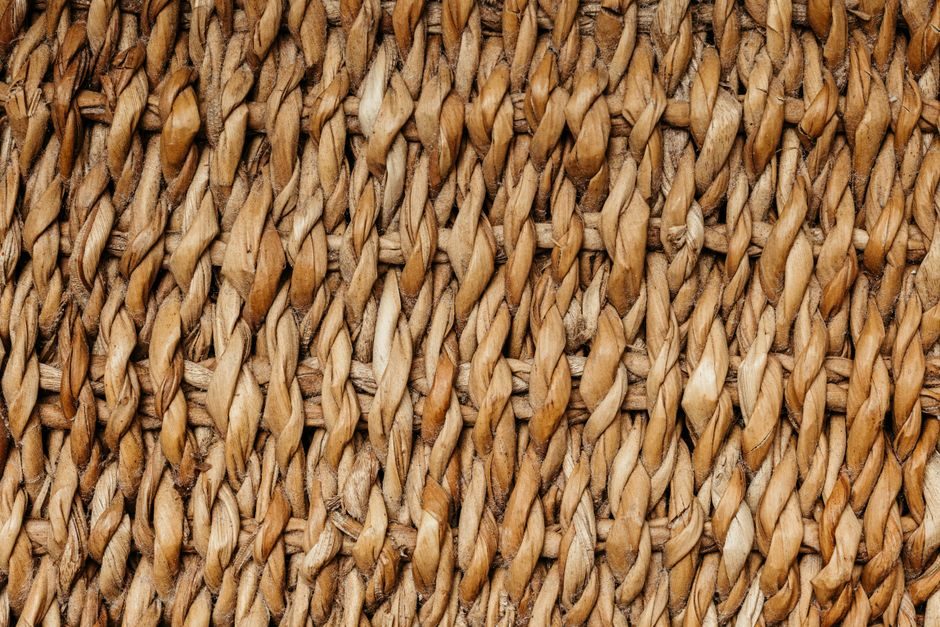
Glass fiber is a hair-thin filament drawn from molten glass, with an outer cladding around 125 µm and an inner transmitting or load-bearing core as small as 10 µm, and it forms the structural or optical backbone of composites, insulation and data cables [S1]. Across industrial uses — GRP/GRE pipework, FSK-faced glass-wool blankets, optical data links — the same base material shows a consistent pattern: high specific strength, low thermal conductivity, immunity to electromagnetic interference, traded off against brittleness, moisture sensitivity and higher upfront fabrication cost.
Specifying engineers in 2026 need a side-by-side map of those attributes, because glass fiber is rarely the only candidate on the table: carbon fiber, aramid, basalt and stainless steel are the typical alternates, and the right call depends on temperature, chemistry, electrical environment and unit cost per MPa of stiffness. The note below consolidates measurable advantages, the failure modes that have shown up in field service, and the comparison points that make a procurement call defensible.
Mechanical and Physical Advantages That Drive Selection
Glass-reinforced epoxy (GRE) pipework leverages glass fiber's specific strength: GRE pipe and matching flanges ship at ISO 9001:2008 certification with rated pressure classes for city water, desalination and chemical service, where the fiber/resin/film construction gives high corrosion resistance at a fraction of the weight of carbon-steel alternatives [S3][S4]. For comparison, the same material science underpins continuous glass fiber-reinforced composite fittings, which suppliers list with anti-corrosion performance, long service life, and lower installed cost than alloy alternatives for the same pressure class [S4].
For thermal and acoustic service, glass-wool blankets built from fibers of 5–7 µm average diameter are produced in densities from 10 to 48 kg/m³ and thicknesses from 25 to 150 mm, with standard roll widths of 1200 mm and lengths from 5000 to 30000 mm, optionally faced with FSK vapor barrier for HVAC ductwork [S2]. The data link below is illustrative of why the optical form wins: optical fibers carry signals through total internal reflection, with no radiated electromagnetic energy, so they are harder to tap and reject crosstalk, which is the same dielectric property exploited in composite structural use [S1].
Where Glass Fiber Loses: Brittle Failure, Moisture, and Cost
Glass fiber is more fragile than copper wire of equivalent diameter, requires special handling to avoid breakage during handling, and depends on optical fusion splicing plus trained technicians for termination [S1]. In structural form the same constraint shows up as low impact tolerance: glass-reinforced laminates crack rather than dent, and the resin matrix — not the glass — governs long-term durability in wet service unless a proper liner or veil is specified. Glass-wool insulation products that absorb moisture lose thermal performance and can become a corrosion risk to adjacent steel, so FSK or aluminum-facing is specified wherever humid air contact is expected [S2].
Installed cost is the recurring penalty. Optical fiber systems need transmitters, receivers, repeaters and sometimes optical amplifiers, plus trained installers, which raises the first-cost versus copper twisted-pair even though the lifetime bandwidth story favors fiber [S1]. The structural analog is GRE versus carbon steel: a 100-piece minimum order at 10000 pieces per month is common for GRP flanges, and a 20000-metre minimum order quantity with 500000 m/month capacity is typical for the high-pressure GRE pipe SKU on offer in mid-2026 catalogues [S3][S4]. Engineers running optical glass process lines should track that minimum order quantity is a real lead-time variable, not a marketing footnote.
Glass Fiber vs Carbon Fiber vs Aramid vs Steel: Selection Criteria
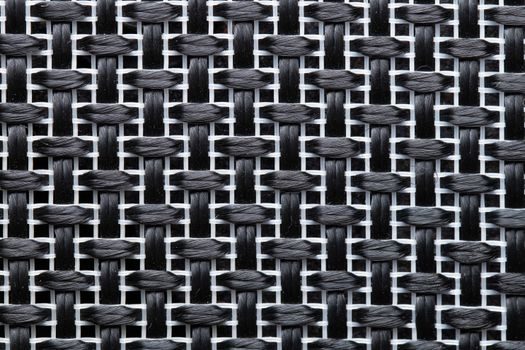
The four most common reinforcement choices line up against four decision criteria, and the comparison usually decides the call. Glass fiber is the lowest cost per kg, has good tensile strength (roughly 2–3 GPa for E-glass roving), moderate stiffness (E ≈ 70–80 GPa), but the highest density of the three fiber options at ~2.5–2.6 g/cm³, and it loses properties sharply above its softening point near 800 °C. Carbon fiber at the same diameter delivers higher specific stiffness (E ≈ 230–700 GPa depending on modulus grade) and lower density (~1.75–1.95 g/cm³), but at a per-kg cost that is several times higher than E-glass. Aramid (Kevlar) sits in between on density (~1.44 g/cm³) but absorbs moisture and is degraded by UV, which glass fiber tolerates better. Steel remains the reference for impact toughness and high-temperature creep resistance, with the well-known penalty in corrosion mass and electromagnetic coupling. [S1]
For insulation duty, glass-wool densities from 10 to 48 kg/m³ and thicknesses of 25 to 150 mm compete against stone wool, aerogel and PIR/PU foam; the concrete fiber family of reinforcement products — steel, polypropylene, alkali-resistant glass — sits in a different loading role (crack control in slabs) and should not be confused with structural GRP laminates. The practical decision rule: pick glass fiber when the failure mode is corrosion or EMI, the temperature is under ~250–300 °C for the resin matrix, and the budget cannot absorb a carbon-fiber premium.
Use Cases That Justify Glass Fiber in 2026 Specifications
Three real procurement contexts line up cleanly with the material's strengths. First, GRE and GRP pipework for seawater cooling, chemical dosing and district water: suppliers supply GRE pipe and matching flanges to API, ASTM, ISO and GB standards with long service life and lower installed cost than alloy piping in the same pressure class [S3][S4]. Second, HVAC and process insulation: FSK-faced glass-wool blanket in 1200 mm-wide rolls, 25–150 mm thick, 10–48 kg/m³ density, supplied cut to length from 5000 to 30000 mm, is the default flexible insulation for rectangular ductwork and large-bore process pipe [S2]. Third, optical data and signal links: total-internal-reflection glass fiber supports the high bandwidth and long-distance runs that copper twisted-pair cannot match, with no radiated EMI and no crosstalk to manage [S1].
The decision map for engineers weighing storage cage advantages and disadvantages shows the same logic — fiber-reinforced polymer (FRP) cages, pallets and trays keep the corrosion-resistance benefit when the load and temperature envelope fit inside GRP's working range. A direct spec-to-spec read-across for adjacent selections is the linear guide advantages and disadvantages map, where ball-screw and roller-guide choices trade stiffness for speed much as glass and carbon fiber trade cost for stiffness.
Failure Modes and Inspection Gates for Glass-Reinforced Equipment
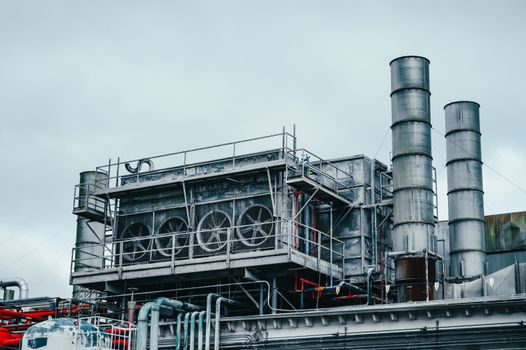
Three failure families show up repeatedly in service. (1) Resin-dominated failure: the glass fiber itself is intact, but hydrolysis, UV exposure or chemical attack on the polyester, vinylester or epoxy matrix drops the interlaminar shear strength long before fiber breakage occurs — a 1–2 mm corrosion barrier or vinylester liner is the standard mitigation for GRE pipe in chemical service [S3]. (2) Fiber-dominated brittle failure: impact, over-bending during installation, or a localized stress raiser at a flange face initiates a crack that propagates without plastic deformation, so GRE flanges are specified to API/ASME bolt patterns and torque values rather than steel tightening practice [S4]. (3) Moisture and thermal failure of insulation: glass-wool that loses its facing or wets out loses R-value and can become a corrosion-promoting layer on adjacent steel, which is why FSK or aluminum-foil-scrim-kraft facing is the default for HVAC [S2].
For high-pressure GRE pipe, suppliers in mid-2026 list API/ASTM/ISO/GB compliance with anti-corrosion construction, long service life and "low costs" as the headline trade, balanced against the 20000-metre minimum order quantity that should be checked against project demand before the spec is locked [S3][S4]. The same kind of design-integrity decision shows up in adjacent spec-first maps, e.g. the expansion anchor types, drill size map, and concrete substrate selection reference, where substrate, load and environment drive the call.
Sourcing, Standards, and Trackable Signals for the Next Buying Cycle
Procurement should anchor every glass-fiber SKU to a standards ladder: ISO 9001:2008 for the manufacturer's quality system, API/ASME/ISO/GB pressure and dimensional standards for GRE pipe and flanges, ASTM-style resin and laminate test methods, and project-specific fire/smoke ratings (e.g. ASTM E84, EN 13501-1) for insulation facings — any of which can be referenced back to the supplier datasheet and a sample test report [S3][S4]. For optical use, the IEEE 802.3 Ethernet family and the IEC 60793 series govern the glass-fiber medium itself, with total-internal-reflection geometry defined by a 125 µm cladding around a ~10 µm core [S1].
Three signals to watch into the next quarter: (a) whether the 20000-metre MOQ and 500000 m/month supply capability for high-pressure GRE pipe hold under continued municipal-water project demand [S3]; (b) whether suppliers of GRP flanges keep the 100-piece MOQ and 10000-piece monthly capacity stable for small-batch replacement orders [S4]; and (c) whether 1200 mm-wide FSK-faced glass-wool rolls in 25–150 mm thickness remain in stock at the 10–48 kg/m³ density band as HVAC retrofit demand peaks [S2]. Engineers writing a similar spec-first map for optical glass TCO or for a linear guide selection will recognize the same procurement pattern: standards-anchored SKUs, MOQ as a real lead-time variable, and density/thickness/cladding combinations as the actual decision levers.