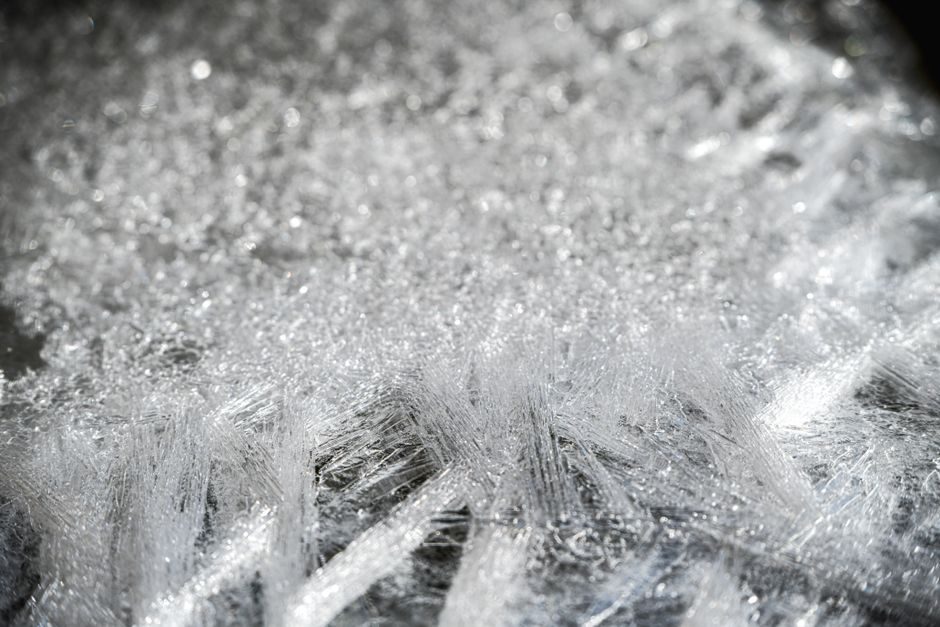
Chopped glass-fiber strand for PA/PP/PBT/ABS/PC compounding is listed at US$0.75–0.85/kg on Made-in-China.com as of 2026-06-07, with no published MOQ cap beyond the standard inquiry gate [S2]. That single number is the most repeatable reference price for thermoplastic reinforcement — every other per-kg quote should be sanity-checked against it before a PO is released.
Glass-fiber textile, felt, and downstream finished parts (ski poles, FRP panels) span a far wider band — felt alone runs US$0.50–9.99/m² on the same marketplace snapshot from 2026-03-24 [S4]. Engineers specifying glass fiber for industrial use therefore need to separate the raw-fiber cost driver from the converting, finishing, and converting-into-part cost stack, because the latter dominates total landed cost in most non-compounding applications.
Raw chopped strand: the US$0.75–0.85/kg anchor
The US$0.75–0.85/kg quotation on Made-in-China.com for chopped E-glass strand targeted at PA, PP, PBT, ABS, and PC thermoplastics is a thermoplastic-grade product — not a general-purpose roving [S2]. Buyers should treat this band as the floor for commodity compounding applications, with the understanding that higher tex ( heavier roving ), silane sizing tailored to a specific resin chemistry, and longer chop length (typically 3–12 mm for injection-grade, 6–25 mm for compression-grade) all push the effective price upward in 5–15% steps even within the same listing family.
For a quick sanity check on Chinese export offerings, cross-reference the roving and yarn families documented on the glass fiber encyclopedia page — the tex/yield, filament diameter, and sizing chemistry are the three real cost drivers behind any per-kg quote, and the encyclopedia lays out the underlying spec language. Untreated glass fibres are hygroscopic and must be dried before thermoplastic compounding, which adds a process-side cost the raw per-kg price does not capture [S1].
Glass-fiber felt and needled mats: US$0.50–9.99/m²
Glass-fiber felt on the same marketplace ranges from US$0.50–1.00/m² for commodity insulation-grade rolls (Jiangsu Blue Sky Environmental Protection Group) up to US$1.99–9.99/m² for a glass-fiber punch-needle felt rated to 250 °C continuous service with chemical-corrosion and abrasion-resistance claims [S4]. The 5–10× spread inside one product family is not market noise — it tracks three things: (1) base weight per m² (typically 200–1000 g/m²), (2) continuous operating temperature (250 °C commodity vs 500–800 °C high-silica grades), and (3) needling density and surface finish.
For process engineers evaluating insulation, filtration, or fire-protection bids, a US$0.50–1.00/m² roll is acceptable for duct lagging, removable jackets, and basic filtration; a US$2–10/m² needled felt is the right spec for welding blankets, expansion-joint packing, and high-temperature filtration media where temperature rating and abrasion life are written into the contract. The S2–S4 spread also mirrors what you see in industrial valve production technology — price band is set by spec band, not by raw-material cost alone.
Finished parts: ski poles, FRP profiles, custom composites
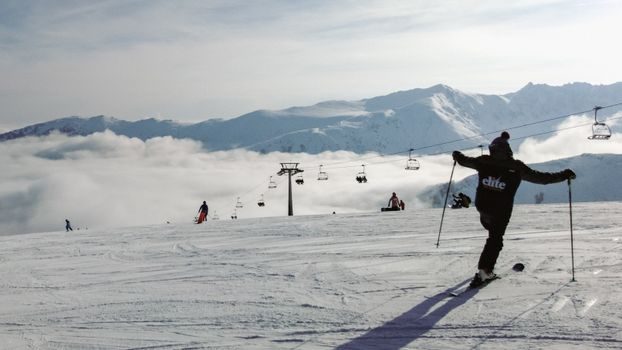
Finished glass-fiber parts diverge sharply from raw-fiber pricing. A 2026-05-21 listing for glassfiber ski poles is quoted without a per-piece price — the supplier instead prices by length (37/40/50/54 inch options), colour, and finished weight, with a stated pitch that the part is "more durable, harder, more flexible and lighter weight than all aluminum poles" [S3]. That pricing model is the rule, not the exception: any glass-fiber tube, pultruded profile, or filament-wound part is sold on geometry + tolerance + weight, not on the per-kg fiber cost.
The implication for sourcing teams is straightforward — request a per-metre or per-kg finished-part quote in addition to the per-piece quote, and benchmark it against the US$0.75–0.85/kg raw roving plus a realistic converting cost (typically 3–8× raw cost for pultrusion, 5–15× for filament winding, 8–20× for autoclave-cured laminates). This same cost-stack logic is the theme of the industrial pump industry coverage, where housing metallurgy and machining dominate the per-kg raw casting price by an order of magnitude.
Cost driver hierarchy: what actually moves the number
Across the three product families above, the cost hierarchy is consistent. In order of price impact for buyers, the dominant levers are: (1) fiber grade — E-glass commodity, E-CR for acid exposure, S-glass for high-modulus aerospace, quartz for dielectric applications and high-purity optical glass substrates; (2) form factor — chopped, continuous roving, woven roving, mat, milled fiber; (3) sizing/compatible resin system — polyester, vinyl ester, epoxy, phenolic, PP, PA; (4) tex/yield and filament diameter; (5) processing route — pultrusion, filament winding, hand lay-up, SMC/BMC, injection-grade compound. [S1]
Buyers who collapse all five into a single per-kg comparison are the ones who get burned on landed cost. The right move is to spec the fiber by grade + form + sizing, then ask for three quotes at the same spec across at least two suppliers — exactly the discipline that shows up in industrial valve production technology and the air compressor production technology coverage.
Limitations and what the snapshot does not tell you

[S2]
For comparison, the semiconductor spot price coverage treats spot-vs-contract in the same way — headline numbers are useful only once freight, volume, and compliance are layered back in. Treat any glass-fiber price band the same way.
Selection rules for a 2026 PO
For thermoplastic compounding at scale, anchor on the US$0.75–0.85/kg band and request lot-level certificates (filament diameter, tex, moisture content ≤0.1%, sizing identity). For insulation and filtration felt, decide the continuous-temperature ceiling first — 250 °C commodity, 400 °C, or 600–800 °C high-silica — and let that pick the US$0.50–1.00 or US$2–10/m² band; do not negotiate on price before the temperature spec is locked. For finished parts, push for per-metre or per-kg finished pricing in parallel with the per-piece quote, and benchmark the converting margin against a 3–8× (pultrusion) to 8–20× (autoclave) raw-cost multiple. [S3]
Trackable near-term signals to watch: (a) any movement in Chinese E-glass export tariffs or anti-dumping measures, which historically reset the per-kg floor; (b) the spread between S-glass and E-glass, which widens when aerospace demand picks up and tightens when wind-energy orders cool; (c) textile-glass roving tightness, which is a leading indicator for both the felt and the chopped-strand markets since they share the same bushing lines.
For component-level specifications, see linear guide.