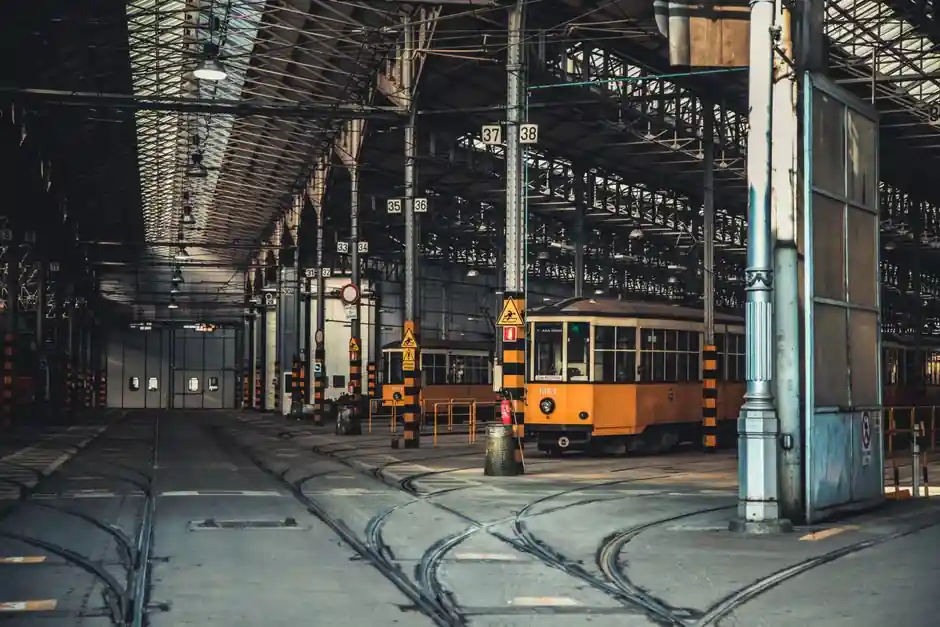
Glass fiber reinforcements are projected to remain the leading fiber type in the global rail composites market through 2034, on the strength of durability, fire/smoke performance, and a roughly 75% weight reduction versus mild steel and 30% versus aluminum for equivalent structural parts [S2][S7]. For rail specifiers, that puts glass fiber at the front of any shortlist when cost-per-kg-saved, fire certification, and supply-chain maturity dominate the decision.
The rail composites market was valued at USD 1.97 billion in 2025 and is forecast to grow from USD 2.11 billion in 2026 to USD 3.65 billion by 2034 at a 7.1% CAGR, with Asia Pacific holding 38.4% regional share in 2025 and Europe the fastest-growing region at 7.8% CAGR [S5]. Within that pool, glass fiber composites remain the volume workhorse because they sit below carbon fiber on price while delivering better mechanical performance than aramid in most rail-relevant laminate constructions [S2][S5].
Why Glass Fiber Wins on Rail: Weight, Fire, and Cost-per-kg
A 10% reduction in rail vehicle weight improves fuel efficiency by 5% to 7% on internal-combustion traction and extends the operational range of an electric train by roughly 10% [S4]. That figure is the lever specifiers use to justify composite substitution in bodyshell, bogie frame, and interior panel redesigns.
Glass fiber laminates also meet the EN 45545-2 fire, smoke, and toxicity hazard levels that govern European rolling stock, including the R7 HL2 classification demonstrated on composite connecting rods showcased at JEC World 2026, where the part delivered more than 50% weight reduction versus the metal baseline [S5]. Glass fiber reinforcements are typically 75% lighter than steel and 30% lighter than aluminum at equivalent stiffness targets, with a low coefficient of thermal expansion that keeps panel gaps stable across the temperature swings seen on European and Asian mainline service [S7].
Resin Pairing: Epoxy Leads, Phenolic and Vinyl Ester Fill the Fire-Critical Slots
Epoxy captured 32.8% of rail composite resin demand in 2025 and remains the default matrix for structural carbody, driver-cab, and bogie applications where mechanical performance dominates the spec [S5]. Epoxy pairs cleanly with both E-glass and higher-modulus glass fabrics, processes well in resin-transfer molding, and tolerates the secondary bonding steps used for large rail panels.
For fire-critical interior zones, phenolic and vinyl ester systems are the common substitutes, with polyester filling non-structural interior trim where cost outweighs mechanical peak [S5]. The mix of resin and glass format (chopped strand mat, woven roving, unidirectional fabric) sets both the laminate mechanical envelope and the ability to pass the smoke-density and toxicity limits rail buyers demand. Optical glass and sight glass components are not part of this composite decision tree, but the same glass-family taxonomy appears in adjacent rail glazing and cab window specifications.
Application Map: Interior, Exterior, and Structural
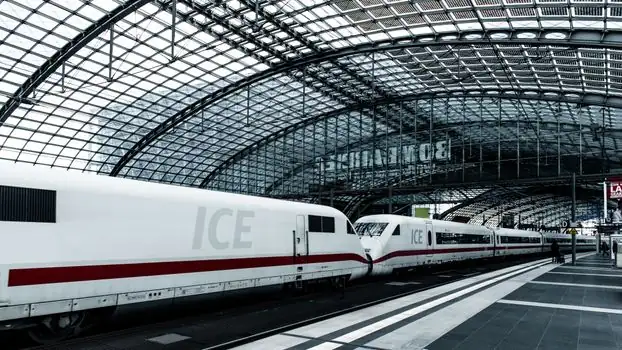
Interior applications held 56.4% of the rail composites market in 2025, covering flooring, ceiling panels, sidewall modules, seat structures, and partition walls where glass-reinforced phenolic and polyester systems dominate [S5]. These parts convert the weight-saving argument into measurable interior volume, easier cleaning cycles, and lower HVAC load per car.
Exterior and structural uses include carbody shells, cab fronts, end caps, fairings, bogie frames, and brake-disc housings, where glass/epoxy is competing with carbon/epoxy at the upper end of the performance curve [S3]. Recent work published in Polymer Composites (Oct 2023) documents fiber-reinforced polymer adoption in car bodies, bogies, and wheelsets, confirming that the rail-grade composite envelope now extends to primary suspension components [S1]. For deeper material comparison, see the parallel glass fiber selection map for electronics, which covers the dielectric-grade side of the same fiber family.
Decision Criteria: Glass vs Carbon vs Aramid in Rail
Specifiers typically line the three fiber families against four rail-specific criteria: specific strength, specific stiffness, raw material cost, and fire/smoke certification status. Glass fiber wins on cost and on a fully mature EN 45545-2 certification track record, while losing on specific stiffness to carbon fiber and on impact toughness to aramid at low temperature [S2][S5].
Carbon fiber is the fastest-growing rail segment at 8.2% CAGR through 2034, but its higher per-kg cost confines it to weight-critical structural parts such as roof panels, tilting-bogie components, and high-speed train carbody shells [S5]. Aramid fiber shows up where impact and abrasion matter, including driver-cab lining and selected interior crash structures, but it is rarely the primary reinforcement in large structural shells. Where weight, cost, and fire certification all need to clear the bar, glass fiber is still the default; where stiffness and mass at the top of the speed envelope dominate, carbon is the substitute [S2][S4].
Manufacturing and Process Constraints
High processing and manufacturing cost remains the single largest restraint on broader composite adoption in rail, with carbon fiber reinforced polymer (CFRP) priced well above glass fiber reinforced polymer (GFRP) and natural fiber composites [S4]. That cost gap is why cost-estimation tools are now standard in early-stage rail composite design, allowing engineering teams to weigh tooling, layup, and cure time against the per-kg weight-saving benefit.
For glass-reinforced parts, the practical process envelope includes hand layup for low-volume prototype panels, vacuum infusion for medium-volume structural shells, and pultrusion for long constant-section profiles such as door rails, window frames, and cable trough covers [S1][S7]. Pultrusion in particular is where glass fiber beats carbon on cycle time and scrap rate, since the roving format processes cleanly and tolerates the high fiber-volume fractions rail structural parts require.
Where Glass Fiber Is and Is Not the Right Answer
Glass fiber is the right reinforcement for: interior panels and flooring where fire certification and cost-per-m2 drive the spec; exterior fairings, cab fronts, and end caps where surface quality and dent resistance matter more than peak stiffness; bogie secondary structures and wheelset covers where fatigue and corrosion resistance dominate; and pultruded profiles for door rails, window frames, and cable management [S1][S3][S5].
Glass fiber is the wrong reinforcement for: high-speed train primary carbody shells where carbon/epoxy delivers the stiffness-to-mass ratio needed at 250-350 km/h; primary suspension links and wheel-set structural members where specific stiffness and fatigue life put carbon ahead; and any component where the buyer will not accept the thicker laminate section that glass needs to match carbon's stiffness [S2][S4]. Specifiers should also treat the architectural hardware selection playbook as a useful parallel reference, because station-side glass-fiber architectural components share the same fire and weight logic as rolling stock interiors.
Trackable Signals: 2026-2034 Watchpoints
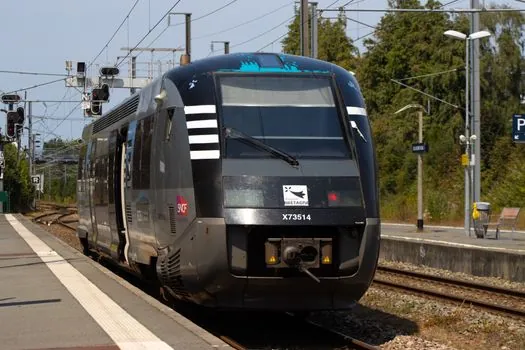
Two near-term signals will move the rail glass-fiber decision tree. First, the supply-side capacity build-out in India, China, and Brazil is shifting glass roving prices downward, which directly tightens the cost case against carbon on exterior and structural parts [S4]. Second, fire-certification reform under EN 45545-2 and equivalent UIC and FRA pathways continues to push interior resin systems toward phenolic and low-smoke epoxy, which in turn reorders the glass-format choice toward compatible fabric and mat grammages [S5].
A third trackable item is composite sleeper deployment: in April 2026 Indian Railways announced composite sleepers rated for up to 700 kg per square centimetre load at bridge approaches and points/crossings, expanding the addressable volume for pultruded glass-reinforced profiles beyond rolling stock [S5]. Read alongside the commercial flooring spec-first map, where glass-reinforced panels face similar fire and load criteria, the rail composite decision tree is converging on a small set of qualified glass/resin/process combinations rather than a free-form material choice.